AI myth busting. Lets learn together. Its the internet. Never share anything you dont want anyone to know.
It’s the internet. Never share anything you don’t want anyone to know. EVER.
Let’s talk honestly about AI, caricatures, privacy, and the fear that seems to be building around it, because there’s a lot of noise out there, and not all of it is balanced or true. Scare mongering and fear inducing. I want to share a few things with you.
Recently I saw a post warning people about creating AI caricatures. The message was clear: nothing is free, social media is watching, AI is dangerous, and we should all be worried about our data being swallowed by a tech machine somewhere.
I get the concern. Really, I do.
However, I also think we need to slow down, breathe, and add some education and nuance to the conversation, especially as counsellors, and especially for the people who trust us.
Yes, the internet collects data.
Yes, social platforms track behaviour.
And yes, we should all be mindful of what we share online.
None of that is new.
If you’ve ever used Facebook, searched on Google, or shopped online, you’ve already stepped into a system built on data and AI. That’s the reality of modern life. But there’s a big difference between using a tool responsibly and feeding it sensitive information carelessly. Meta (facebook use it for example) one of the biggest data collectors out there and very honest about it too! If you dont want people to know it, dont post it. Your stuff is not private. Thats a myth.
And that’s where the real conversation needs to sit.
What I actually did (and what I didn’t do)
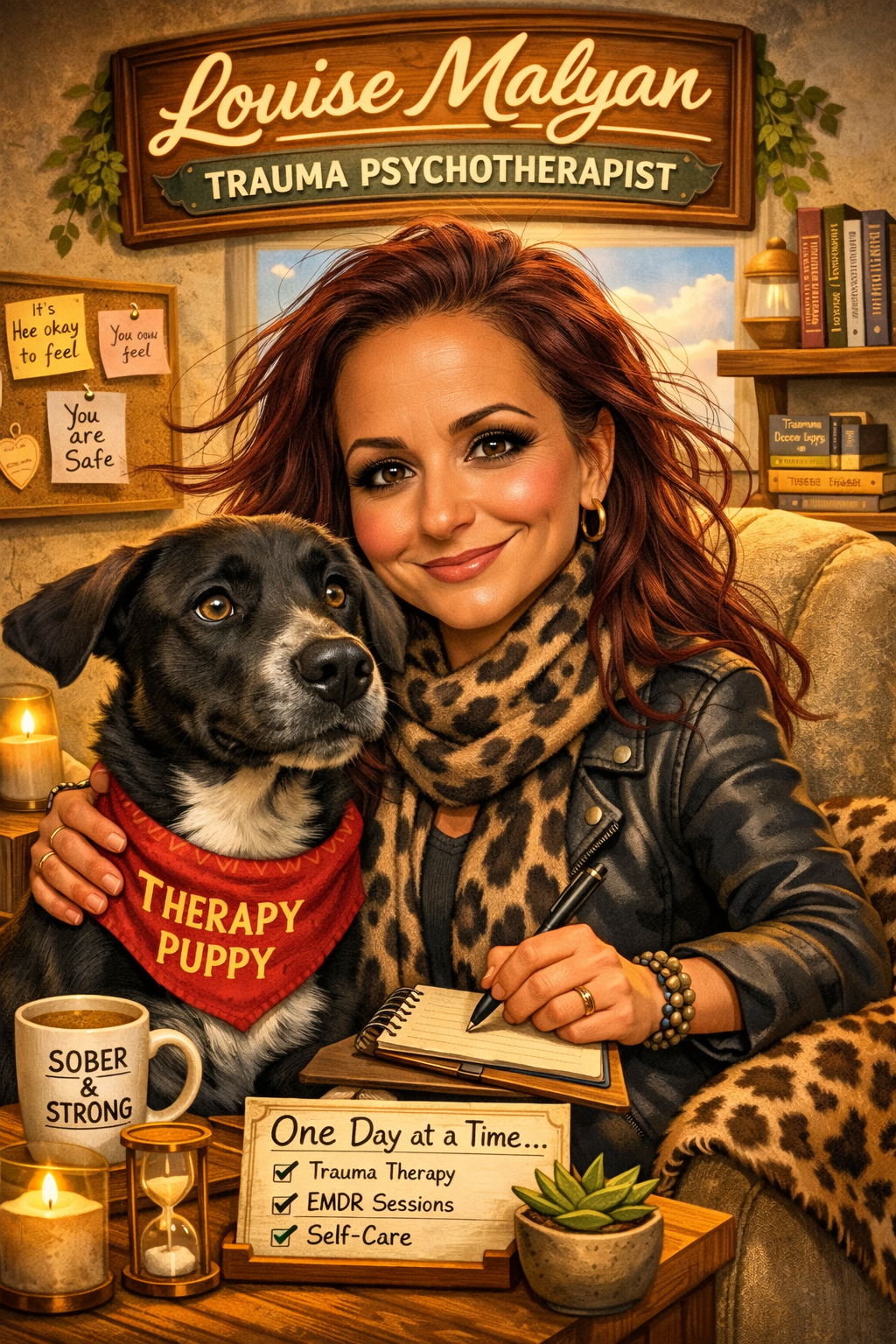
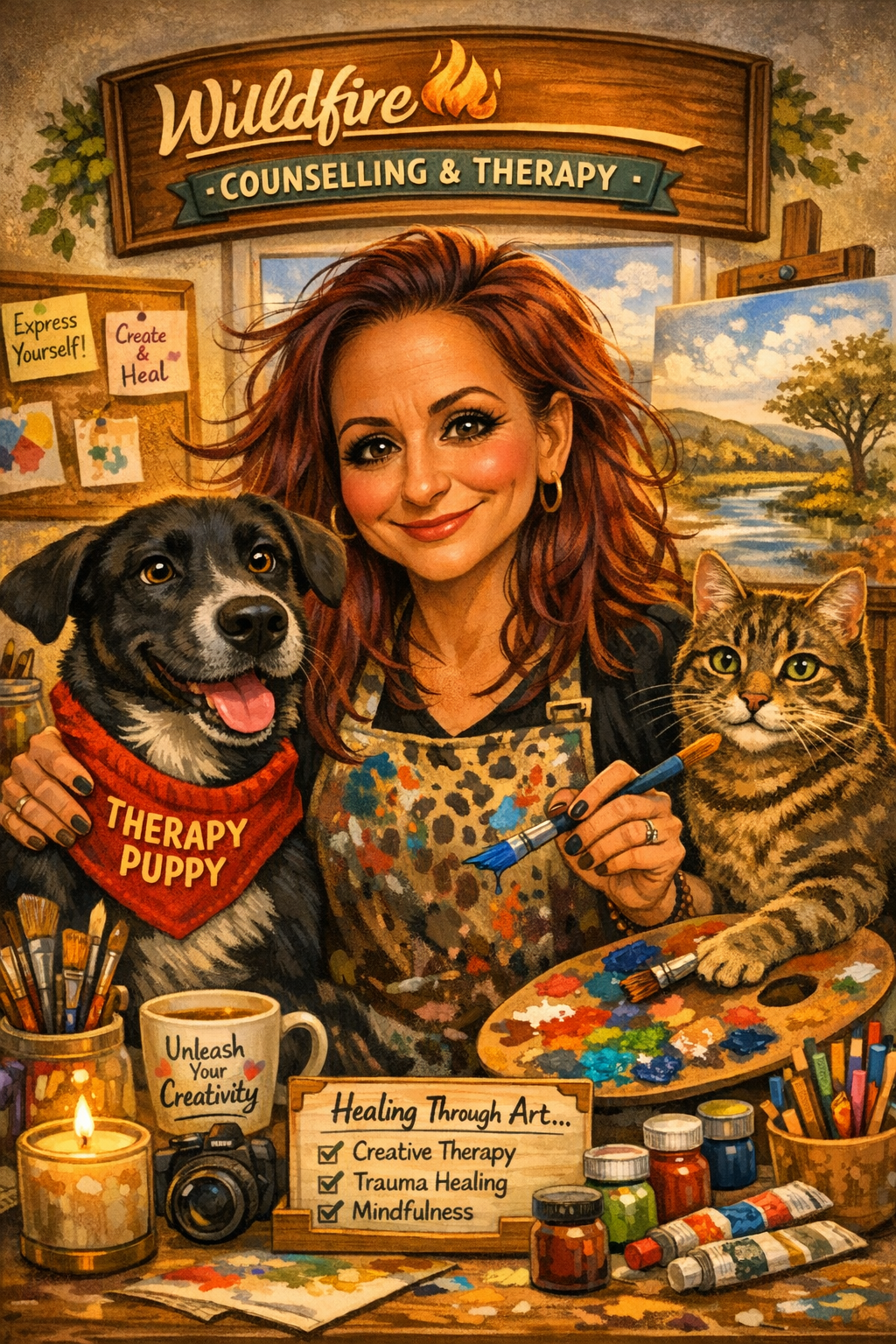
I’ve seen the caricatures too. They’re fun. I was curious. So I played.
My prompt was simple:
“Using this photo and all you know about Louise Malyan from Wildfire Tranquil Counselling & Therapy Hub, make me a set of caricatures.”
That’s it.
I didn’t give personal details.
I didn’t upload confidential information.
I didn’t share client stories or private conversations.
I used information that is already public, my website, my professional presence, things I have chosen to make visible.
If someone is putting deeply personal information into AI that they don’t want public, then yes, that’s risky and dangerous. But that’s not an AI problem. That’s a digital literacy problem.
Let’s talk about fear vs reality
There’s a narrative that AI tools instantly “scour the internet,” gather your life story, and expose your secrets. The reality is more boring and less dramatic.
Tools like OpenAI work within specific systems and boundaries. They don’t magically access everything about you just because you asked for a cartoon version of yourself. That’s not how it works.
Could technology be misused? Absolutely. That’s true for every technology ever created, phones, social media, even email.
The answer isn’t fear.
The answer is education and ethical use.
Counsellors, ethics, and AI
As a therapist, confidentiality is sacred. That doesn’t change because new tools exist.
I will never put identifying client information into AI. Ever. I see people using the anon feature on facebook thinking it's confidential, this is not ok. I challenge it every time I see it.
No names.
No recognisable details.
No confidential stories.
That’s non-negotiable.
However, refusing to engage with technology at all doesn’t make us safer or better practitioners. It just leaves us uninformed.
Used wisely, AI can be a tool, not a replacement for therapy, not a shortcut for learning, and absolutely not a robot counsellor.
Human relationship is the therapy. Always.
Confidentiality is a passion of mine. I’ve had mine broken. I nearly died. I will NEVER put clients at risk of that.
Why AI helps me….. and why that matters
I’m very open about being Autistic ADHD, snd having CPTSD and dyspraxia. Executive function can be messy. Thoughts arrive fast, chaotic, tangled. Sometimes I need help organising them.
AI can help me rearrange my thinking, like having a whiteboard that helps me sort, structure, and clarify ideas.
And here’s the crucial part:
I do that safely.
Without personal details.
Without confidential information.
When ADHD brain locks onto something, it’s like a dog with a bone, urgent, immediate, impossible to switch off. AI can help in those moments when I need to process or organise ideas right now, without waiting days for the perfect headspace.
That doesn’t remove learning.
It doesn’t replace reflection.
It doesn’t replace people.
It just helps me work with the brain I have.
I might ask it a better word to replace another. What questions to ask myself to arrange a list. How I can prioritise, what do I need to think about. Or the meaning of a word, or where I can find information. I have to fact check EVERYTHING. No intimate or personal details, just open questions that we can also google (ok yes, thats another form of ai!)
Reassurance for clients
If you’re reading this as a client and wondering, “Is my information safe?”
Yes.
Your privacy is something I take incredibly seriously. The boundaries around confidentiality do not bend because technology exists. My ethical responsibility to you comes first, always.
AI is a tool I use carefully, intentionally, and appropriately. Just like any other professional tool.
The bigger picture
Technology is not going away. Neither is human connection.
We can challenge fear-based narratives without dismissing genuine concerns. We can use tools safely while staying ethical. We can be curious and cautious at the same time.
For me, it comes down to this:
Use common sense.
Protect personal information.
Don’t share anything you wouldn’t want public.
And remember, the heart of therapy will always be human-to-human connection. No algorithm can replace that.
AI might help organise thoughts.
It might help creativity.
It might even make a slightly spooky caricature.
But healing? Growth? Being truly seen?
That still happens between humans, between people.
Stay safe, stay connected & take gentle care.
Louise x