Feelings, Empathy, and Why Being Understood Matters
One of the most painful experiences we can have is not being understood.
You can be surrounded by people, even people who care about you, and still feel deeply alone in how you feel. Often that’s not because anyone is deliberately unkind, but because feelings are invisible, and not everyone has learned how to really see them in others.
A lot of conflict, frustration, and hurt comes from a misunderstanding of what empathy actually is.
We often think empathy means feeling something about another person. But that isn’t quite it.
Take the cinema as an example. You’re watching a film and a character goes through something heartbreaking. You feel sad. You might cry. That feeling is real, but it isn’t empathy. The character doesn’t know you feel it. Nothing has been communicated or received.
What you’re experiencing there is your own emotional response. You might call it sympathy, or resonance, or compassion, but empathy requires something more.
Empathy is relational.
It’s when another person gets it.
When they understand, acknowledge, and reflect your inner experience in a way that lets you know you’re not alone with it.
That’s the space counsellors sit in.
In therapy, it’s not enough for a therapist to quietly feel something on your behalf. The other person needs to know they are understood. Empathy lives in that shared, communicated understanding.
This is also why things can feel so tricky in personal relationships, especially when one person has done a lot of inner work.
It can feel like a game you’ve both been playing for years, with unspoken rules. Then one day, you change. You learn new language. You see patterns. You understand emotions differently.
The problem is, the rules have only changed for you.
The other person is still playing the old game, because they haven’t done the same learning or reflection. Expecting them to suddenly respond with the same level of insight can feel frustrating on both sides.
We see this a lot with neurodivergence too.
For some people, for example, it can be genuinely confusing to understand how someone else feels something they don’t feel themselves. That doesn’t mean there’s no care, it often comes down to differences in what’s known as theory of mind: the ability to recognise that other people have thoughts, feelings, and experiences that are different from your own.
Add trauma into the mix, and things become even more complex.
Someone living in a constant state of fight or flight experiences the world very differently. Their nervous system is always scanning for danger. When others appear to be “getting on with life as normal”, it can feel invalidating, as though there’s an expectation to feel fine simply because nothing obvious is wrong.
But trauma isn’t visible.
Grief is another place where this shows up painfully.
I’ve felt this myself recently. When people haven’t lost someone they love, or don’t experience family bonds in the same way, they often can’t understand the depth or unpredictability of grief. How one moment you can be laughing, and the next you’re floored by a wave of sadness.
That doesn’t mean the feeling is wrong.
It just means it isn’t theirs.
And this is something really important to remember:
Feelings are involuntary.
We don’t choose them. We feel them.
When feelings get pushed down or ignored, anxiety often steps in. Anxiety isn’t the problem, it’s the protector. It tries to keep us safe from feelings we don’t feel able to experience.
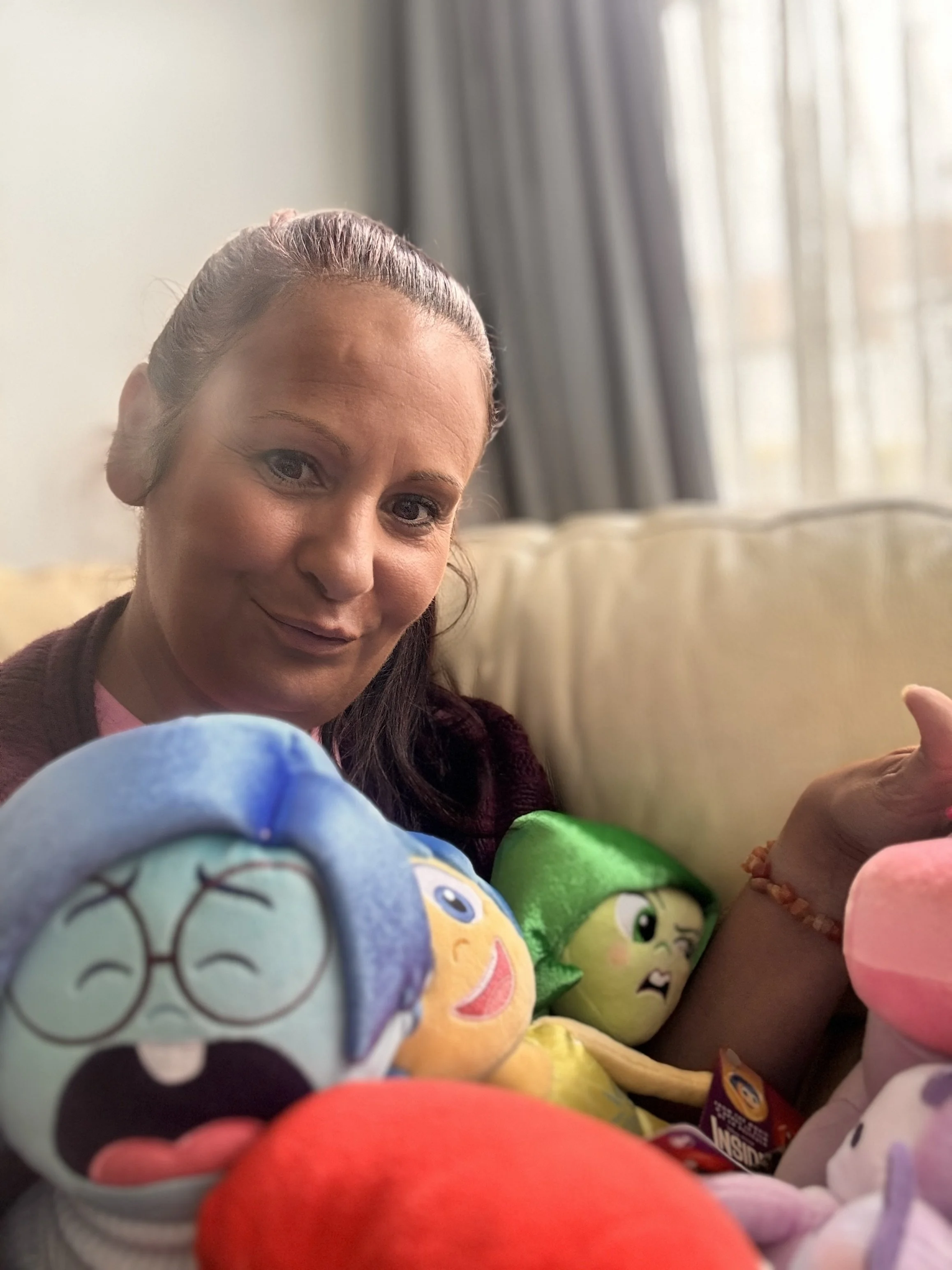
A brilliant way of understanding this is through Inside Out 2. When sadness and anger are pushed away, anxiety takes over to protect the system. Once those underlying feelings are allowed space, anxiety no longer has to work so hard.
When someone says, “I feel this way,” they’re not asking you to change how you feel.
They’re not blaming you.
They’re stating a fact about their inner world.
Many people who haven’t done much self-work struggle with this. They may not be ready. They may be scared. They may simply not have the tools yet. And that’s okay, it’s their journey.
Personally, I think therapy is something everyone would benefit from. I see the relief it brings when people finally get to put a weight down. I’ll admit my bias there!!
But even without therapy, there’s something we can all practise.
Respect.
I often think of a line from an interview with Pink that I love: we can all have different views, different beliefs, different opinions, just don’t be a dick.
That applies to feelings too.
It’s not okay to be abusive or nasty to someone because of how they feel. Someone else’s feeling doesn’t invalidate yours.
One of the simplest and most powerful shifts we can make is to speak from the I.
“I feel…” instead of “You always…” or “You make me…”.
That one change can completely alter the tone of a conversation, if the other person is willing to listen.
I was reminded of this recently while watching an interview where the live chat became heated. Someone spoke about coping through prayer and faith, and others responded with ridicule and anger.
That isn’t okay.
If prayer helps someone, it helps them.
If running helps someone, it helps them.
If climbing a mountain helps someone, it helps them.
Not everything works for everyone.
And not everyone has the same relationships, beliefs, nervous systems, or emotional worlds.
Empathy isn’t about agreeing.
It’s about recognising that another person’s inner experience is real, even when it’s different from your own.
That recognition alone can change everything.
Stay safe, stay connected, take gentle care,
Louise x
If any of this resonates, or you’re curious about exploring your feelings in a space where they can be understood rather than explained away, you’re very welcome to get in touch. I offer therapy, supervision and tailored workshops that is different to traditional talking therapy, relational, trauma-informed, down to earth and human at its core. You can email me at louisemalyancounselling@gmail.com to ask questions, find out more about working together, or arrange an initial free conversation.