The kids are not broken. The system is.
Are Phones Really the Problem?
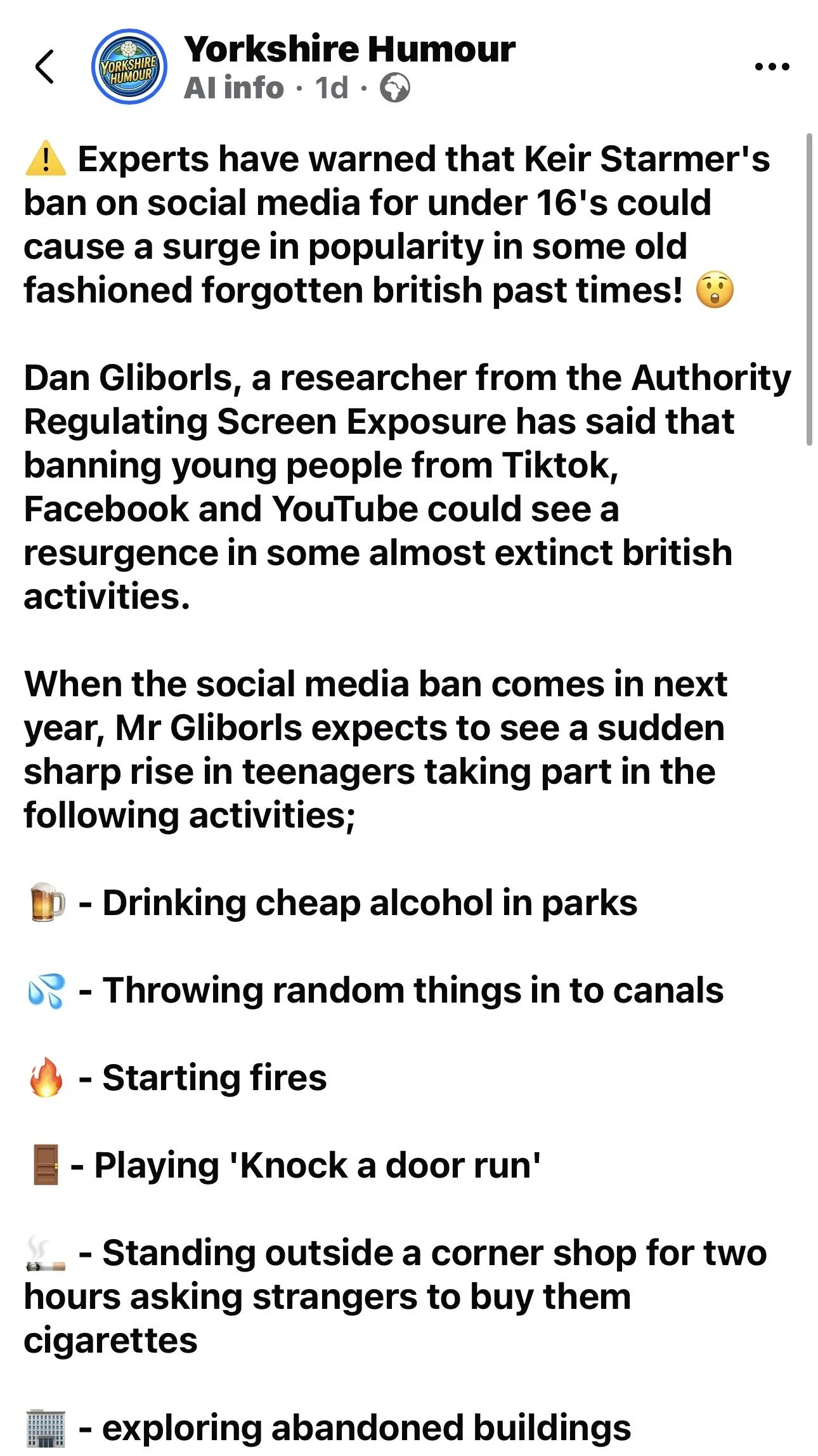
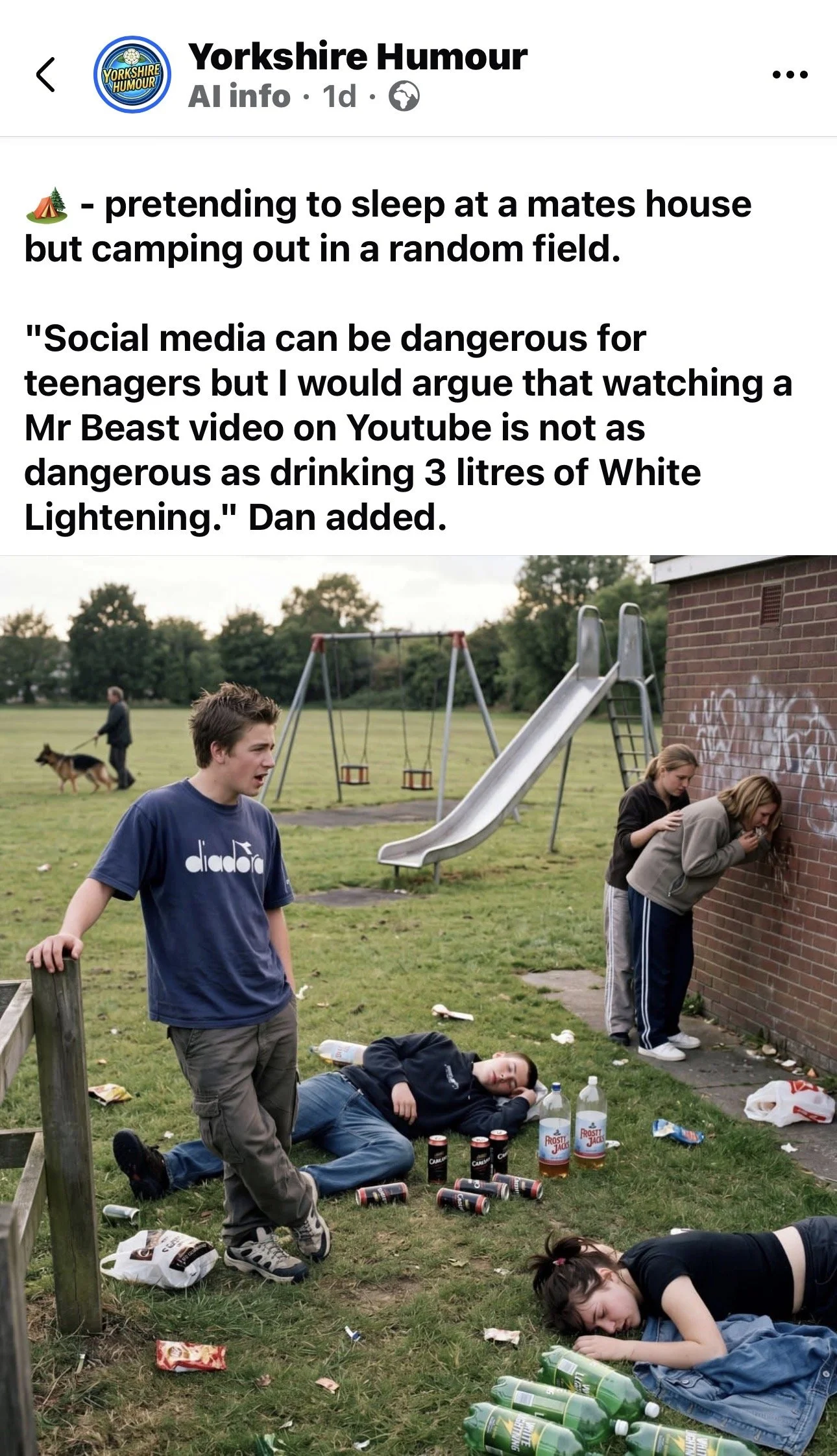
I saw a joke post on Facebook recently about the proposed social media ban for under 16s.
The punchline was that if teenagers can’t scroll TikTok or YouTube anymore, we’ll see a resurgence in some traditional British pastimes:
Drinking cheap cider in parks.
Setting fire to things.
Throwing random objects into canals.
Knock-a-door-run.
Hanging around outside corner shops trying to convince strangers to buy cigarettes.
It was meant to be funny.
And to be fair, I laughed.
Yet underneath the humour sits something much bigger.
Because whilst social media absolutely has risks, I think we’re in danger of looking at the symptom and missing the wider picture.
I Remember 2020
When Covid hit, we closed schools.
We closed clubs.
We closed youth groups.
We closed sports.
We closed communities.
We closed almost everything that helped young people connect.
For many children and teenagers, the only thing left was technology.
Their phones became classrooms.
Their phones became friendships.
Their phones became support networks.
Their phones became connection.
For nearly two years many young people learnt how to socialise through a screen because there was no alternative.
Then we reopened the world and expected them to simply switch back.
Yet human beings don’t work like that.
The Children I See
As a therapist, I see the impact every day.
Young people struggling with social anxiety.
Young people terrified of public transport.
Young people who panic in shops.
Young people who don’t know how to join groups or conversations.
Young people who missed huge chunks of normal social development.
Not because they chose to.
Because circumstances took those opportunities away.
Many were isolated during some of the most important developmental years of their lives.
We talk about lost learning.
I think we’ve underestimated lost living.
School Refusal Isn’t Usually About Home
One of the things I hear most often is discussion around school refusal.
Families are fined.
Parents are blamed.
Children are labelled.
Yet often what I hear from the young person is something entirely different.
They aren’t refusing home.
They’re refusing an environment that feels overwhelming, unsafe, exhausting or impossible to navigate.
There’s a difference.
That doesn’t mean attendance doesn’t matter.
Of course it does.
However, punishment without understanding rarely creates change.
Support does.
Curiosity does.
Compassion does.
We Know So Much More Now
Here’s the thing that frustrates me.
We know more about trauma than ever before.
We know more about neurodivergence than ever before.
We know more about nervous systems than ever before.
We know that behaviour is communication.
We know children don’t wake up in the morning thinking:
“I’d like everyone to dislike me today.”
Children do well when they can.
And when they can’t, something is usually getting in the way.
Yet many are still being punished for symptoms rather than supported with causes.
The child who can’t sit still.
The child who talks too much.
The child who forgets things.
The child who melts down.
The child who shuts down.
The child who avoids school.
The child who masks all day then self-harms privately to cope with the exhaustion.
I hear these stories every week.
Social Media Is Not The Villain Or The Hero
Do I think social media can be harmful?
Absolutely.
Algorithms can be dangerous.
Bullying exists.
Comparison exists.
Predators exist.
Misinformation exists.
Companies absolutely need greater accountability for what is posted and how young people are protected online.
That conversation matters.
However, I don’t think social media is entirely the enemy either.
Because for many young people it is where they found their tribe.
The autistic teenager who suddenly realises they’re not broken.
The ADHD teenager who finally understands why their brain works differently.
The young person questioning their identity.
The child with a niche special interest nobody in school understands.
The teenager lying awake at 2am feeling utterly alone until they discover thousands of people experiencing exactly the same thing.
Connection matters.
Humans need connection.
Always have.
Always will.
When We Remove Connection, We Need To Replace It
If social media access is reduced, then we need to ask ourselves an important question.
What are we replacing it with?
More youth services?
More mental health support?
More community groups?
More safe places to belong?
More understanding within schools?
More accessible therapy?
Absolutely nothing…. Which scares me.
Because if we simply remove a source of connection without creating another one, young people will naturally look elsewhere.
Humans are wired to seek belonging.
If they can’t find it in one place, they’ll search for it somewhere else.
Sometimes in healthy ways.
Sometimes in unhealthy ones.
The Real Conversation
I don’t think this is really about phones.
I think it’s about connection.
I think it’s about belonging.
I think it’s about understanding.
I think it’s about creating environments where young people feel safe enough to be themselves.
Where differences aren’t punished.
Where support arrives before crisis.
Where behaviour is met with curiosity rather than shame.
Because children are not the problem.
Most are doing their absolute best with the tools available to them.
Perhaps the real question isn’t:
“How do we get children off their phones?”
Perhaps it’s:
“How do we create a world they genuinely want to engage with?”
That feels like a much more important conversation.
And one worth having.
Stay safe, stay connected, and take gentle care.
Louise x
If this resonates, you’re not on your own.
Pull up a chair.
I've got you.
If you’re tired of carrying it alone, I’m here.
We can take it at your pace. No pressure. No fixing. Just space to be human.
📧 louisemalyancounselling@gmail.com
🌐 www.wildfirecounsellingtherapy.co.uk
Free, no-obligation intro chat, just to see if we’re the right fit.