 Image 1 of 5
 Image 2 of 5
 Image 3 of 5
 Image 4 of 5
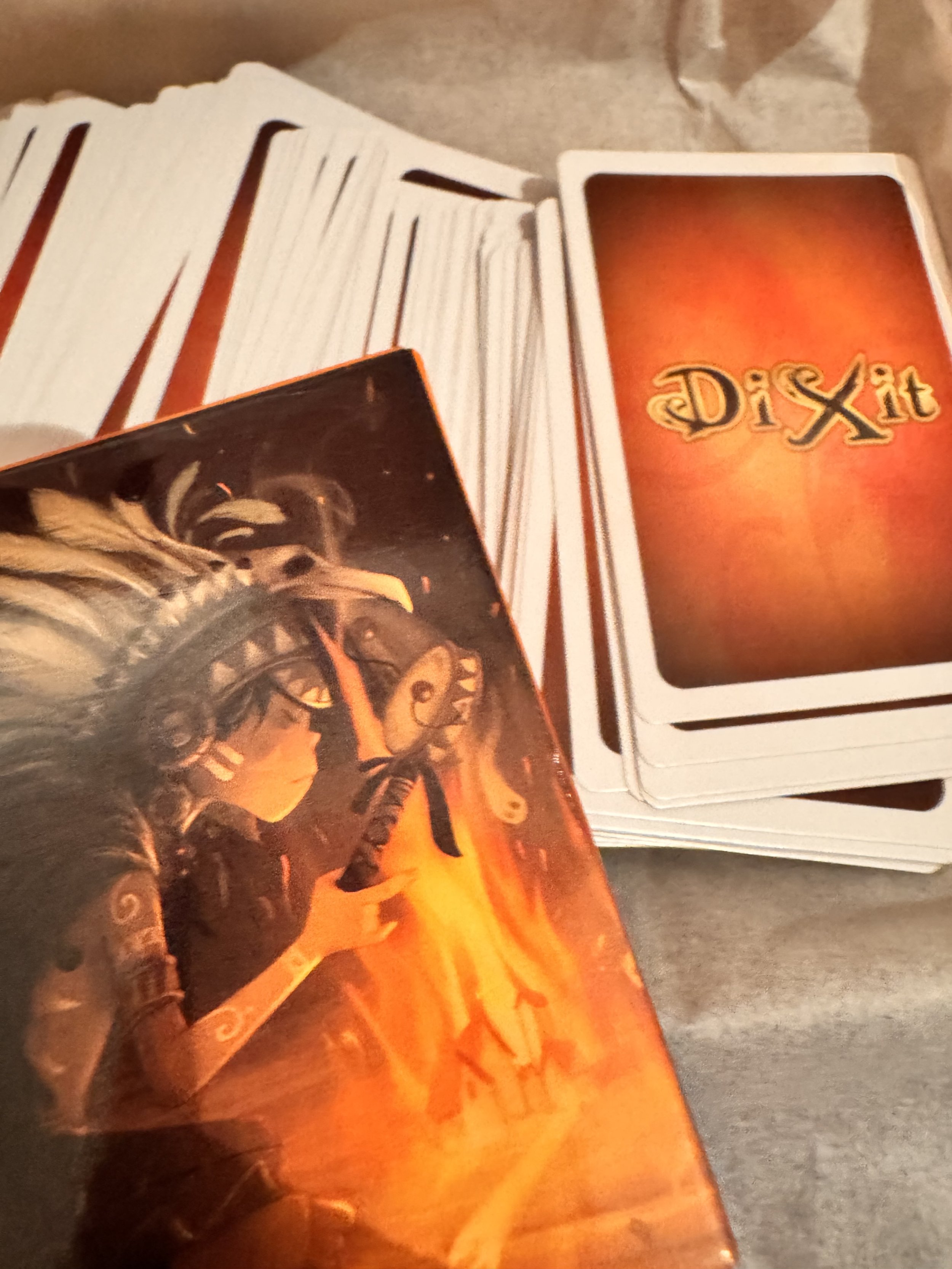 Image 5 of 5
Dixit cards are widely used in therapy as a creative, non-verbal tool to help clients express emotions, explore personal narratives, and gain new perspectives in a safe and imaginative way. The abstract, wordless imagery facilitates metaphorical thinking and can be particularly helpful for individuals who struggle to articulate their feelings verbally.
Therapeutic Applications and Techniques
Therapists use a variety of techniques with the image-based cards to facilitate self-reflection and communication:
Storytelling: Clients can pick one or more cards and create a story around them. This technique helps in exploring personal narratives and experiences in a safe, imaginative way, often revealing underlying feelings and concerns.
Metaphor Exploration: The vivid imagery can be interpreted in numerous ways. Therapists encourage clients to discuss what an image means to them, which can lead to insights about their thoughts and emotions without feeling too personal.
Emotional Expression: Clients can select cards that represent how they are feeling in the moment. This non-verbal approach is especially beneficial for those who find it difficult to name or articulate their emotions directly.
Exploring Values and Goals: In techniques like Acceptance and Commitment Therapy (ACT), clients may choose cards that symbolize important values in their lives or future aspirations. This opens up dialogue about their goals and the steps needed to reach them.
Identifying "Parts of Self" and Relationships: Clients can select cards that represent different aspects of themselves (e.g., inner critic, hopeful self) or key relationships in their lives. The therapist then explores the dynamics and differences the client notices between these representations.
Creative Writing or Art Prompts: The cards can serve as inspiration for creative expression beyond verbal communication. A client might use a chosen card as a prompt for free writing, a poem, or an expressive art piece (e.g., painting or collage).
Icebreaker Activities: In group therapy, the cards can be used as an icebreaker. Participants can select a card and share why they chose it, promoting group cohesion and making everyone feel more comfortable sharing.
Key Benefits
Bypasses verbal barriers: The visual nature of the cards allows clients to approach sensitive or difficult topics indirectly, which can be less intimidating than direct questioning.
Encourages creativity and imagination: The abstract and whimsical art on the cards encourages divergent thinking and new perspectives, fostering a dynamic therapeutic process.
Promotes self-reflection: By inviting personal interpretation, the cards help clients gain greater awareness and understanding of their inner world and experiences.
Accessible for all ages and styles: The technique is adaptable and suitable for children, adolescents, and adults, including those with autism who may find this a more structured social outlet to explain their lived experiences.
Non-directive: Unlike some therapy-specific cards with labels, Dixit cards are intentionally ambiguous, allowing the creative control and meaning to stay with the client.
Dixit cards are widely used in therapy as a creative, non-verbal tool to help clients express emotions, explore personal narratives, and gain new perspectives in a safe and imaginative way. The abstract, wordless imagery facilitates metaphorical thinking and can be particularly helpful for individuals who struggle to articulate their feelings verbally.
Therapeutic Applications and Techniques
Therapists use a variety of techniques with the image-based cards to facilitate self-reflection and communication:
Storytelling: Clients can pick one or more cards and create a story around them. This technique helps in exploring personal narratives and experiences in a safe, imaginative way, often revealing underlying feelings and concerns.
Metaphor Exploration: The vivid imagery can be interpreted in numerous ways. Therapists encourage clients to discuss what an image means to them, which can lead to insights about their thoughts and emotions without feeling too personal.
Emotional Expression: Clients can select cards that represent how they are feeling in the moment. This non-verbal approach is especially beneficial for those who find it difficult to name or articulate their emotions directly.
Exploring Values and Goals: In techniques like Acceptance and Commitment Therapy (ACT), clients may choose cards that symbolize important values in their lives or future aspirations. This opens up dialogue about their goals and the steps needed to reach them.
Identifying "Parts of Self" and Relationships: Clients can select cards that represent different aspects of themselves (e.g., inner critic, hopeful self) or key relationships in their lives. The therapist then explores the dynamics and differences the client notices between these representations.
Creative Writing or Art Prompts: The cards can serve as inspiration for creative expression beyond verbal communication. A client might use a chosen card as a prompt for free writing, a poem, or an expressive art piece (e.g., painting or collage).
Icebreaker Activities: In group therapy, the cards can be used as an icebreaker. Participants can select a card and share why they chose it, promoting group cohesion and making everyone feel more comfortable sharing.
Key Benefits
Bypasses verbal barriers: The visual nature of the cards allows clients to approach sensitive or difficult topics indirectly, which can be less intimidating than direct questioning.
Encourages creativity and imagination: The abstract and whimsical art on the cards encourages divergent thinking and new perspectives, fostering a dynamic therapeutic process.
Promotes self-reflection: By inviting personal interpretation, the cards help clients gain greater awareness and understanding of their inner world and experiences.
Accessible for all ages and styles: The technique is adaptable and suitable for children, adolescents, and adults, including those with autism who may find this a more structured social outlet to explain their lived experiences.
Non-directive: Unlike some therapy-specific cards with labels, Dixit cards are intentionally ambiguous, allowing the creative control and meaning to stay with the client.