ADHD Awareness Month, Day Four: Rejection, Rest and the Very Important Business of Colouring
Written on Sunday, published on Monday. Yes, I’m confused too. 😂
Well, would you look at me being organised!
It’s Sunday, and I’m writing Monday’s blog.
Why?
Because I’ve discovered that you can actually schedule a blog to publish at a later date. Well, i mean remembered as I did know. I forgot.
I know. Revolutionary stuff. 😂
So rather than waking up tomorrow, remembering I’ve promised myself I’m going to write throughout ADHD Awareness Month, getting distracted by seventeen other things and eventually thinking, Oh bloody hell, I’ve forgotten again, I’m trying something different.
I’m writing tomorrow’s blog today.
Which means that when you’re reading this, my today is actually your yesterday.
And now I’ve confused myself.
Anyway, welcome to day four!
When a cold becomes more than a cold
I’ve not been very well.
Nothing particularly exciting, just a cold that’s left me feeling rather rubbish.
And I’ve been reminded how being physically unwell can affect so much more than your physical health.
Especially when you have ADHD.
I’d arranged to see a friend, something I was really looking forward to.
And then I didn’t wake up when I was supposed to.
I wasn’t feeling well.
The plans didn’t happen.
And instead of my brain simply thinking, You’re poorly, these things happen, it decided to have a little party with every possible negative interpretation.
I’ve let them down.
They’re going to think I’m unreliable.
They’re going to be disappointed in me.
What if they don’t invite me again?
What if they think I don’t care?
I’m not a very good friend.
And before you know it, something as ordinary as being unwell and missing a plan has turned into a whole conversation about whether you’re good enough.
Wonderful, isn’t it? 😂
That horrible feeling of not quite belonging
If you have ADHD, you might recognise some of this.
It’s often described as rejection sensitive dysphoria, or RSD.
It’s a term people use to describe particularly intense emotional responses to perceived rejection, criticism or disapproval. It’s not a separate formal diagnosis, and it isn’t something everybody with ADHD experiences.
For those who do recognise it, though, it can feel enormous.
And sometimes there hasn’t actually been any rejection.
Nobody has fallen out with you.
Nobody has told you you’re a terrible friend.
Nobody has decided you’re not worth bothering with.
Yet your brain has already written the entire story.
And it’s rarely a particularly flattering one.
For me, that feeling can connect with something deeper.
Not fitting in. Not being enough. Being the person who gets things wrong.
Those old beliefs can be remarkably quick to make an appearance when I’m tired, poorly or overwhelmed.
And I think that’s an important part of understanding ourselves.
Sometimes the intensity of our reaction isn’t only about what’s happening today.
It’s also about what today’s experience reminds us of.
And then came a text message
My friend replied.
Essentially saying:
It’s absolutely fine. You’re not well.
That’s it.
No drama.
No guilt.
No suggestion that I’d ruined anything.
Just understanding.
And honestly, sometimes a message like that means more than somebody could possibly realise.
Because while my brain was busy telling me I’d disappointed somebody and wasn’t a good enough friend, there was another human being reminding me that being unwell is allowed.
That friendships don’t have to fall apart because plans change.
That I don’t have to earn somebody’s understanding by explaining myself seventeen different ways.
And that got me thinking about how we support the people in our lives who have ADHD.
Sometimes reassurance really does matter
If you’re friends with, living with or in a relationship with somebody who has ADHD, you might not always realise what’s happening in their head.
Something that feels quite small to you might have triggered an enormous amount of worry for them.
Perhaps they’ve forgotten to reply.
Cancelled plans.
Misunderstood something you’ve said.
Gone quiet.
Or started apologising repeatedly for something you weren’t even upset about.
You don’t need to become responsible for managing every feeling they have.
And reassurance doesn’t mean pretending everything is fine when something genuinely needs addressing.
We can still have boundaries, express disappointment and hold each other accountable.
And we can do those things with kindness.
Sometimes a simple message helps.
I know you’re not well. Please rest.
We’re okay.
I’m not upset with you.
We’ll rearrange.
I was thinking about you. How are you feeling?
You might think those words are obvious.
To somebody whose brain is busy imagining rejection, they can make an enormous difference.
And if you’re the person with ADHD, there’s something here for us too.
We can practise being honest.
Instead of disappearing because we’re ashamed, perhaps we can say:
I’m really sorry. I’m not feeling well, and I’m disappointed we couldn’t meet. My brain is making a bit of a story out of it.
It can feel vulnerable to say that.
And it gives the other person an opportunity to understand what’s happening rather than having to guess.
I also have to remind myself that a feeling isn’t necessarily a fact.
Feeling rejected doesn’t automatically mean somebody has rejected me.
That’s something I’ve learned through my own personal work, and something I continue to practise.
So what am I doing about it today?
Absolutely nothing productive.
Well, not in the traditional sense.
I’m under the covers.
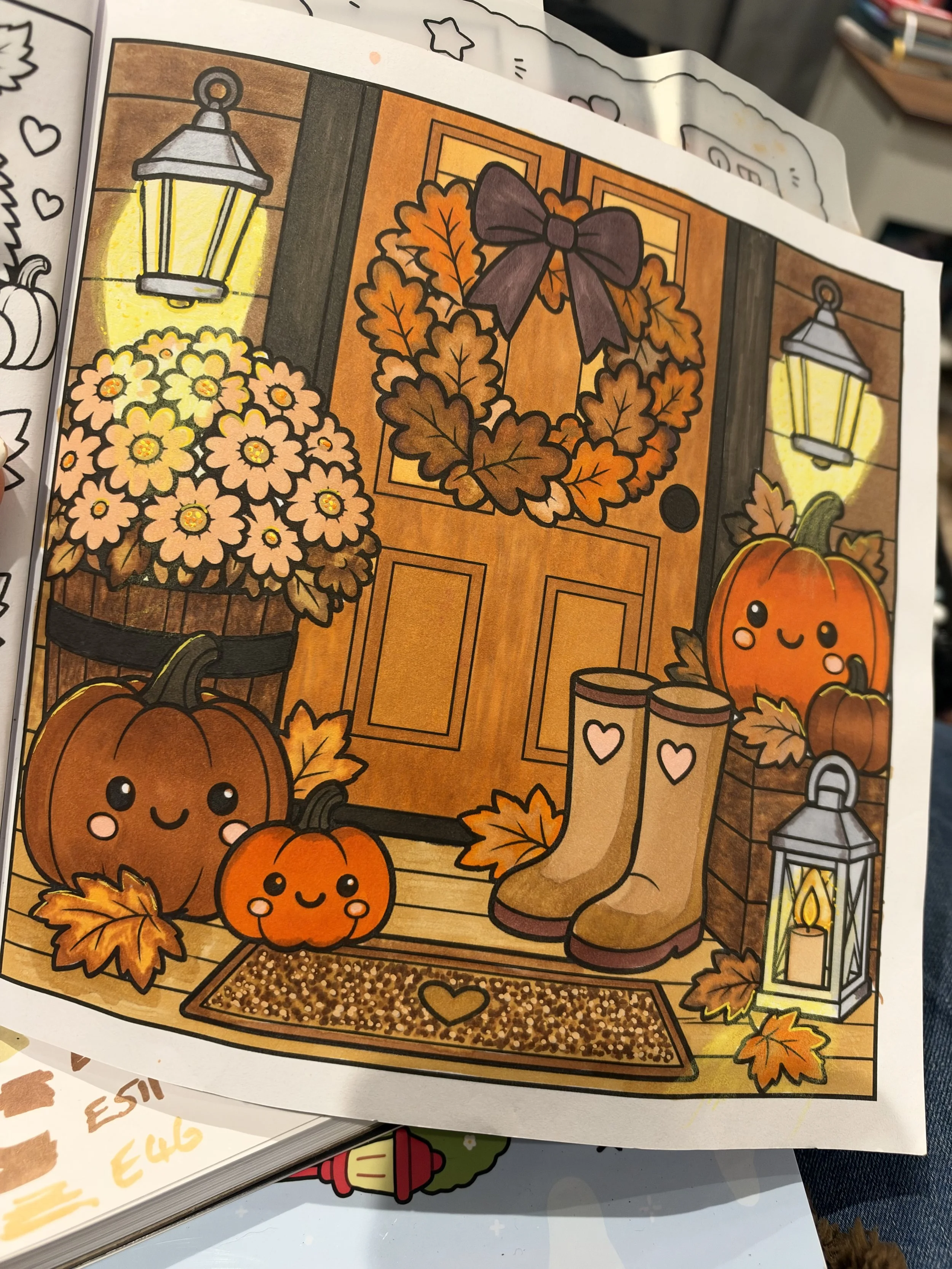
I’ve got my colouring books.
My lovely new pens.
I’ve been watching colouring videos and crafty videos.
And I’m having naps whenever I feel I need one.
That’s today’s grand plan.
And I’m rather enjoying it, apart from the cold, obviously.
There was a time when I might have felt guilty about spending a day like this.
I should be doing something useful.
I should be catching up on work.
I should be cleaning.
I should be making the most of my time.
And now?
I’m poorly.
I’m resting.
I’m doing something that brings me joy.
That is enough.
And can we talk about adult colouring for a minute?
Because I absolutely love it.
The pens.
The colours.
The blending.
The books.
The satisfaction of watching a picture come to life.
And yes, sometimes I spend almost as much time watching other people colour as I do colouring myself. 😂
There’s something wonderfully absorbing about it.
I can focus on choosing colours, experimenting with combinations and creating something without needing it to be particularly useful.
And I find it comforting.
Of course, everybody’s experience is different. Some people find colouring relaxing, others find it frustrating, and some would rather do absolutely anything else.
That’s fine.
The point is finding something that works for you.
And here’s something I find quite interesting.
When did we decide that colouring was for children?
Or playing?
Or making things simply because we enjoy them?
At what age did we apparently become too grown-up for joy?
For years, so much of adulthood seemed to be about responsibility, achievement and being sensible.
Work hard.
Pay the bills.
Keep the house tidy.
Be productive.
And somewhere in all of that, play could start to feel like something we had to justify.
Thankfully, there’s a wonderful creative community of adults embracing colouring, junk journalling, painting, crafting, doodling and all sorts of other things.
People making things simply because they want to.
No need to be good at it.
No need to sell it.
No need to turn it into a side hustle.
You’re allowed to enjoy something without making it productive.
I think that’s a rather lovely thing to remember.
Creativity, ADHD and giving ourselves permission
One of the things I love about creative activities is that they offer different ways of engaging with ourselves.
Sometimes words are difficult.
Sometimes our thoughts are racing.
Sometimes we’re emotionally exhausted.
And sometimes we don’t particularly want to analyse anything.
We want to colour a mushroom purple, give a frog a ridiculous hat or spend half an hour choosing which shade of pink looks best next to teal.
And why not?
Creativity can give us opportunities to explore, experiment, concentrate, express ourselves or simply enjoy being in the moment.
It’s one of the reasons I incorporate creative approaches into my therapy work.
Not because everybody needs to colour.
And certainly not because colouring magically fixes mental health difficulties.
Because people are different.
We connect with things differently.
We process experiences differently.
And sometimes doing something with our hands makes it easier to explore what’s happening in our minds.
Other times it’s simply enjoyable.
Both are perfectly good reasons.
Perhaps today is about listening to what you need
I think there’s a little lesson for me in all of this.
I’ve been unwell.
I’ve missed something I wanted to do.
My ADHD brain has wandered into some familiar feelings about not being good enough.
I’ve had a lovely reminder from a friend that I’m allowed to be human.
And now I’m resting.
Not because I’ve given up on anything.
Because it’s what I need today.
Tomorrow might look different.
And if it doesn’t, that’s okay too.
So perhaps, whether you have ADHD or not, you could ask yourself something today.
What do I actually need?
Not what you think you should need.
Not what somebody else would do.
Not what would look impressive on social media.
What would genuinely help you right now?
Maybe it’s sleep.
Maybe it’s company.
Maybe it’s asking somebody for reassurance.
Maybe it’s cancelling something.
Maybe it’s getting outside.
Maybe it’s making something.
Maybe it’s allowing yourself to have a difficult day without turning it into evidence that you’re failing at life.
And perhaps, if somebody you care about is having a difficult time, you could send them a little message.
Nothing elaborate.
A simple thinking of you might mean more than you realise.
As for me, I’m heading back under the covers with my pens.
And if tomorrow’s blog appears as planned, we’ll know my new scheduling discovery worked.
If it doesn’t?
Well, that’ll probably make an excellent subject for day five. 😂
Take gentle care,
Louise x
A little about working with me
I’m Louise, a psychotherapist, counsellor and ADHD coach who believes therapy doesn’t have to look clinical.
I work with people who are tired of feeling misunderstood, overwhelmed, not good enough or as though they’re constantly trying to fit into somebody else’s expectations.
We can talk, get creative, explore patterns, work practically or find a combination that suits you.
You don’t need to arrive with everything figured out.
And you certainly don’t need to pretend you’re okay when you’re not.
If you’d like to explore working together, I offer a free 15–20 minute WhatsApp video introductory call, with no obligation.
Wildfire Counselling & Therapy
🌿 wildfirecounsellingtherapy.co.uk
📧 louisemalyancounselling@gmail.com
📱 WhatsApp: 07540 843727