 Image 1 of 1
Behind the Mask creative workshop & kit 27th October 3.30pm
🎭 BEHIND THE MASK
An Experiential Creative Workshop
Exploring masking, belonging, protection and what it can cost us to hide parts of ourselves.
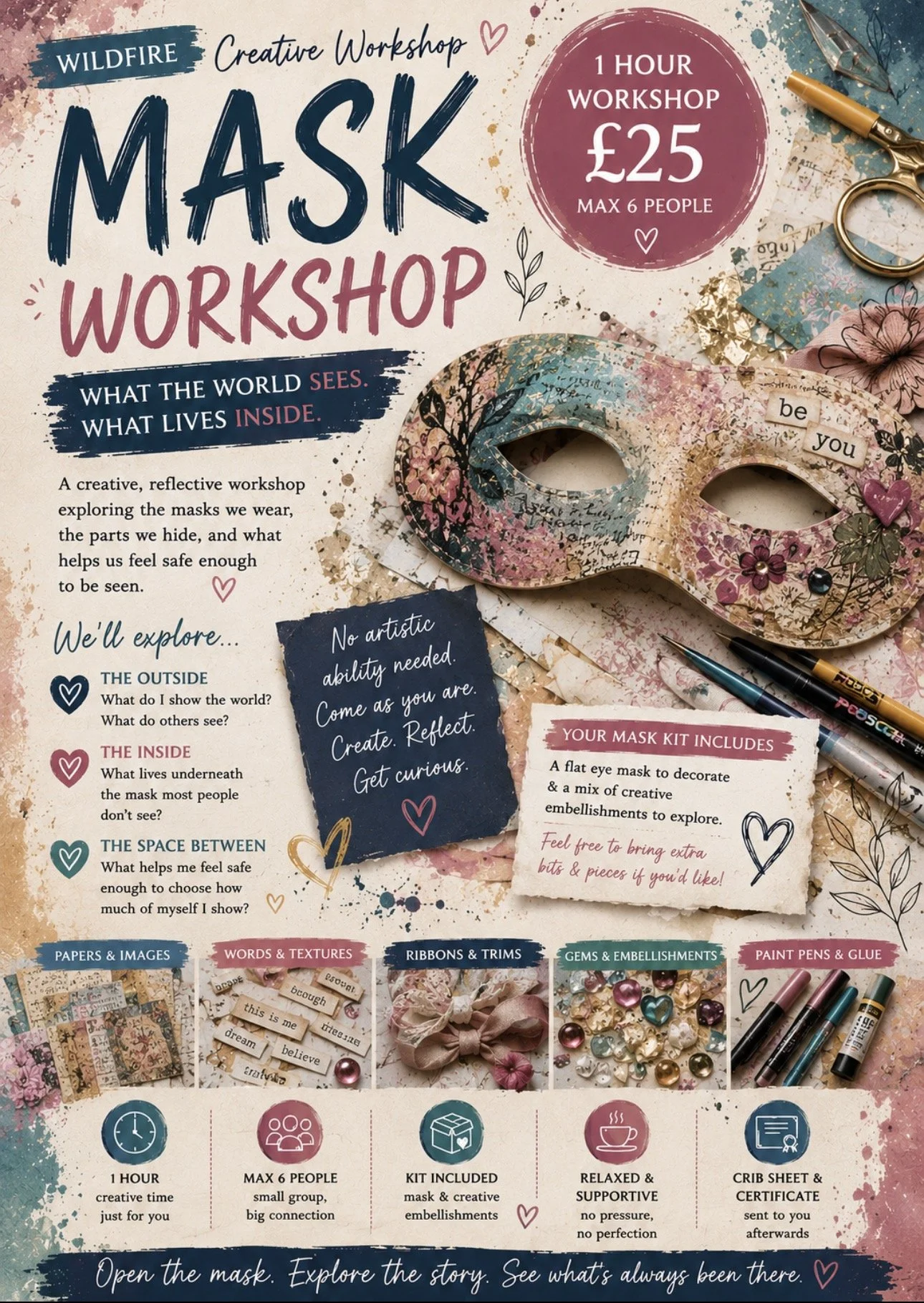
£25 | 1 hour | Online | Creative kit included
What does the world see when it looks at you?
The capable one.
The therapist who knows what they’re doing.
The funny one.
The calm one.
The helper.
The one who can cope.
The one who doesn’t need anything.
And what happens to the bits that don’t quite fit that version?
Behind the Mask isn’t really about decorating a mask.
The mask gives us another way into a conversation that can sometimes be incredibly difficult to have with words alone.
It’s an experiential workshop exploring what we show, what we hide, what we’ve learned is acceptable and what we fear might happen if more of us were actually seen.
And we’re going to experience that process ourselves before considering how we might use it with somebody sitting opposite us.
WHAT THE WORLD SEES
We’ll begin with the outside of our masks.
What do I allow people to see?
What am I known for?
Who have I learned to be around other people?
What parts of me feel acceptable?
What version of myself walks into the therapy room?
And perhaps:
What do people believe comes easily to me that actually takes quite a lot of effort?
Because masks aren’t necessarily lies.
Sometimes they’re roles we’ve become incredibly good at playing.
Sometimes they’re adaptations.
Sometimes they’re protection.
And sometimes they’re genuinely parts of who we are.
WHAT LIVES UNDERNEATH
Then we’ll turn the mask over.
This is the side the world doesn’t always see.
The doubt.
The sensitivity.
The anger.
The fear of getting it wrong.
The “I’m not actually as good at this as everyone thinks I am.”
The things we’ve been told are too much.
The things we learned weren’t enough.
The parts we’ve edited, softened, hidden or changed because somewhere along the way we learned:
This version of me belongs better.
We’ll explore questions such as:
What am I frightened people might see?
What do I work hard to hide?
Where did I learn that this part wasn’t acceptable?
What happens inside me when I feel different?
What does masking help me avoid?
What does maintaining it cost me?
This can naturally take us into shame, imposter feelings, neurodivergent masking, perfectionism, people pleasing, identity and belonging without deciding beforehand what somebody’s mask means.
AND THEN WE GET CURIOUS ABOUT SOMETHING IMPORTANT…
What has the mask done for me?
Because I don’t want us ripping masks off and declaring that everyone should “be their authentic self.”
That’s far too simplistic.
There may have been very good reasons we learned not to show everything.
A mask might have helped someone belong.
Avoid rejection.
Navigate school.
Survive a difficult home.
Stay employed.
Appear confident.
Feel safer.
Or simply decide which parts of themselves are private.
So rather than asking:
How do I get rid of my mask?
We’ll ask:
Do I still need it here?
Where can I soften it?
Who gets to see underneath?
When do I actively choose to wear it?
What would I need to feel safe enough to show a little more of myself?
Because authenticity isn’t about giving everybody access to us.
Choice matters.
THEN WE CHANGE CHAIRS
Towards the end of the workshop, we’ll step away from our own mask and look at the experience through the eyes of the practitioner.
What happened when you created rather than explained?
What did you instinctively put on the outside?
What was harder to place on the inside?
What did you leave off altogether?
Did anything surprise you?
And crucially:
What would it have felt like if I had told you what your mask meant?
We’ll consider how this intervention could be adapted with clients experiencing shame, low self-worth, masking, imposter syndrome, people pleasing, trauma, identity difficulties or a feeling that they don’t quite belong.
We’ll also think about curiosity versus interpretation, emotional safety, pacing and allowing the client to decide what, if anything, they want to share.
Because the mask belongs to them.
So does its meaning.
YOUR WILDFIRE KIT
Your kit will be posted to you before the workshop and will include your flat eye-mask style masks and a unique collection of creative embellishments and materials to get you started.
Every kit will be slightly different.
You’re also very welcome to raid your own creative stash and bring anything else you’re drawn to, pens, paint, fabric, photographs, words, magazines, ribbon, stickers, random scraps you’ve been saving for absolutely no identifiable reason… all welcome.
Afterwards you’ll receive a Wildfire reflective crib sheet and CPD attendance certificate.
Suitable for counsellors, psychotherapists, supervisors, trainees and other helping professionals.
No artistic ability required.
No pressure to disclose.
No requirement to take the mask off.
Don’t just learn the intervention. Sit in the other chair.
Experience what it asks of you first. Then consider what it might open for your clients.
🎭 BEHIND THE MASK
An Experiential Creative Workshop
Exploring masking, belonging, protection and what it can cost us to hide parts of ourselves.
£25 | 1 hour | Online | Creative kit included
What does the world see when it looks at you?
The capable one.
The therapist who knows what they’re doing.
The funny one.
The calm one.
The helper.
The one who can cope.
The one who doesn’t need anything.
And what happens to the bits that don’t quite fit that version?
Behind the Mask isn’t really about decorating a mask.
The mask gives us another way into a conversation that can sometimes be incredibly difficult to have with words alone.
It’s an experiential workshop exploring what we show, what we hide, what we’ve learned is acceptable and what we fear might happen if more of us were actually seen.
And we’re going to experience that process ourselves before considering how we might use it with somebody sitting opposite us.
WHAT THE WORLD SEES
We’ll begin with the outside of our masks.
What do I allow people to see?
What am I known for?
Who have I learned to be around other people?
What parts of me feel acceptable?
What version of myself walks into the therapy room?
And perhaps:
What do people believe comes easily to me that actually takes quite a lot of effort?
Because masks aren’t necessarily lies.
Sometimes they’re roles we’ve become incredibly good at playing.
Sometimes they’re adaptations.
Sometimes they’re protection.
And sometimes they’re genuinely parts of who we are.
WHAT LIVES UNDERNEATH
Then we’ll turn the mask over.
This is the side the world doesn’t always see.
The doubt.
The sensitivity.
The anger.
The fear of getting it wrong.
The “I’m not actually as good at this as everyone thinks I am.”
The things we’ve been told are too much.
The things we learned weren’t enough.
The parts we’ve edited, softened, hidden or changed because somewhere along the way we learned:
This version of me belongs better.
We’ll explore questions such as:
What am I frightened people might see?
What do I work hard to hide?
Where did I learn that this part wasn’t acceptable?
What happens inside me when I feel different?
What does masking help me avoid?
What does maintaining it cost me?
This can naturally take us into shame, imposter feelings, neurodivergent masking, perfectionism, people pleasing, identity and belonging without deciding beforehand what somebody’s mask means.
AND THEN WE GET CURIOUS ABOUT SOMETHING IMPORTANT…
What has the mask done for me?
Because I don’t want us ripping masks off and declaring that everyone should “be their authentic self.”
That’s far too simplistic.
There may have been very good reasons we learned not to show everything.
A mask might have helped someone belong.
Avoid rejection.
Navigate school.
Survive a difficult home.
Stay employed.
Appear confident.
Feel safer.
Or simply decide which parts of themselves are private.
So rather than asking:
How do I get rid of my mask?
We’ll ask:
Do I still need it here?
Where can I soften it?
Who gets to see underneath?
When do I actively choose to wear it?
What would I need to feel safe enough to show a little more of myself?
Because authenticity isn’t about giving everybody access to us.
Choice matters.
THEN WE CHANGE CHAIRS
Towards the end of the workshop, we’ll step away from our own mask and look at the experience through the eyes of the practitioner.
What happened when you created rather than explained?
What did you instinctively put on the outside?
What was harder to place on the inside?
What did you leave off altogether?
Did anything surprise you?
And crucially:
What would it have felt like if I had told you what your mask meant?
We’ll consider how this intervention could be adapted with clients experiencing shame, low self-worth, masking, imposter syndrome, people pleasing, trauma, identity difficulties or a feeling that they don’t quite belong.
We’ll also think about curiosity versus interpretation, emotional safety, pacing and allowing the client to decide what, if anything, they want to share.
Because the mask belongs to them.
So does its meaning.
YOUR WILDFIRE KIT
Your kit will be posted to you before the workshop and will include your flat eye-mask style masks and a unique collection of creative embellishments and materials to get you started.
Every kit will be slightly different.
You’re also very welcome to raid your own creative stash and bring anything else you’re drawn to, pens, paint, fabric, photographs, words, magazines, ribbon, stickers, random scraps you’ve been saving for absolutely no identifiable reason… all welcome.
Afterwards you’ll receive a Wildfire reflective crib sheet and CPD attendance certificate.
Suitable for counsellors, psychotherapists, supervisors, trainees and other helping professionals.
No artistic ability required.
No pressure to disclose.
No requirement to take the mask off.
Don’t just learn the intervention. Sit in the other chair.
Experience what it asks of you first. Then consider what it might open for your clients.