 Image 1 of 2
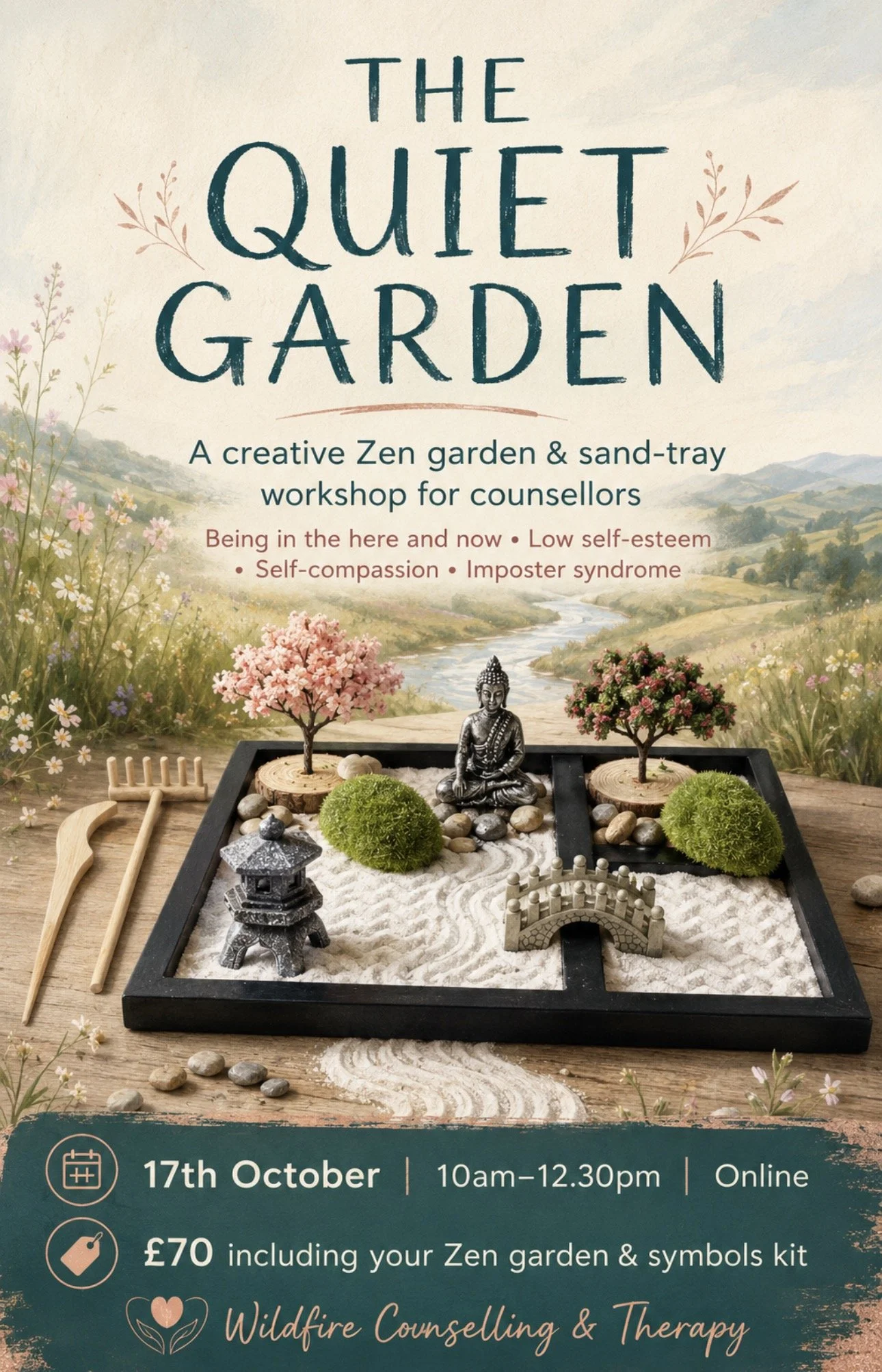 Image 2 of 2
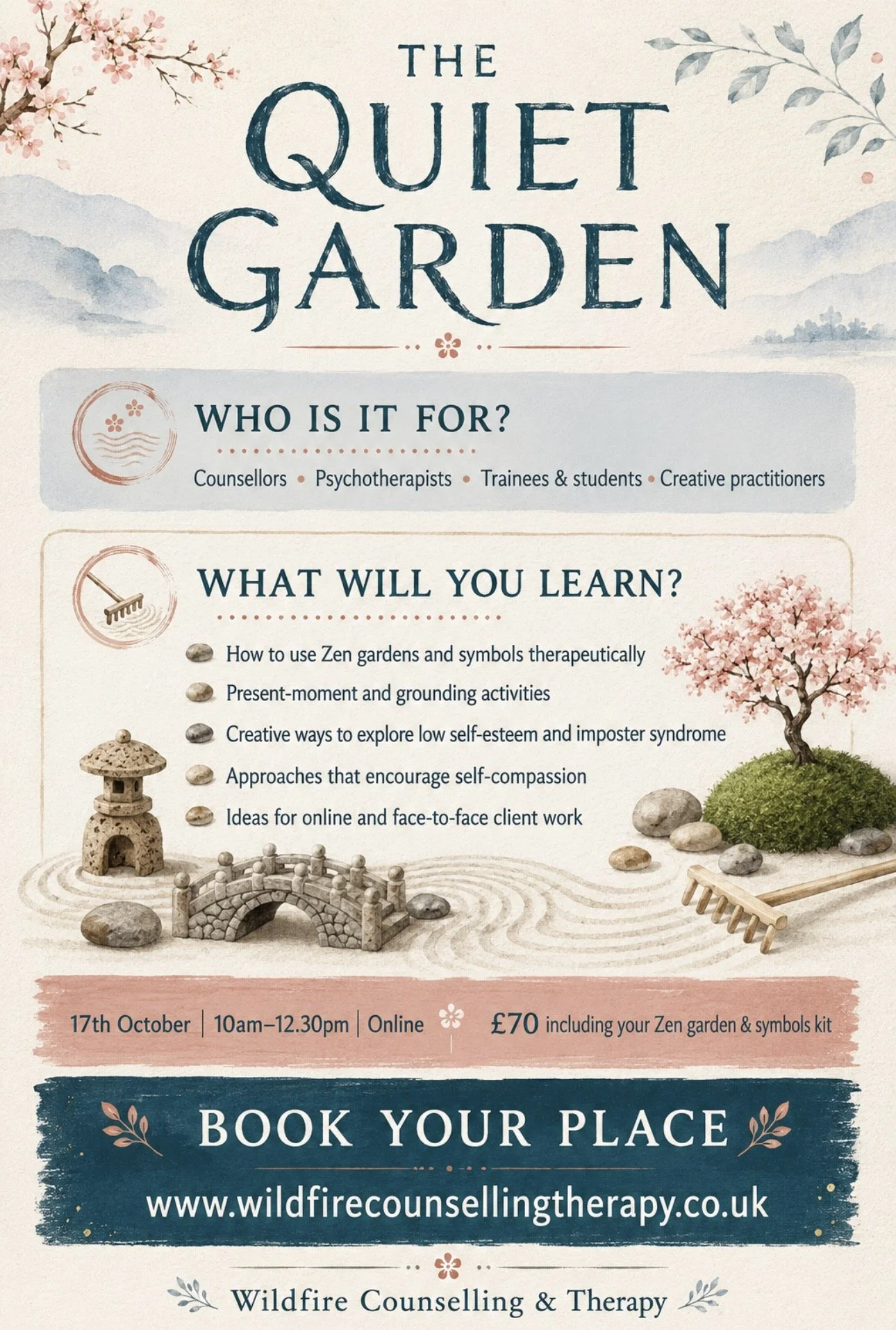
Quiet Garden sand tray workshop 17th October
ZEN GARDEN
When You Don’t Have the Answer
An Experiential Creative Workshop for Therapists
Exploring imposter syndrome, uncertainty, self-compassion and what happens when we stop trying to get it right.
£70 | 2.5 hours | Online | Zen Garden kit included
What happens when the therapist doesn’t know?
We sit with people every day who want answers.
Why am I like this?
What should I do?
Why isn’t therapy working?
When will I feel better?
And somewhere underneath, therapists can be carrying questions of our own:
Should I know what to do here?
Am I doing enough?
What if I’m missing something?
What if another therapist would handle this better?
What if they realise I don’t actually know what I’m doing?
That uncomfortable space of not knowing can very quickly wake up imposter feelings, self-doubt and the urge to do something.
So this workshop isn’t really about making a beautiful Zen Garden.
It’s about what happens inside us when there isn’t an obvious answer.
FIRST, YOU’LL SIT IN THE OTHER CHAIR
Before we think about techniques or how you might use sand and symbols with clients, you’re going to experience the process yourself.
Using your own mini Zen Garden, sand and collection of symbols, we’ll explore what happens when you’re invited to create without being told what the finished result should look like.
You may know exactly what you want to do.
You might stare at the sand thinking:
What the hell am I supposed to make?
Perfect.
That’s information too.
We’ll notice the urge to get it right, compare, make something meaningful, understand immediately or wonder whether everybody else somehow knows something we don’t.
Rather than rushing past those responses, we’ll get curious about them.
THE PRESSURE TO KNOW
We’ll explore some of the quieter expectations therapists can carry:
I should know what to say.
I should be further along by now.
A good therapist wouldn’t feel stuck.
Everyone else seems more confident than me.
I need to give my client something useful.
And we’ll consider an important question:
Who decided what a “good enough therapist” looks like?
Not to reassure ourselves that we’re brilliant.
Not to replace uncomfortable thoughts with positive affirmations.
But to understand the measuring stick we’re using — and whether it’s actually ours.
WHEN THE SAND CHANGES
One of the things I love about working with sand is that nothing has to stay where you put it.
Move something.
Take it away.
Bury it.
Make space.
Smooth everything over.
Start again.
Or leave the bloody thing exactly where it is.
We’ll use that physical process to explore:
What am I holding onto because I think I should?
What am I trying too hard to solve?
Where could I make a little more space?
What happens when I change something?
What happens when I don’t?
And perhaps:
Can I tolerate not knowing what this means yet?
Because sometimes our clients need us to stay alongside uncertainty rather than rush in and remove it.
SELF-COMPASSION WITHOUT THE BULLSHIT
We’ll also explore what happens when the person struggling with not being enough is us.
Not with forced positivity.
Not “tell yourself you’re an amazing therapist.”
And definitely not pretending self-doubt disappears once you’ve got enough qualifications.
Instead, we’ll explore a more believable kind of self-compassion.
Can I notice that I’m uncertain without turning uncertainty into incompetence?
Can I make a mistake without making the mistake mean something about my worth?
Can I recognise what I know and remain open to what I don’t?
Can I ask for help without using that as evidence that I’m a fraud?
Can I be learning and still belong here?
That’s the space I want us to explore.
THEN WE CHANGE CHAIRS
This is where the workshop becomes directly relevant to your clinical practice.
After experiencing the process personally, we’ll step back into our role as therapists and examine what actually happened.
What was it like being given choice?
Did you immediately look for instructions?
Did you worry about creating the “right” thing?
Did a symbol mean something different once you placed it in the sand?
What happened when you moved something?
What did you leave out?
What did you want to explain?
What did you want to keep private?
And perhaps most importantly:
What would it have felt like if I had told you what your garden meant?
We’ll explore the difference between curiosity and interpretation and how easily a therapist can accidentally take ownership of a client’s metaphor.
The sand belongs to them.
The symbols belong to them.
So does the meaning.
TAKING IT INTO THE THERAPY ROOM
You’ll leave with practical ideas for adapting sand, symbols and miniature Zen Gardens with clients experiencing themes such as:
imposter syndrome
low self-worth
shame
perfectionism
anxiety and overwhelm
feeling stuck
uncertainty and decision-making
identity and belonging
transitions and change
difficulty finding words
self-compassion
the need for control
And it doesn’t have to become a whole “sand tray session”.
One symbol can be enough.
One movement can become the work.
You might explore:
“Show me what stuck looks like.”
“Choose something that represents the pressure you’re carrying.”
“Where would you put yourself in this garden?”
“What would happen if that moved?”
“Is there anything missing?”
Or simply:
“What do you notice?”
We’ll consider how to use prompts without leading, how to resist interpreting symbolism, when silence is useful, and how to allow clients to change, destroy or leave their creation without needing to explain it.
YOUR WILDFIRE ZEN GARDEN KIT
Your kit will be posted to you before the workshop and includes your own mini Zen Garden, sand and a unique collection of symbols and creative resources to use during our time together and afterwards in your own practice.
Each collection may be be slightly different - because there doesn’t need to be one prescribed set of objects for meaningful work to happen.
You’ll also receive a reflective crib sheet and CPD attendance certificate following the workshop, giving you prompts, considerations and ideas you can revisit when adapting the work for clients.
Suitable for counsellors, psychotherapists, supervisors, trainees and other helping professionals.
No previous sand tray experience needed.
No artistic ability required.
No perfect garden expected.
And absolutely no requirement to know what you’re doing before you’ve begun.
Don’t just learn the intervention. Sit in the other chair.
Experience uncertainty. Notice what you do with it. Then consider what that teaches you about sitting alongside it with your clients.
Because perhaps being a good therapist isn’t about always knowing what comes next.
Perhaps it’s about becoming a little more comfortable staying curious when you don’t.
ZEN GARDEN
When You Don’t Have the Answer
An Experiential Creative Workshop for Therapists
Exploring imposter syndrome, uncertainty, self-compassion and what happens when we stop trying to get it right.
£70 | 2.5 hours | Online | Zen Garden kit included
What happens when the therapist doesn’t know?
We sit with people every day who want answers.
Why am I like this?
What should I do?
Why isn’t therapy working?
When will I feel better?
And somewhere underneath, therapists can be carrying questions of our own:
Should I know what to do here?
Am I doing enough?
What if I’m missing something?
What if another therapist would handle this better?
What if they realise I don’t actually know what I’m doing?
That uncomfortable space of not knowing can very quickly wake up imposter feelings, self-doubt and the urge to do something.
So this workshop isn’t really about making a beautiful Zen Garden.
It’s about what happens inside us when there isn’t an obvious answer.
FIRST, YOU’LL SIT IN THE OTHER CHAIR
Before we think about techniques or how you might use sand and symbols with clients, you’re going to experience the process yourself.
Using your own mini Zen Garden, sand and collection of symbols, we’ll explore what happens when you’re invited to create without being told what the finished result should look like.
You may know exactly what you want to do.
You might stare at the sand thinking:
What the hell am I supposed to make?
Perfect.
That’s information too.
We’ll notice the urge to get it right, compare, make something meaningful, understand immediately or wonder whether everybody else somehow knows something we don’t.
Rather than rushing past those responses, we’ll get curious about them.
THE PRESSURE TO KNOW
We’ll explore some of the quieter expectations therapists can carry:
I should know what to say.
I should be further along by now.
A good therapist wouldn’t feel stuck.
Everyone else seems more confident than me.
I need to give my client something useful.
And we’ll consider an important question:
Who decided what a “good enough therapist” looks like?
Not to reassure ourselves that we’re brilliant.
Not to replace uncomfortable thoughts with positive affirmations.
But to understand the measuring stick we’re using — and whether it’s actually ours.
WHEN THE SAND CHANGES
One of the things I love about working with sand is that nothing has to stay where you put it.
Move something.
Take it away.
Bury it.
Make space.
Smooth everything over.
Start again.
Or leave the bloody thing exactly where it is.
We’ll use that physical process to explore:
What am I holding onto because I think I should?
What am I trying too hard to solve?
Where could I make a little more space?
What happens when I change something?
What happens when I don’t?
And perhaps:
Can I tolerate not knowing what this means yet?
Because sometimes our clients need us to stay alongside uncertainty rather than rush in and remove it.
SELF-COMPASSION WITHOUT THE BULLSHIT
We’ll also explore what happens when the person struggling with not being enough is us.
Not with forced positivity.
Not “tell yourself you’re an amazing therapist.”
And definitely not pretending self-doubt disappears once you’ve got enough qualifications.
Instead, we’ll explore a more believable kind of self-compassion.
Can I notice that I’m uncertain without turning uncertainty into incompetence?
Can I make a mistake without making the mistake mean something about my worth?
Can I recognise what I know and remain open to what I don’t?
Can I ask for help without using that as evidence that I’m a fraud?
Can I be learning and still belong here?
That’s the space I want us to explore.
THEN WE CHANGE CHAIRS
This is where the workshop becomes directly relevant to your clinical practice.
After experiencing the process personally, we’ll step back into our role as therapists and examine what actually happened.
What was it like being given choice?
Did you immediately look for instructions?
Did you worry about creating the “right” thing?
Did a symbol mean something different once you placed it in the sand?
What happened when you moved something?
What did you leave out?
What did you want to explain?
What did you want to keep private?
And perhaps most importantly:
What would it have felt like if I had told you what your garden meant?
We’ll explore the difference between curiosity and interpretation and how easily a therapist can accidentally take ownership of a client’s metaphor.
The sand belongs to them.
The symbols belong to them.
So does the meaning.
TAKING IT INTO THE THERAPY ROOM
You’ll leave with practical ideas for adapting sand, symbols and miniature Zen Gardens with clients experiencing themes such as:
imposter syndrome
low self-worth
shame
perfectionism
anxiety and overwhelm
feeling stuck
uncertainty and decision-making
identity and belonging
transitions and change
difficulty finding words
self-compassion
the need for control
And it doesn’t have to become a whole “sand tray session”.
One symbol can be enough.
One movement can become the work.
You might explore:
“Show me what stuck looks like.”
“Choose something that represents the pressure you’re carrying.”
“Where would you put yourself in this garden?”
“What would happen if that moved?”
“Is there anything missing?”
Or simply:
“What do you notice?”
We’ll consider how to use prompts without leading, how to resist interpreting symbolism, when silence is useful, and how to allow clients to change, destroy or leave their creation without needing to explain it.
YOUR WILDFIRE ZEN GARDEN KIT
Your kit will be posted to you before the workshop and includes your own mini Zen Garden, sand and a unique collection of symbols and creative resources to use during our time together and afterwards in your own practice.
Each collection may be be slightly different - because there doesn’t need to be one prescribed set of objects for meaningful work to happen.
You’ll also receive a reflective crib sheet and CPD attendance certificate following the workshop, giving you prompts, considerations and ideas you can revisit when adapting the work for clients.
Suitable for counsellors, psychotherapists, supervisors, trainees and other helping professionals.
No previous sand tray experience needed.
No artistic ability required.
No perfect garden expected.
And absolutely no requirement to know what you’re doing before you’ve begun.
Don’t just learn the intervention. Sit in the other chair.
Experience uncertainty. Notice what you do with it. Then consider what that teaches you about sitting alongside it with your clients.
Because perhaps being a good therapist isn’t about always knowing what comes next.
Perhaps it’s about becoming a little more comfortable staying curious when you don’t.