The World Didn’t Fall Apart (Because I Chose the Sun)
Sometimes rebellion looks like cancelling a meeting and standing in a field with daffodils on a Wednesday.
The rain has been relentless lately.
Grey mornings. Heavy skies. That damp chill that creeps into your shoulders and seems to whisper, “Stay small. Stay inside.” For a lot of people, it’s matched how things have felt emotionally too. Darker days, metaphorically and physically. Long stretches of just getting through. I have certainly felt the impact of both.
Then today, the sun made an appearance.
Not a dramatic, cinematic entrance. Just light breaking through cloud like it had quietly decided we’d had enough.
It was Wellbeing Wednesday. And by some rare alignment of diaries, I had 2 whole hours free in the middle of the day. An hour either side of wellbeing Wednesday.
That meant…..Three hours.
Now, old programming would have said: Be productive. Catch up. Get ahead. Do admin. Fill the space.
Instead, I cancelled wellbeing Wednesday, told the truth, and went out into the sunshine with my husband and the puppies.
I told the group of therapists, 4.5k of them, exactly what I was doing. I said I was being human. That I was choosing self-care. That I was taking advantage of the light.
Why lie?
There’s something powerful about modelling boundaries instead of preaching them. As therapists, we talk about nervous system regulation, burnout, sustainability. But if we can’t occasionally say, “The sun is out and I’m going to stand in it,” what are we demonstrating?
The world did not fall apart.
It did not crumble.
Emails did not combust.
The profession did not collapse because one therapist chose sunlight.
Instead, something beautiful happened.
I invited those therapists to use the time too. To get outside if they could. To look up. To take photos. To reflect.
And the pictures that came back, stunning.
Daffodils blazing yellow against green.
Deer caught mid-step in quiet fields.
Wild garlic carpeting woodland floors.
Wide skies.
Soft light.
Early spring lambs wobbling on new legs.
There is something deeply regulating about seasonal change. Our bodies respond to light. Sun on your arms and face isn’t indulgence, it’s biology. Vitamin D shifts. Circadian rhythms recalibrate. The nervous system reads brightness as safety.
Standing there, feeling warmth on my skin after weeks of grey, I could feel how much my own system needed it.
Sometimes we forget that we are mammals before we are professionals.
Rain and darkness affect us.
Long winters, literal and emotional, take a toll.
We are not machines designed for endless output under fluorescent lighting.
Self-care isn’t always bubble baths and candles. Sometimes it’s cancelling something non-urgent because the sun has finally broken through and your body says, “Now. Go now.”
There’s also something deeper here.
So many of us have been in darker times, grief, stress, global uncertainty, personal struggles. When the light appears, even briefly, we have to let ourselves step into it. Not wait until everything is perfect. Not earn it through exhaustion.
Just step forward.
What I loved most was the collective permission. One honest admission, “I’m choosing sunshine”, opened space for others to do the same. And instead of judgement, there was beauty. Reflection. Connection.
That’s what happens when we stop pretending we’re endlessly resilient.
We show that boundaries are real.
We show that rest is responsible.
We show that prioritising ourselves doesn’t equal selfishness.
And crucially, the world doesn’t fall apart when we do.
The lambs were still there.
The daffodils were still standing.
The emails were still waiting.
Life carried on.
But I felt different.
Lighter.
More present.
More alive.
Sometimes the most radical thing you can do in a productivity-obsessed culture is stand in the sun in the middle of a Wednesday and say, “This matters.”
Dark seasons come.
Rain falls.
There are heavy times.
And then the light returns.
When it does, look up.
Step into it.
Let it land on your skin.
The work will still be there tomorrow. Wellbeing Wednesday will happen again.
And me? I feel absolutely refreshed and dare I say it? Warm & glowing.
Stay safe, stay connected & take gentle care
Louise x
If this resonates, you’re not on your own.
Pull up a chair.
I've got you.
If you’re tired of carrying it alone, I’m here.
We can take it at your pace. No pressure. No fixing. Just space to be human.
📧 louisemalyancounselling@gmail.com
🌐 www.wildfirecounsellingtherapy.co.uk
Free, no-obligation intro chat, just to see if we’re the right fit.


The world's gone mad.
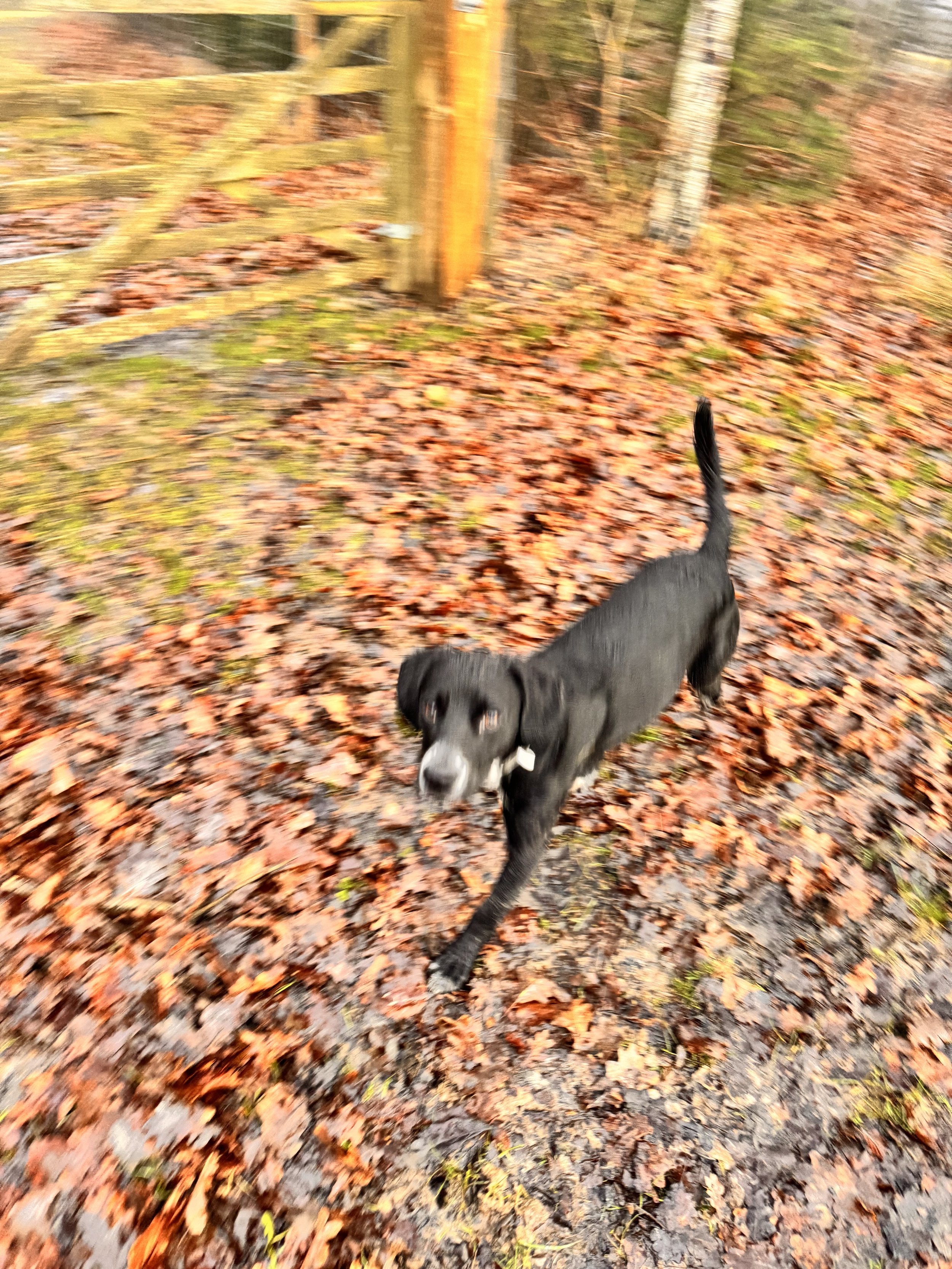
I took the puppies out earlier.
Sunshine. Actual, proper sunshine. The kind that makes you squint and forgive the British weather for at least twenty minutes.
They were completely unbothered by the state of the world.
No awareness of politics.
No scrolling.
No existential dread.
Just grass. Smells. A stick that absolutely had to be carried at full speed for no clear reason.
And I stood there watching them, thinking about how many conversations I’ve had recently that begin with:
“Everything feels mad.”
“It’s all too much.”
“I don’t know what’s going to happen.”
“I can’t switch off.”
Yes. It is crazy out there.
War. Cost of living. Climate anxiety. Political division. Social media shouting matches. Constant access to distressing news 24/7. Our nervous systems were not designed to process global catastrophe before breakfast.
Your brain evolved to track threats in your immediate environment, rustling bushes, tribal conflict, food scarcity. Now it’s trying to metabolise global instability from a glowing rectangle in your hand while you’re also replying to emails and remembering to defrost chicken.
Of course people feel on edge.
This doesn’t mean you’re weak.
It means you’re wired.
But here’s where the sunshine and the puppies come in.
There’s a concept in psychology called the “circle of control.” It’s simple, but powerful.
Inside the circle:
Your actions.
Your boundaries.
Your responses.
Your routines.
Your care for your own nervous system.
Outside the circle:
Global politics.
Stock markets.
Other people’s behaviour.
The weather.
The internet’s latest outrage.
When we spend too much time mentally wrestling with what’s outside our circle, our anxiety ramps up. Because the brain hates unsolved problems, and these are unsolvable at an individual level.
Standing in that sunshine, I realised something again.
The puppies were firmly inside their circle.
Warmth.
Movement.
Connection.
Curiosity.
That doesn’t mean we ignore reality. It means we balance awareness with regulation.
A few gentle strategies I share with clients when the world feels overwhelming:
Limit your intake. You are allowed to be informed without being saturated. Choose when and how you consume news. Not first thing. Not last thing. Your nervous system deserves bookends of safety.
Name what is yours. Literally say, “This is outside my control.” It sounds simple. It works because it helps your brain categorise the threat.
Ground physically. Sunshine. Fresh air. Cold water on your wrists. Walking the dog. Moving your body. The nervous system resets through the body, not through overthinking.
Create micro-stability. Small daily anchors: morning coffee ritual, evening walk, a playlist, lighting a candle. Predictability calms the brain when the world feels unpredictable.
Look up. I mean that quite literally. When we’re anxious, our posture folds in and our gaze drops to screens. Lift your eyes. Take in the sky. Your brain reads open space as safety.
And maybe most importantly, connect. Anxiety thrives in isolation. Talk about what’s coming up for you. You don’t have to carry global fear alone.
It is wild out there.
But you are allowed to experience warmth.
You are allowed to laugh at your dog being ridiculous.
You are allowed to rest.
You are allowed to focus on your circle.
Standing there in the sunshine today, I thought: this is resistance too.
Regulating your nervous system in chaotic times isn’t avoidance.
It’s strength.
It’s sustainability.
It’s how we stay steady enough to show up well in the parts of the world we can influence.
The world may be spinning.
But right now, there is sunlight somewhere.
There is fresh air.
There is something within your circle that you can tend to.
Start there.
Even the puppies know that’s enough for today.
Stay safe, stay connected & take gentle care
Louise x
If this resonates, you’re not on your own.
Pull up a chair.
I've got you.
If you’re tired of carrying it alone, I’m here.
We can take it at your pace. No pressure. No fixing. Just space to be human.
📧 louisemalyancounselling@gmail.com
🌐 www.wildfirecounsellingtherapy.co.uk
Free, no-obligation intro chat, just to see if we’re the right fit.

This image, and Punch’s story, stopped me.
Those viral clips of him sitting alone, clutching his little orange teddy like it was the only thing in the world he could trust. Watching the troop from a distance. Not quite in. Not quite out. Just… surviving.
And now? He’s inching closer.
Not dramatically.
Not all at once.
Not “fixed.”
Just a few inches nearer than yesterday.
For a Japanese macaque, where hierarchy matters and belonging is everything, that’s not small. That’s courage.
And honestly? It made me think about us.
Trauma and the Nervous System: Sitting on the Edge of the Group
When humans experience trauma, abandonment, neglect, loss, abuse, chronic stress, our nervous systems adapt to survive.
Sometimes that looks like:
Sitting on the edge of relationships
Watching but not joining
Clutching tightly to the one thing that feels safe
Trusting objects more than people
Staying hyper-aware of everyone’s movements
We might look “fine.”
We might even function well.
But internally, we’re sitting slightly apart from the troop.
Punch holding his teddy isn’t weakness.
It’s regulation.
That toy is his safety cue. His nervous system anchor. The one thing that says, I’m not completely alone.
Humans do this too.
We hold onto coping strategies. Routines. Busyness. Work. A relationship. A therapist. Sometimes even anxiety itself, because at least it’s familiar.
And here’s the important part:
We don’t rip the teddy away.
Therapy Isn’t Forcing You Into the Circle
In therapy, we don’t drag someone into the middle of the group and say, “You’re safe now. Behave like it.”
That would overwhelm the nervous system.
Instead, we sit with you while you hold the teddy.
We let your body learn, slowly, that connection doesn’t equal danger.
We co-regulate.
We notice.
We pause.
We go at your pace.
Little by little, your nervous system begins to update.
You inch closer.
Not because someone pushed you.
Not because you “should.”
But because something inside feels just a tiny bit safer.
That’s healing.
The Quiet Privilege of Being a Therapist
There’s something deeply humbling about this work.
We often don’t see what happens next.
There isn’t a dramatic reunion scene.
No standing ovation.
No final episode where everything wraps up beautifully.
Sometimes it’s just a wave.
A goodbye.
A “thank you.”
And then you go back to your troop.
You build friendships.
You leave a relationship that wasn’t safe.
You start speaking up.
You apply for the job.
You rest.
You belong.
We don’t always get to witness the full circle forming.
But what a privilege it is to have sat beside you while you were still holding the teddy.
Not for us.
For you.
Joining Your Own Tribe
Punch isn’t fully inside the circle yet.
But he’s not outside of it anymore either.
That’s everything.
Belonging doesn’t roar.
It inches.
And maybe that’s what therapy is really about, not changing who you are, but helping your nervous system feel safe enough to join your tribe.
To find:
Your people
Your spaces
Your version of safety
Your own “teddy” … healthy, grounding, supportive
And maybe even a therapist who truly gets you.
Because when you feel understood, something softens.
You don’t have to perform.
You don’t have to fight for position.
You don’t have to sit quite so far away.
You can move a little closer.
And sometimes, a few inches closer than yesterday is the bravest thing you’ll ever do. 🐒✨
stay safe, stay connected & take gentle care
Louise x
If this resonates, you’re not on your own.
Pull up a chair.
I've got you.
If you’re tired of carrying it alone, I’m here.
We can take it at your pace. No pressure. No fixing. Just space to be human.
📧 louisemalyancounselling@gmail.com
🌐 www.wildfirecounsellingtherapy.co.uk
Free, no-obligation intro chat, just to see if we’re the right fit.


Human First
Being solely self-employed is both liberating and terrifying.
I love the autonomy. I love that I’m my own boss. I set the rules. I work in a way that feels authentic, flexible, aligned with who I am.
And I still have to pay the bills.
This past year has been one of the hardest of my life. I’d signed up and paid for further courses & qualifications. I’d invested in conferences. I was growing the business, building momentum, stretching myself.
Then tragedy struck.
My mum got sick.
And then she died.
What followed was a period of pain I can’t quite put into tidy words. I couldn’t work like I had before. I didn’t have savings to stop working entirely. So I existed in that impossible space so many self-employed people know, grieving deeply, yet still needing to function.
I had to take time out. For grief. For self-care. For survival.
And then, as if that wasn’t enough, I experienced seven more bereavements.
Seven.
People and pets who were in my life last year are not in it now. My world has shifted in ways I’m still integrating. It’s been a roller coaster of shock, anger, disbelief, exhaustion, numbness, love, longing.
And yet.
There are people in my life now who weren’t here last year, and they have made an enormous impact.
There are people who were already here who stepped up in ways I will never forget.
My husband got my need for no xmas decorations, no celebration. I couldnt. I just couldnt.
My daughter respected and understood cancellations.
My supervisor checked in most days. Helped with admin. Held me emotionally. Knew what I needed yet never assumed. She met me where I was at.
A friend and colleague sat with me day after day, letting me be up, down, inconsistent, messy. She just intuitively knew. Showed me love in ways I didnt even know I needed.
Another friend took me dancing and listened to me rant late into the night.
Someone sat with me through the night in a grief group online and understood the confusion and anger. She got why I was there and respected my feelings and the place I was in. Didnt put her stuff on me.
A new friend laughed and cried with me night after night and got how ADHD & trauma sits and respected my needs without words. She got it.
My siblings and I talked, created, laughed through tears, instinctively knowing we needed connection.
My accountant removed stress from my shoulders and quite literally held my hand through the business side when I couldn’t think straight.
And Arthur, my puppy. Lets just say, today is possible thanks to him. He gave me a reason to get up.
None of these people tried to fix it.
They didnt tell me everything would be okay, because it wasn’t.
They heard me.
They held me.
They let me feel.
That is everything.
A few months into a new year, I can say this honestly: I have good days. I have good hours. I have sadder days and sadder hours.
That is natural.
Grief doesn’t shrink. The loss doesn’t become less sad. What changes is the space around it. Life grows around the grief. The world shifts. New experiences enter. We evolve whether we want to or not.
I have begun to gently invite that in. To create a new normal that honours what was and makes space for what is becoming.
And in doing that, I’ve realised something profound.
This is exactly what we do in therapy.
We don’t fix.
We don’t rush.
We don’t tell someone they should be over it.
We sit. We validate. We evolve alongside.
Watching my clients grow warms my heart in ways that are hard to describe. Their wins matter. Their setbacks matter. Their honesty matters. I will never shame them for how they feel, and I won’t pretend I’m some emotionless observer either.
I am human first.
I’ve journalled publicly about my grief. I’ve spoken about it. Thousands of people have read, watched, messaged, shared their own stories. There is no shame in that. It has helped me. And it has helped others feel less alone.
This past year has made my work deeper. Richer. More embodied. It has modelled boundaries, stepping back when needed. It has modelled self-care, not as a luxury, but as necessity.
On a plane, we’re told to put the oxygen mask on ourselves before helping even our children. Not because we’re selfish. Because we’re no use to anyone if we can’t breathe.
That applies to life too.
Yes, I’m a psychotherapist.
And I am a human first.
Exactly as it should be.
So this is gratitude, from the bottom of my heart, to the people who carried me when I couldn’t carry myself.
And it’s also a message to you, if you are struggling:
It is imperative that you are okay first.
There is no shame in reaching out.
There is no weakness in needing support.
There is strength in allowing yourself to be held.
You are so important.
Stay safe.
Stay connected.
Take gentle care.
Louise x
If this resonates, you’re not on your own.
Pull up a chair.
I've got you.
If you’re tired of carrying it alone, I’m here.
We can take it at your pace. No pressure. No fixing. Just space to be human.
📧 louisemalyancounselling@gmail.com
🌐 www.wildfirecounsellingtherapy.co.uk
Free, no-obligation intro chat, just to see if we’re the right fit.


Finding Your Tribe (Even If It Takes Until Your 40s and beyond)
Wednesday wellbeing got me thinking about tribe. About the people who get you. The ones who don’t try to sand you down into something more convenient.
My brain runs at a million miles an hour. Always has.
I juggle multiple projects and love the buzz of it, yet sitting doing nothing can cause me physical and mental discomfort. Then, out of nowhere, I’ll crash and sleep for 15 hours. Or take a three-hour daytime nap like my body has just pulled the plug. Then live on 4-6 hours sleep like i’ve had the best rest ever.
Some days sound feels unbearable. Other days I want music loud and immersive.
I get overwhelmed by the smallest admin task, yet happily hold multiple projects complex emotional work with clients all day long.
I am a walking contradiction.
And for years, I felt shame about that.
I felt shame for being super capable in some areas and completely stuck in others. For thinking fast. For talking fast. For jumping to step 22 when someone else is still working out step one.
Joe Bloggs is carefully reading the instructions. I’ve already reorganised the system and colour-coded it.
That didn’t always go down well.
At school, my ADHD was obvious, but not obvious enough. I talked too much. I “wasn’t applying myself.” I needed to try harder.
Maths? Hard. So I learned by rote. Then one teacher showed me visual ways to break things down and something clicked. Mental arithmetic? My thing. Numbers neatly lined up in a spreadsheet with symbols? Absolutely not.
Contradiction again.
And then there was Mr Short, my science teacher when I was 11–14. He demonstrated everything visually. Colours. Diagrams. Experiments. He saw how I learned. He adjusted. And I thrived.
That’s what being seen does.
But there were plenty who didn’t see me. Who criticised. Who tried to mould me into something more “neurotypical,” more compliant, less intense. The criticism over the years nearly broke me. Very nearly killed me.
Now?
Bollocks to the lot of them.
And thank you, from the bottom of my heart, to the ones who saw my worth before I could and when i couldn’t. The ones who encouraged, championed, and stayed when I was chaotic, messy, growing when i felt like chucking in the towel.
Because finding your tribe changes everything.
I didn’t find mine until my 40s. A creative community of incredible women and some men too!! who love deeply, challenge kindly, and celebrate wins like they’re their own. They held me through the darkest days and clapped the loudest when things went right.
It’s never too late to find your people.
I am a round peg in a square world, and I’m completely okay with that now.
I feel emotion deeply. I work on myself constantly. I evolve. I question. I grow. And none of that would have happened without relationship.
That’s why I work the way I do.
I’m passionate about what I do, and I’m bloody good at it too. However, not every counsellor is for every client. And that’s okay.
Choice matters.
I didn’t feel like I had choice once, and the pain that caused is indescribable. So I want people to know they do. You get to decide who sits opposite you. You get to decide what feels safe.
My clients mean the world to me. I feel their pain. I celebrate their breakthroughs. Sometimes my heart feels like it might burst when they realise their own strength.
And I also know autonomy matters. They have to get there themselves. I can walk alongside, guide, reflect, yet I don’t take over. That’s respect.
The same goes for supervision. It isn’t a tick box. It’s support for all of you, your work, your doubts, your business, your ambition. A space to grow, not perform.
I want people to succeed. I want them to expand. I want to give what was given to me, belief, encouragement, space to be different without being diminished.
If you’re still looking for your tribe, still feeling like the odd one out, still wondering why you can do some things brilliantly and others feel impossible, you’re not broken.
You might just be wired differently.
And there are people out there who will get you.
Therapy can help you hold the dark days while you search. It can help you shed the shame that was never yours. It can help you stand solid in who you are so that when your tribe appears, and it will, you recognise them.
Stay safe.
Stay connected.
Take gentle care.
Louise
X
If this resonates, you’re not on your own.
Pull up a chair.
I've got you.
If you’re tired of carrying it alone, I’m here.
We can take it at your pace. No pressure. No fixing. Just space to be human.
📧 louisemalyancounselling@gmail.com
🌐 www.wildfirecounsellingtherapy.co.uk
Free, no-obligation intro chat, just to see if we’re the right fit.

ACEs: When Childhood Experiences Don’t Stay in Childhood
You may have seen the term ACEs and wondered what it actually means.
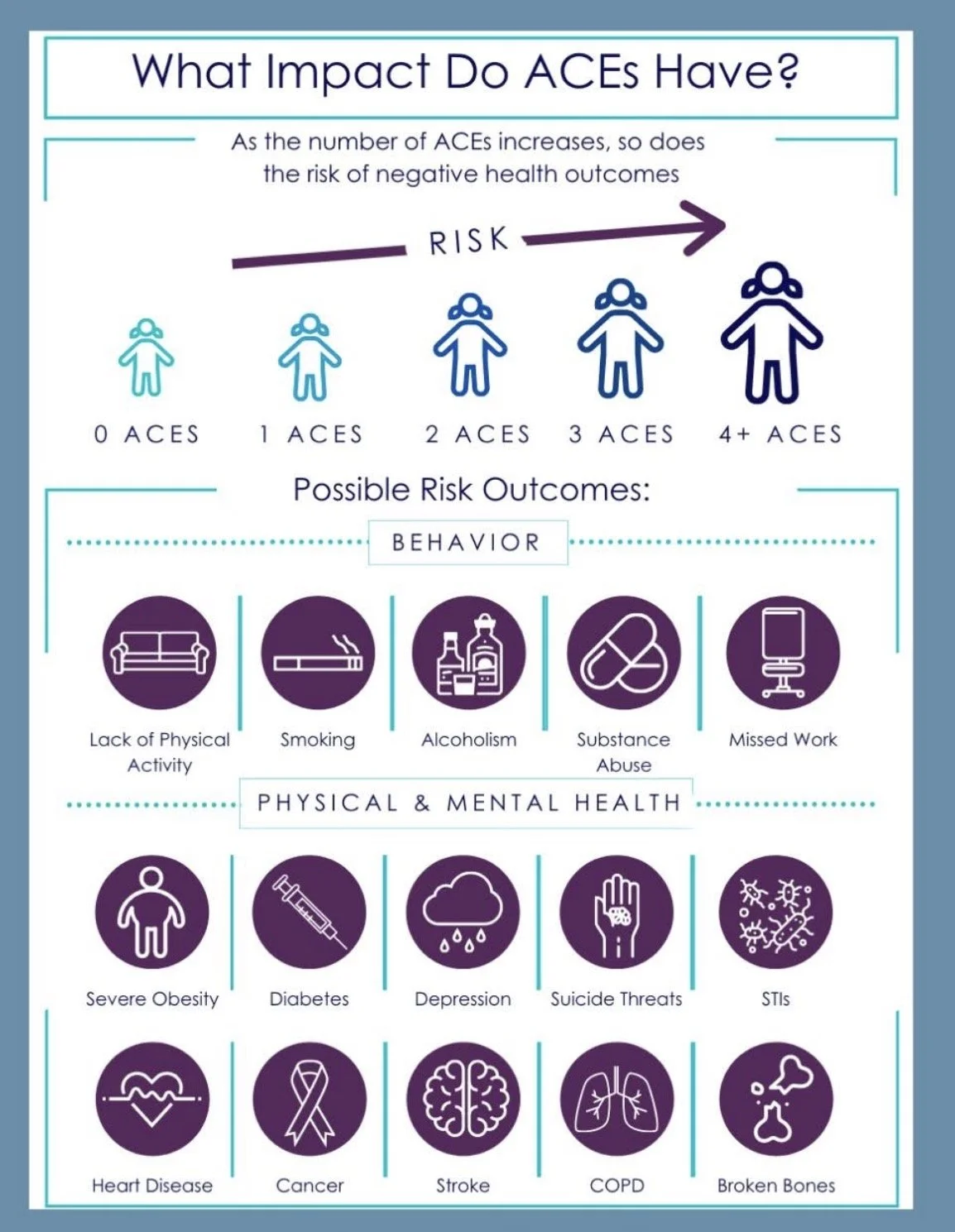
ACEs stands for Adverse Childhood Experiences. The original research looked at difficult or traumatic experiences in childhood, things like abuse, neglect, domestic violence, addiction in the home, parental mental illness, divorce, or loss. What researchers found was powerful: the higher someone’s ACE score, the greater their risk of physical and mental health difficulties later in life.
But here’s the part that matters most to me as a therapist:
Trauma isn’t just what happened.
Trauma is what the brain couldn’t process at the time.
That changes everything.
Because what may not look traumatic to an adult can absolutely be traumatic to a child.
Moving house.
Changing schools.
Parents divorcing.
A parent being emotionally unavailable.
Feeling different.
Being the “sensitive one.”
Not being believed.
Children don’t have adult brains. They don’t have language, perspective, or context. They don’t know, “This isn’t my fault.” They just experience overwhelm.
And when something overwhelms a child’s nervous system without enough support, it becomes an adverse experience.
Children rarely articulate trauma clearly. Instead, it shows up in behaviour.
Clinginess.
Aggression.
Withdrawal.
Perfectionism.
People-pleasing.
Shutting down.
Those behaviours aren’t “bad.” They’re adaptations. They’re survival strategies.
Over time, those strategies can shape attachment, how we connect to others. If safety felt unpredictable, love felt conditional, or emotions weren’t welcomed, we learn to protect ourselves.
That can show up in adulthood as:
• Anxiety that seems to come out of nowhere
• Addiction or numbing behaviours
• Fear of abandonment
• Struggles in relationships
• Feeling “too much” or “not enough”
• Hyper-independence
• Chronic hypervigilance
Sometimes people arrive in therapy saying, “Nothing that bad happened to me, so I don’t know why I’m like this.”
That sentence alone tells me something probably did.
Because trauma isn’t a competition. It’s not about whether it was “bad enough.” It’s about whether your nervous system could cope.
When we experience trauma, the body goes into protection mode. Fight. Flight. Freeze. Flop. Fawn. Those responses are automatic. Involuntary. Designed to keep you alive.
Here’s the important part:
That system doesn’t just switch off because you turned 18.
If a part of you felt unsafe at seven, that seven-year-old nervous system can still get activated at thirty-seven. Your reactions can feel bigger than the current situation because they’re not just about now, they’re about then. The reaction you have is to the 7 year old experience, triggered by something in the here and now.
That’s why you might think afterwards:
“Why did I react like that?”
“I’m so dramatic.”
“That was stupid.”
And then comes shame.
But your body wasn’t being dramatic. It was doing exactly what it was designed to do, detect danger and protect you.
Hypervigilance, always scanning, always on edge, isn’t weakness. It’s a nervous system that learned early that the world wasn’t fully safe.
The exhausting part is carrying that into adulthood when the danger is no longer the same, but the body doesn’t know that yet. Constantly scanning for danger, hyper vigilant and on high alert. Its exhausting, confusing and emotionally painful.
It doesn’t have to stay like this.
This is where counselling can help.
It starts with choosing a therapist you are drawn to and then gel with. Someone you feel gets you. Not every counsellor is for every client, my advice is always chat to a few and explore options.
Once you have chosen, we can start the healing process together.
We don’t always need a detailed memory of what happened. We don’t need to relive everything. Often we start with what’s happening now, the anxiety, the reactions, the patterns.
Through a safe therapeutic relationship, the nervous system begins to experience something new: consistency, attunement, regulation. Slowly, the body learns it’s not alone anymore. And most important pehaps? Feeling safe.
We explore gently. At your pace. Without forcing memories or labels.
Sometimes it’s not about naming the trauma.
It’s about noticing the response.
We work with the part of you that reacts. The part that braces. The part that panics. The part that shuts down.
And instead of shaming it, we understand it.
When you realise, “This reaction makes sense,” something shifts. Compassion grows. The grip of shame loosens.
Your body isn’t broken.
Your reactions aren’t stupid.
Your defence mechanisms aren’t flaws.
They are intelligent responses from a younger version of you who did the best they could. The reactions are involuntary. The bodies way of screaming “warning warning, this is not ok”
Healing isn’t about erasing the past. It’s about helping your nervous system update its information. The trauma memory can shift to the regular memory part of the brain and therefore no need for such strong uncontrollable reactions. The body begins to feel safe rather than on constant high alert.
You are not that powerless child anymore.
But your body may still think you are.
Therapy helps those parts catch up.
And when they do, life can feel lighter, not because nothing hard ever happened, but because you’re no longer fighting yourself for having survived it.
Stay safe. Stay connected. Take gentle care,
Louise x
If this resonates, you’re not on your own.
Pull up a chair.
I've got you.
If you’re tired of carrying it alone, I’m here.
We can take it at your pace. No pressure. No fixing. Just space to be human.
📧 louisemalyancounselling@gmail.com
🌐 www.wildfirecounsellingtherapy.co.uk
Free, no-obligation intro chat, just to see if we’re the right fit.
When Your Body Has Been Holding the Story & then perimenopause hits 🙄
For years I lived in a body that hurt.
Tight shoulders.
Clenched jaw.
An aching back with no injury behind it.
Exhaustion that sleep didn’t fix.
Pain that moved around like it had a mind of its own.
At one point I was given labels, fibromyalgia, chronic fatigue. And I’m not dismissing those diagnoses. They are very real for many people. But what nobody explained to me was this:
Your body can hold stress & trauma for years.
Nobody told me my shoulders weren’t just “bad posture.”
Nobody said my jaw pain might be trapped tension, not just TMJ.
Nobody asked what I had lived through.
When we experience trauma, whether it’s one big event or years of smaller relational wounds, the nervous system adapts. It braces. It armours. Muscles tighten to protect vital organs. Breath becomes shallow. The body stays slightly on guard.
That’s useful when you’re surviving.
It’s exhausting when you’re safe but your body hasn’t realised it yet.
A fantastic doctor pointed me to the book by Bessel van de Kolk - the body keeps the score and then Therapy. With a therapist who I gelled with. Quite simply changed my life.
It all changed that for me. Not overnight. Not in some dramatic cinematic breakthrough. But slowly. By learning to notice what was underneath the pain.
Tight shoulders? Often anxiety or responsibility I was carrying.
Clenched jaw? Words unsaid. Anger swallowed.
Back pain? Bracing. Holding it all together.
When I started to process what had happened to me, properly, safely, my body began to soften. The pain didn’t magically disappear, but it made sense. And when something flares now, I don’t panic. I ask: what’s happening? What am I holding?
Then I know what I need to do. Rest. Move. Breathe differently. Talk. Get support.
That knowledge is life changing.
And then, just as I felt like I’d figured my body out… menopause arrived.
Hot flushes in the middle of sessions.
Brain fog so thick I’d lose words mid-sentence.
Memory glitches that made me question myself.
ADHD symptoms dialled up to full volume.
Exhaustion followed by bursts of electric energy at midnight.
Nobody really talks about this properly.
The body changes. The intimate parts change. Sleep changes. Libido changes. Mood shifts. Confidence wobbles. And if, like me, your mum was the person you’d have asked about all of this, and she’s no longer here, there’s a particular kind of loneliness in that.
You can have friends. A partner. A whole support network. But there is something about wanting your mum in those moments. Wanting to ask, “Is this normal?” Wanting reassurance from the person who once knew your body before you did.
Men don’t always know what’s happening either. They can feel confused, shut out, worried they’ve done something wrong. Nobody hands them a manual. So couples can find themselves navigating something huge in silence.
We need to talk about it more.
We also need to take the shame out of it.
Hormones shift the brain as well as the body. Oestrogen plays a role in attention, memory, mood regulation. When it fluctuates, ADHD can feel worse. Brain fog becomes real. You can feel sharp one minute and completely scattered the next.
I went through a phase of buying every supplement under the sun. Trial and error. Hoping one magic vitamin would fix it all. Then someone gently reminded me: you can go to your GP. You can ask for blood tests. You can look at HRT options. You don’t have to self-manage in the dark.
So I’ve booked an appointment. Three weeks to wait. I’m not entirely sure what they’ll suggest. But even taking that step feels empowering.
Here’s what I want you to know if any of this sounds familiar:
You are not dramatic.
You are not lazy.
You are not “losing it.”
Your body is communicating.
Therapy can help you understand what it’s saying.
Not in a mystical way. In a grounded, practical, relational way. We explore stress patterns. Trauma responses. Life transitions. Identity shifts. We create space to talk about the intimate, awkward, uncomfortable bits without shame.
Because this is life.
Bodies change. Hormones shift. Grief resurfaces. Old trauma can reawaken during big transitions like menopause. ADHD traits can amplify. Sleep disruption alone can make you feel like a different person.
When we don’t understand what’s happening, we turn it inward. We assume we’re failing.
When we do understand, something softens.
Being authentic in my body now feels different. I move more freely. I notice when I’m clenching and I release. I recognise when overwhelm is hormonal, when it’s trauma, when it’s lack of sleep, when it’s too much on my plate.
Awareness doesn’t remove everything. But it gives choice.
And once you have choice, you’re not trapped in it anymore.
If you’re navigating unexplained pain, hormonal shifts, worsening ADHD symptoms, grief, or the strange loneliness of midlife changes, you are not alone in that.
Let’s talk about it.
Let’s bring it into the room.
Let’s take the shame out.
Your body has been carrying you for years.
It deserves to be listened to.
Stay safe. Stay connected. Take gentle care,
Louise x
If this resonates, you’re not on your own.
Pull up a chair.
I've got you. If you’re tired of carrying it alone, I’m here.
We can take it at your pace. No pressure. No fixing. Just space to be human.
Take gentle care,
Louise x
📧 louisemalyancounselling@gmail.com
🌐 www.wildfirecounsellingtherapy.co.uk
Free, no-obligation intro chat, just to see if we’re the right fit.
When Words Aren’t Enough: Creativity, Self-Worth and Finding Ourselves Again
Some of the most powerful work I’ve ever done in therapy didn’t start with words.
It started with a picture.
A metaphor.
A card pulled from a deck that somehow knew more about me than I could say out loud.
Creativity is how I grew. It’s how I evolved. And it’s how I continue to grow now. It started with some bird doodles. Rapunzel changed my life.
There was a time when I couldn’t access my feelings in neat sentences. If someone had said, “Just connect with your emotions,” I would have shut down. Not because I didn’t want to. Not because I was resistant. But because I genuinely didn’t know how.
So when I hear people say, “They just won’t connect with their feelings,” I feel a heaviness. For some people, especially those with trauma histories or neurodivergent brains, feelings don’t arrive labelled and organised. They arrive as sensations, overwhelm, numbness, agitation, or nothing at all.
That’s not refusal.
That’s nervous system protection.
And when therapy labels that as avoidance, it can deepen shame. It can leave someone feeling broken, less than, “too much” or “not enough.”
Low self-worth is rarely just a thought.
It’s something lived in the body. Built over years. Formed in how someone was spoken to, treated, ignored, controlled, misunderstood, or made responsible for things that were never theirs.
You don’t think your way out of that.
You experience your way through it.
That’s where creative work comes in.
Using tools like animal imagery, metaphor and cards allows something to soften. When someone chooses a card and says, “I don’t know why, but this one feels like me,” we’ve already bypassed the inner critic. We’ve stepped around the pressure to “explain yourself properly.”
Images can hold what words can’t.
For trauma survivors, this matters. Trauma can fragment memory and language. The brain areas responsible for speech can go offline when we feel threatened. For neurodivergent clients, especially those with ADHD or autistic traits, feelings might be sensory, visual, energetic, not verbal.
Creativity gives another doorway in.
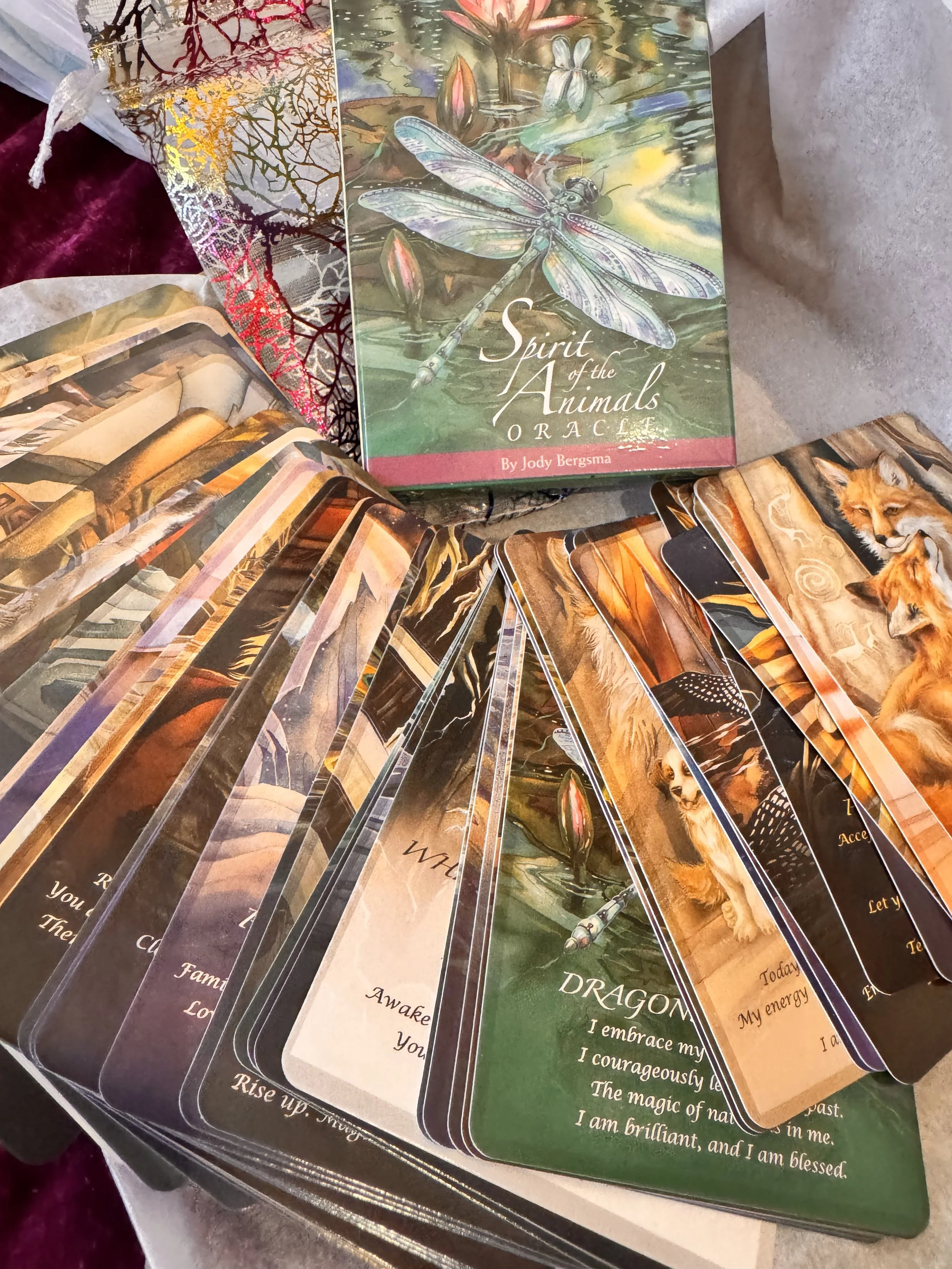
I use Spirit of the Animal Oracle cards in my work because animals carry archetypal energy. Strength. Protection. Adaptability. Hibernation. Instinct. Clients often project their own story safely onto the image. It becomes less exposing. More relational. Gentler.
And here’s the part I care deeply about: it’s never about the cards being magical. It’s about the relationship in the room. The safety. The pacing. The ethical container.
This is how I built my tribe. By trusting who I am. By working down-to-earth, creatively, relationally. By modelling that it’s okay to be different. My own therapist worked creatively with me. That experience changed everything. It showed me there wasn’t anything wrong with me, I just needed a different way in.
When self-esteem is low, it often sounds like:
“I’m hard work.”
“I’m too sensitive.”
“I should be better by now.”
“Everyone else seems to cope.”
“I don’t even know what I feel.”
If that resonates, I see you.
Self-worth grows when we experience ourselves differently. When we feel understood. When something lands and we think, “That’s me… and that makes sense.”
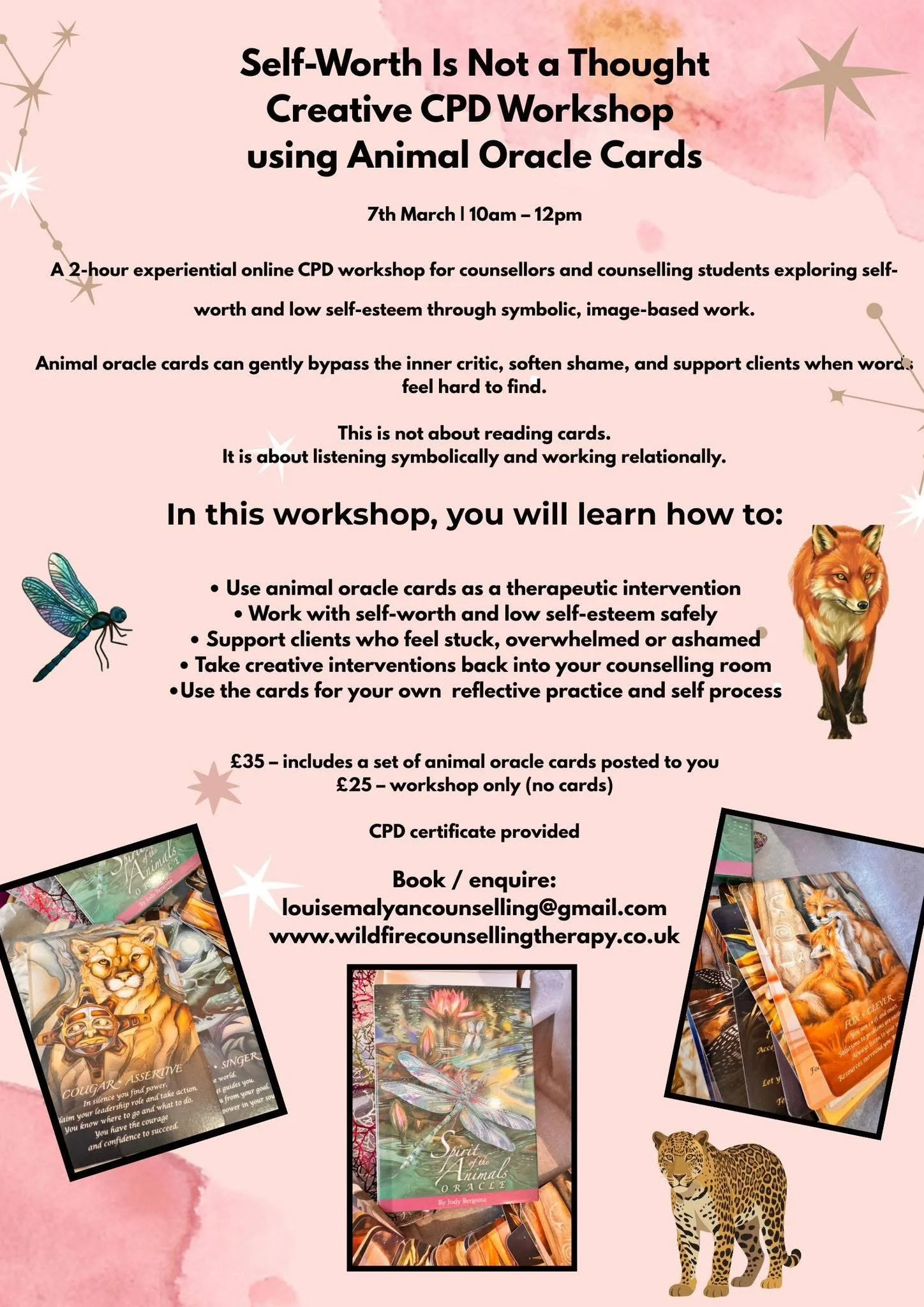
That’s why I’ve created a new experiential online CPD workshop for counsellors and students. It explores self-worth and self-esteem using Spirit of the Animal Oracle Cards, with and without the cards themselves, because this isn’t about selling a tool. It’s about deepening practice.
In this two-hour Zoom workshop we’ll explore how imagery can soften the inner critic, support trauma work safely, and offer neurodivergent clients alternative ways of expression. There will be live exercises, reflective space, and ethical discussion about using creative approaches responsibly in the therapy room.
You’ll leave with practical ideas you can use immediately. You’ll also leave having experienced the work yourself, because we cannot take clients somewhere we haven’t gently walked.
My wider workshops are always about growth. About evolving as practitioners. About trusting our own authenticity rather than squeezing ourselves into rigid models that don’t fit.
Because once we truly believe we are okay as we are, the world loses its power to define us.
Creative work isn’t fluffy. It’s not avoidance. It’s not a gimmick.
It’s another language.
And for some people, it’s the first language that ever made sense.
If you’re curious about working more creatively, relationally and deeply around self-worth, you’ll find the details of the workshop through Wildfire Creative Studio.
Come and explore. Grow. Stretch. Find your own way of doing this work.
There is space for you, exactly as you are. Stay safe, stay connected and take gentle care
Louise x
Pancake Day, Potholes, and Trying to Keep Up With Life
Pancake Day today.
I’ve been talking about it for weeks, planning toppings, thinking about it, definitely looking forward to it… and then somehow only just remembered this afternoon. Classic. Annoying. Very typically me.
Life has felt a bit like the weather lately. Four seasons in one day. Sunshine one minute, rain sideways the next. Cold wind, then sudden warmth. It sums up how many of us are moving through life right now, changeable, unpredictable, trying to keep up.
The roads are full of potholes too, which feels like a decent metaphor. You think you’re cruising along nicely and suddenly, bang, you hit something you didn’t see coming. Puncture, turns into new tyre. Cost a fortune I cant really afford, messed up my day.
Today has been busy. Admin piles. Organising things. Collecting stock for a workshop. Trying to remember what needs doing next while my brain jumps three steps ahead. At one point I found myself standing in the kitchen eating Nutella straight from the jar with a spoon, because sometimes that’s just where the day lands.
And honestly? That’s okay.
Being busy doesn’t always mean being productive. Sometimes it just means juggling a hundred small things while trying not to drop the important ones.
One thing I have learned, and keep relearning, is the importance of prioritising what actually keeps me steady. For me today that meant getting the dog out for a walk. Fresh air. Moving my body. Stepping away from the admin and the noise in my head.
Self-care isn’t always candles and long baths. Sometimes it’s muddy boots, wind in your face, and ten minutes where nobody needs anything from you.
I’ve also been trying to drink more water. Sparkling water with lime juice feels like a small win, simple, grounding, a little ritual that reminds me to slow down for a moment. Some days I dont manage it. Some days I do, these are the days I celebrate rather than beating myself up on the days I forget.
And this is where the therapy part comes in.
So many clients come into the room feeling like they should be doing more, coping better, managing perfectly. (That bloody word “should” it carries so much shame.) Yet life isn’t neat. It’s messy and full of competing priorities. Some days you’re organised and on top of everything. Other days you’re eating Nutella from the jar wondering how it’s only lunchtime.
Both are normal.
A few gentle reminders if today feels a bit like chaos:
Prioritise the basics first. Food, water, movement, fresh air, they genuinely change how our nervous system copes with stress.
Choose one or two key tasks, not ten. Your brain likes achievable wins.
Notice your self-talk. “I’m failing” is usually just “I’m overloaded.”
Build pauses into the day. Even five minutes outside counts. My apple diary is my friend! If its not in there, its doubtful it will happen.
Allow imperfection. Life doesn’t need to be beautifully organised to be meaningful. Tomorrow isnt promised. The here and now is so important.
Therapy certainly isn’t about fixing everything. You are not broken. It’s about learning how to move through the busy, unpredictable days with a bit more compassion for ourselves.
So if you’re reading this while juggling work, family, emotions, deadlines, weather changes, and maybe your own metaphorical potholes, you’re not alone.
Take the walk. Drink the water. Eat the pancake (or the Nutella).
Small things matter more than we realise.
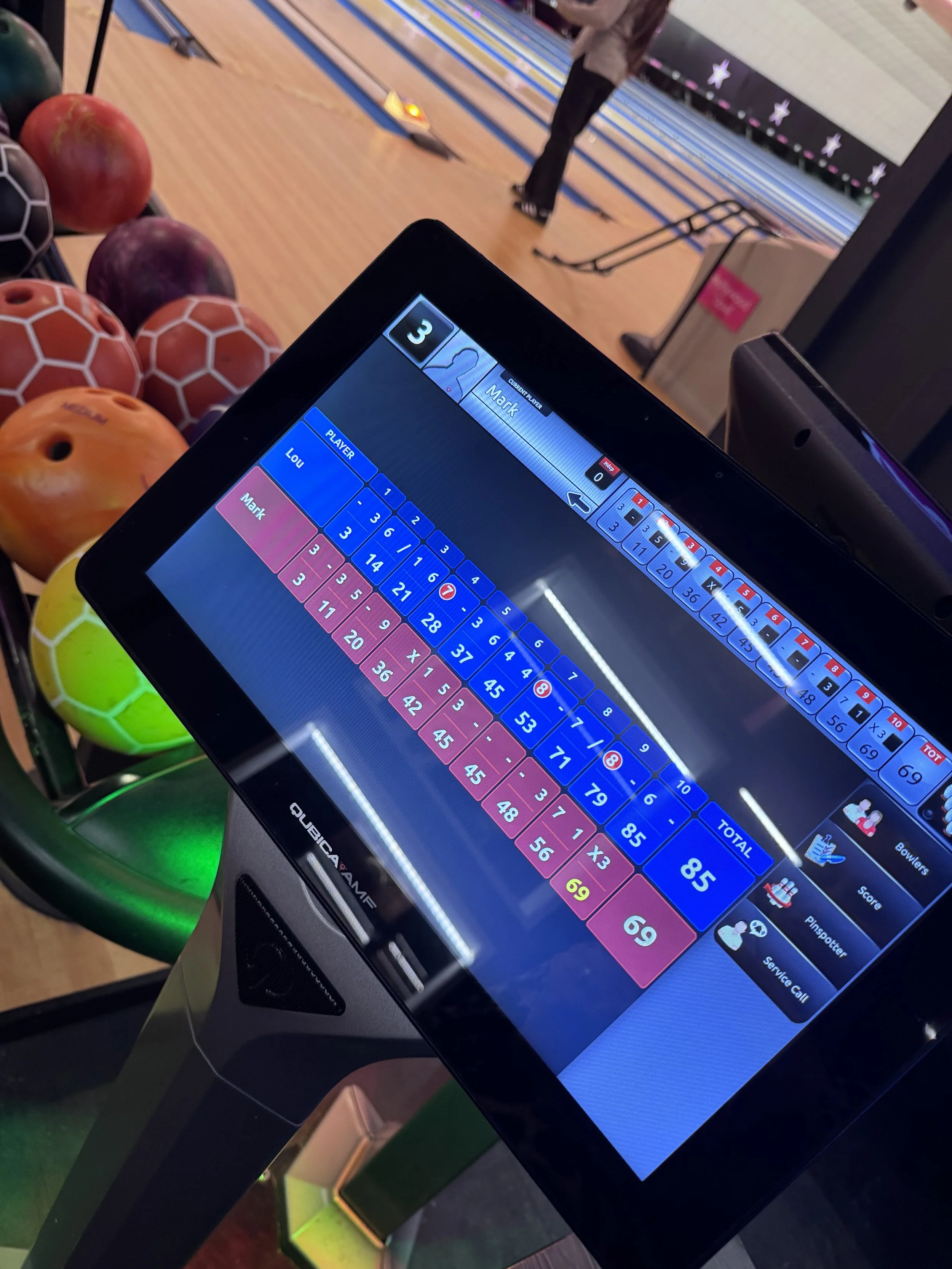
Did the jobs get done? Did they heck. My husband surprised me with a bowling trip and couple of hours in the arcade. Did I have fun? Yes. Does it matter the jobs havent got done? Nope. Do I feel good? Yes, exhausted and happy. Does it affect my work or my clients? Jobs being done no. The trip out gives them a non burnt out me. I’m modelling boundaries, being human and self care. Tomorrow is another day! (And i’ll have pancakes then! If I remember!)
Stay safe.
Stay connected.
Take gentle care.
Louise x
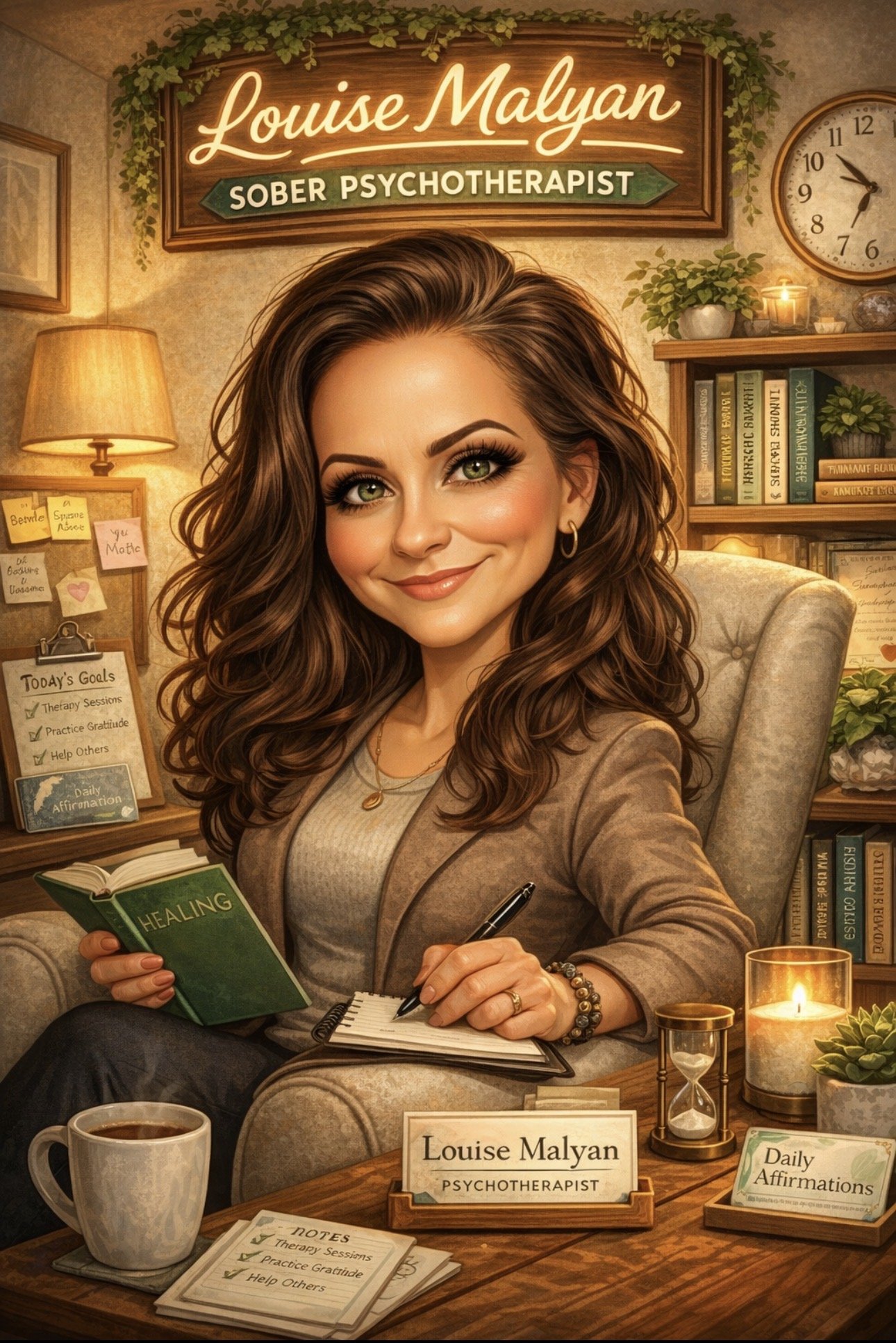
AI myth busting. Lets learn together. Its the internet. Never share anything you dont want anyone to know.
It’s the internet. Never share anything you don’t want anyone to know. EVER.
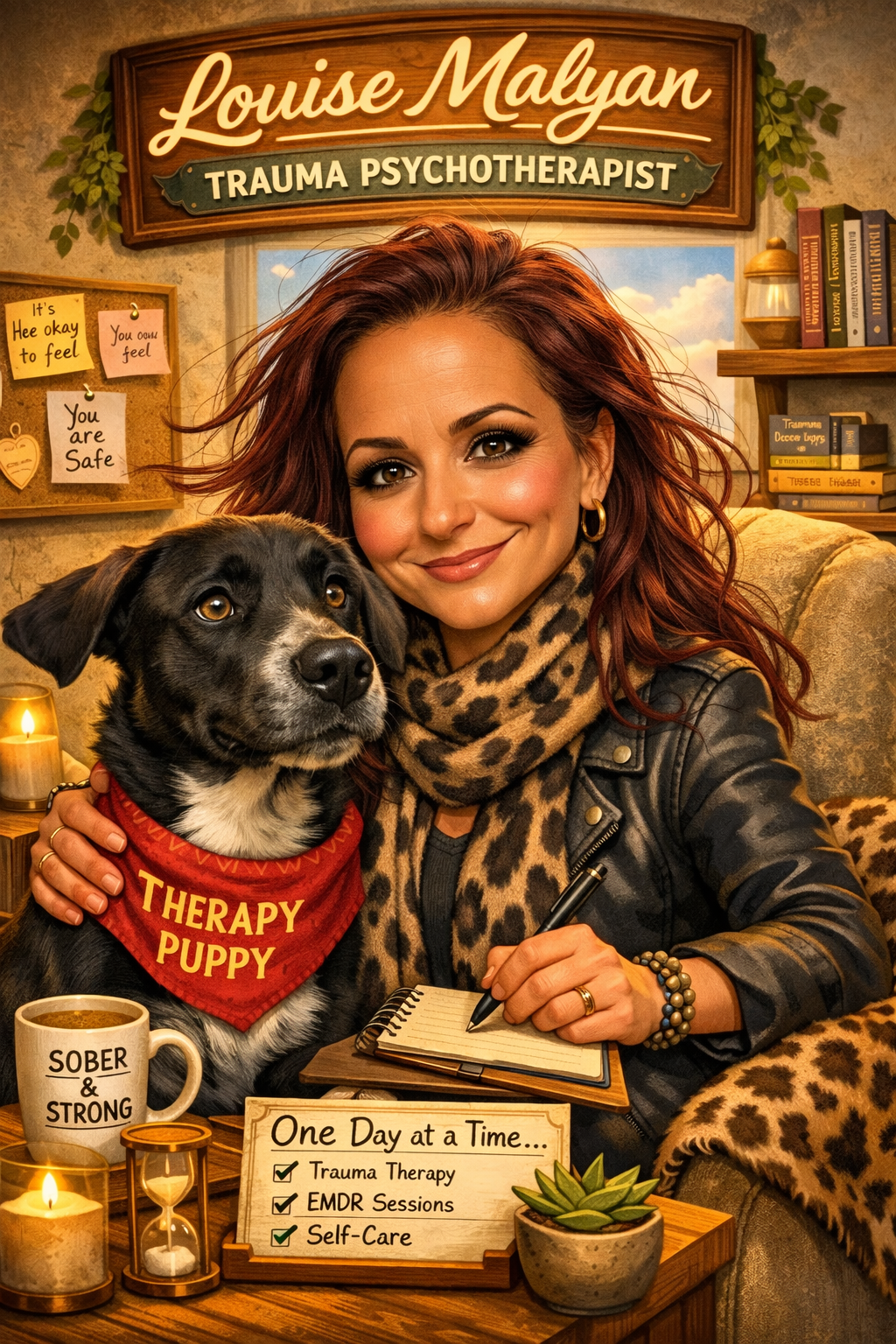
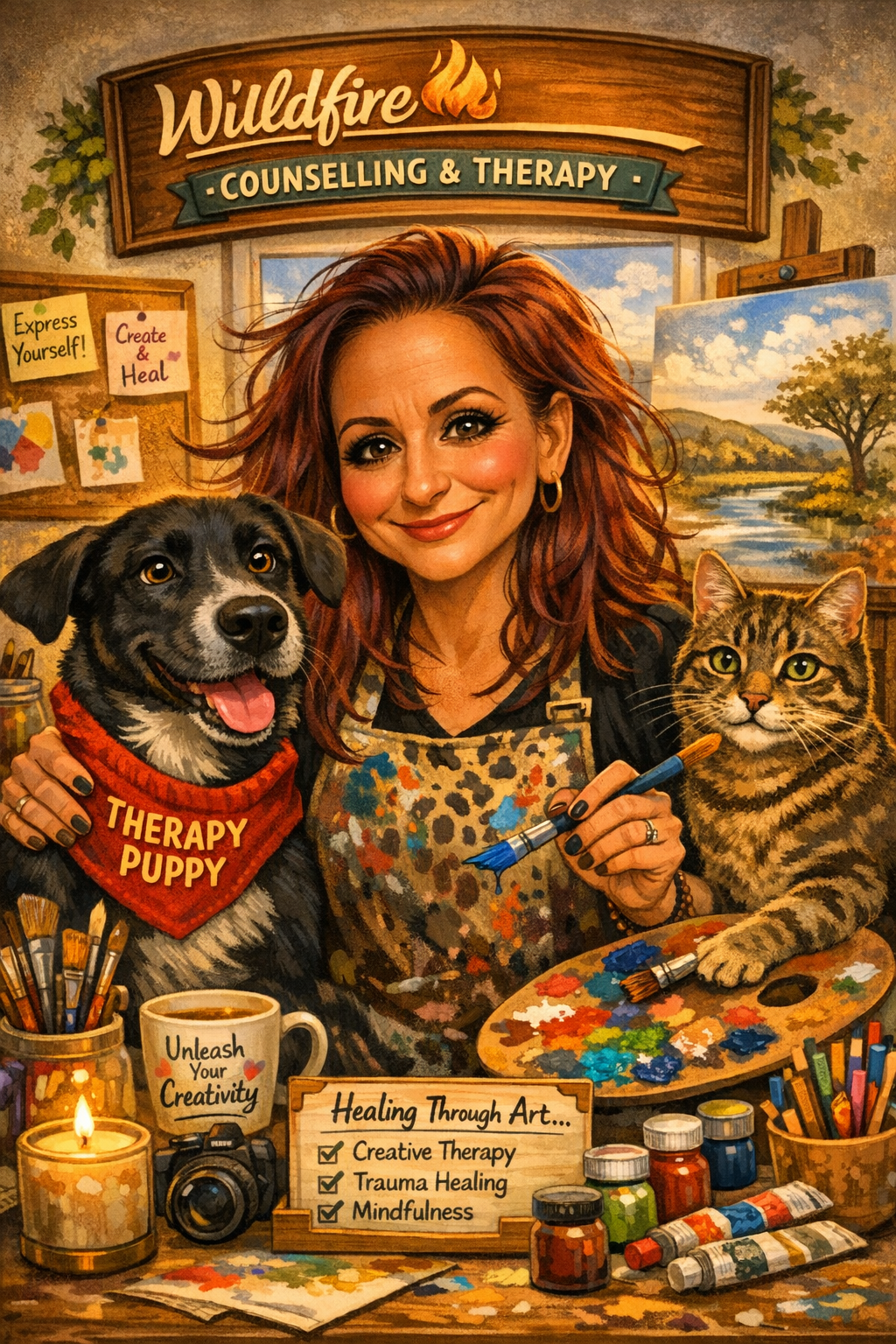
Let’s talk honestly about AI, caricatures, privacy, and the fear that seems to be building around it, because there’s a lot of noise out there, and not all of it is balanced or true. Scare mongering and fear inducing. I want to share a few things with you.
Recently I saw a post warning people about creating AI caricatures. The message was clear: nothing is free, social media is watching, AI is dangerous, and we should all be worried about our data being swallowed by a tech machine somewhere.
I get the concern. Really, I do.
However, I also think we need to slow down, breathe, and add some education and nuance to the conversation, especially as counsellors, and especially for the people who trust us.
Yes, the internet collects data.
Yes, social platforms track behaviour.
And yes, we should all be mindful of what we share online.
None of that is new.
If you’ve ever used Facebook, searched on Google, or shopped online, you’ve already stepped into a system built on data and AI. That’s the reality of modern life. But there’s a big difference between using a tool responsibly and feeding it sensitive information carelessly. Meta (facebook use it for example) one of the biggest data collectors out there and very honest about it too! If you dont want people to know it, dont post it. Your stuff is not private. Thats a myth.
And that’s where the real conversation needs to sit.
What I actually did (and what I didn’t do)
I’ve seen the caricatures too. They’re fun. I was curious. So I played.
My prompt was simple:
“Using this photo and all you know about Louise Malyan from Wildfire Tranquil Counselling & Therapy Hub, make me a set of caricatures.”
That’s it.
I didn’t give personal details.
I didn’t upload confidential information.
I didn’t share client stories or private conversations.
I used information that is already public, my website, my professional presence, things I have chosen to make visible.
If someone is putting deeply personal information into AI that they don’t want public, then yes, that’s risky and dangerous. But that’s not an AI problem. That’s a digital literacy problem.
Let’s talk about fear vs reality
There’s a narrative that AI tools instantly “scour the internet,” gather your life story, and expose your secrets. The reality is more boring and less dramatic.
Tools like OpenAI work within specific systems and boundaries. They don’t magically access everything about you just because you asked for a cartoon version of yourself. That’s not how it works.
Could technology be misused? Absolutely. That’s true for every technology ever created, phones, social media, even email.
The answer isn’t fear.
The answer is education and ethical use.
Counsellors, ethics, and AI
As a therapist, confidentiality is sacred. That doesn’t change because new tools exist.
I will never put identifying client information into AI. Ever. I see people using the anon feature on facebook thinking it's confidential, this is not ok. I challenge it every time I see it.
No names.
No recognisable details.
No confidential stories.
That’s non-negotiable.
However, refusing to engage with technology at all doesn’t make us safer or better practitioners. It just leaves us uninformed.
Used wisely, AI can be a tool, not a replacement for therapy, not a shortcut for learning, and absolutely not a robot counsellor.
Human relationship is the therapy. Always.
Confidentiality is a passion of mine. I’ve had mine broken. I nearly died. I will NEVER put clients at risk of that.
Why AI helps me….. and why that matters
I’m very open about being Autistic ADHD, snd having CPTSD and dyspraxia. Executive function can be messy. Thoughts arrive fast, chaotic, tangled. Sometimes I need help organising them.
AI can help me rearrange my thinking, like having a whiteboard that helps me sort, structure, and clarify ideas.
And here’s the crucial part:
I do that safely.
Without personal details.
Without confidential information.
When ADHD brain locks onto something, it’s like a dog with a bone, urgent, immediate, impossible to switch off. AI can help in those moments when I need to process or organise ideas right now, without waiting days for the perfect headspace.
That doesn’t remove learning.
It doesn’t replace reflection.
It doesn’t replace people.
It just helps me work with the brain I have.
I might ask it a better word to replace another. What questions to ask myself to arrange a list. How I can prioritise, what do I need to think about. Or the meaning of a word, or where I can find information. I have to fact check EVERYTHING. No intimate or personal details, just open questions that we can also google (ok yes, thats another form of ai!)
Reassurance for clients
If you’re reading this as a client and wondering, “Is my information safe?”
Yes.
Your privacy is something I take incredibly seriously. The boundaries around confidentiality do not bend because technology exists. My ethical responsibility to you comes first, always.
AI is a tool I use carefully, intentionally, and appropriately. Just like any other professional tool.
The bigger picture
Technology is not going away. Neither is human connection.
We can challenge fear-based narratives without dismissing genuine concerns. We can use tools safely while staying ethical. We can be curious and cautious at the same time.
For me, it comes down to this:
Use common sense.
Protect personal information.
Don’t share anything you wouldn’t want public.
And remember, the heart of therapy will always be human-to-human connection. No algorithm can replace that.
AI might help organise thoughts.
It might help creativity.
It might even make a slightly spooky caricature.
But healing? Growth? Being truly seen?
That still happens between humans, between people.
Stay safe, stay connected & take gentle care.
Louise x
Working with young people, and why I do it differently
I’ll be honest… when I was younger and way into adulthood…I thought therapy was rubbish.
Not because therapy itself doesn’t work, but because my experience of it didn’t. I never felt seen or heard. My confidentiality was broken. I felt like hard work. Like a problem that needed fixing.
And when you’re young, those experiences stick.
What I know now is this: therapy isn’t rubbish.
Its the fact not every therapist is right for every person.
That understanding shapes everything about how I work today.
When a young person comes to me, autonomy matters. Trust matters. I am very clear about confidentiality and what that means, because safety comes first. I meet them where they’re at, their interests, their hobbies, their world, and we find a way of working together that fits them.
Because life is hard enough anyway.
Add neurodivergence into that, for example ADHD, autism, dyslexia, dyspraxia, feeling different, not quite fitting in, not always understanding how the world works, and it can feel twice as hard. Sometimes there aren’t words for what’s going on. And that’s okay.
There is nothing worse than someone asking “what’s wrong?” when you genuinely don’t know.
In therapy with me, there’s no pressure to have perfect answers. We can find ways of exploring things without needing words straight away. Drawing, music, gaming, films, TV, Lego, crystals, hot chocolate, haribo…. anything can become part of the work if that’s what helps. Therapy doesn’t have to look clinical or formal.
My room certainly doesn’t.
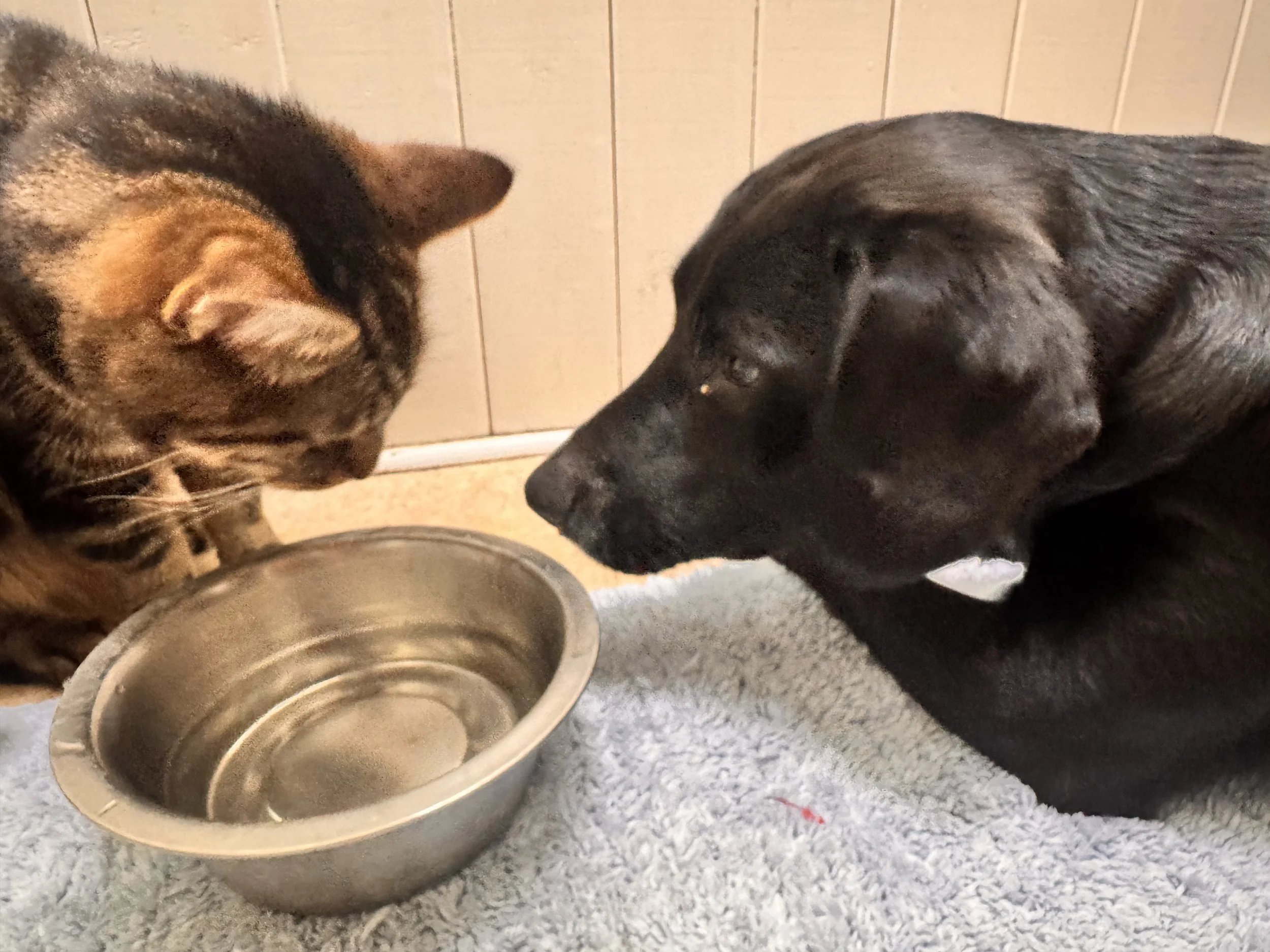
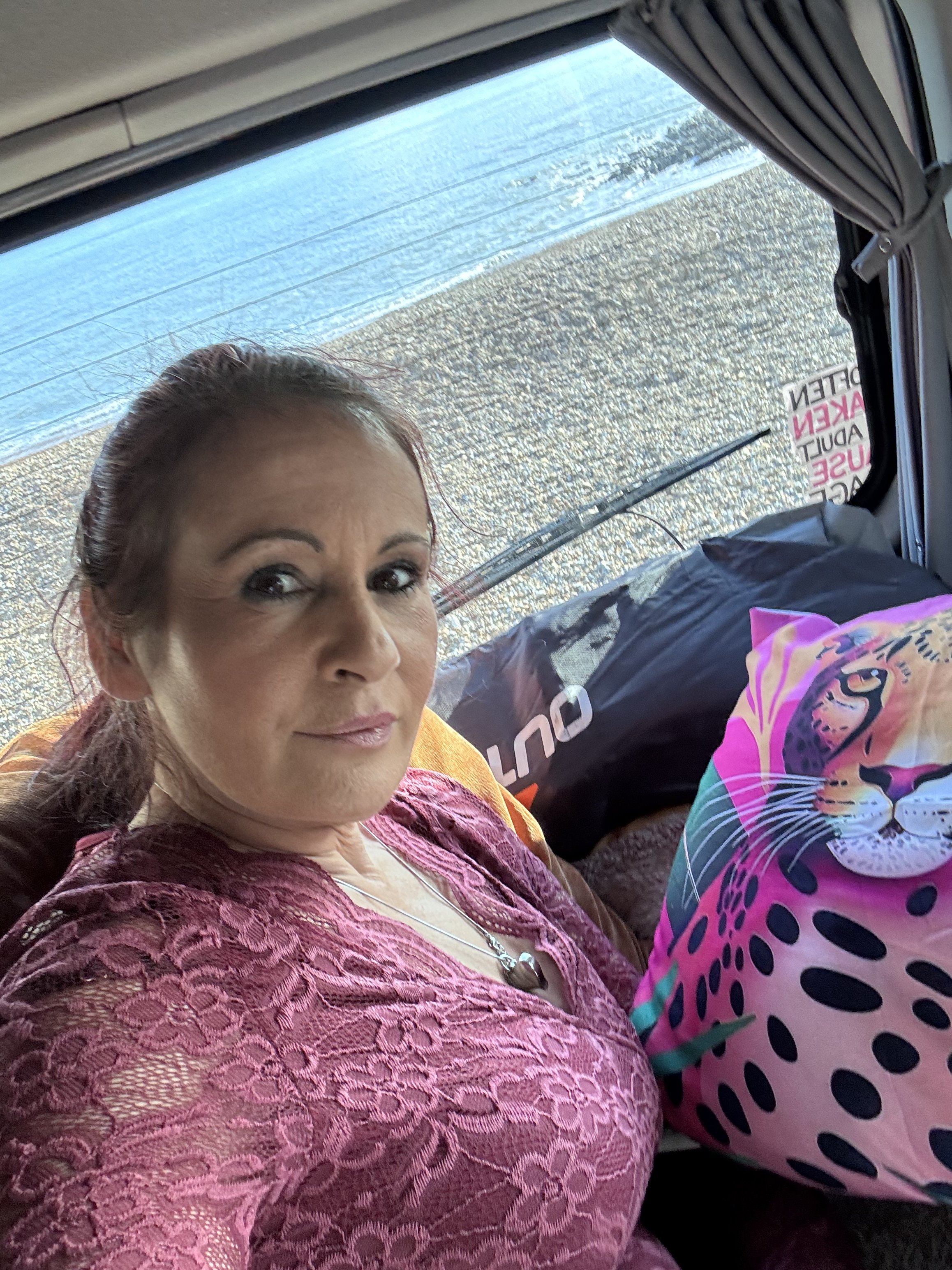
Big comfy sofas. Maybe sitting at the table. Maybe side by side on stools over a hot chocolate at the breakfast bar. Playing with Arthur my therapy puppy or sat with steve the therapy cat, working in the campervan, going for a walk or to the park, We work in ways that feel safe, human and real.
Online we can use various apps, screen share, games, activities, music, spotify. Its endless. We work together and find out the best way, for nobody else, for the person sitting in front of me, physically or through a screen.
Because healing sits in the relationship. In building trust.
I remember what it was like trying to fit in. I turned to alcohol as a teenager because it felt like the only way to get it right. I didn’t know how to talk about what had happened to me. I didn’t know how to be a teenager. Life didn’t come easily.
Alcohol seemed to work, until it didn’t.
Or maybe it never really did. It masked things. It helped me survive for a while, but it also started a struggle that lasted nearly 30 years. Behind closed doors. Feelings locked away.
There is nothing worse than people asking how you are feeling, wanting to know what is wrong when you dont have the words or even know yourself. It's debilitating. Your defences are reacting involuntary, you feel horrific and life is an endless struggle. Yep that was me too.
Until one day I found a therapist who changed my life.
I learned that it was okay to be me. That there was nothing wrong with me. I just learned differently. Processed differently. Lived differently. I’ve been sober a good few years. I know I am not the problem.
And that’s what I want young people to discover now, not in 30 years’ time.
I don’t want them growing up believing they’re broken or not good enough. I don’t want them needing drugs or alcohol to cope with life because they don’t know another way.
I can’t change the whole world, it’s still very square and very neurotypical. I’m a round peg who never fit into that square hole, and I know many others feel the same.
My work is about showing that. Modelling that. Meeting each person, young person, adult, child, exactly where they are. Taking things at their pace, in their language, doing it their way.
Because there is nothing wrong with them.
It’s about what happened to them, or what they are going through, and that does not define who they are.
Healing is possible.
If this resonates, or you’d like to find out more, feel free to get in touch for a free intro chat.
Stay safe, stay connected and take gentle care
Louise x
Valentine’s Day, Love, and Everything In Between
Last night I sat writing cards and wrapping presents. Today my husband and I have planned a day for us. Gentle. Quiet. Safe. Just us and the pup, away from the crowds.
And I know that isn’t everyone’s reality.
Even a few short weeks ago, I personally couldn’t imagine celebrating love, or much of anything, really. Grief and loss felt like despair. A dark place. Heavy and consuming.
That’s why days like today can feel complicated.
Valentine’s Day is everywhere. The shops are full of hearts, flowers, and messages telling us how love should look. It’s hard to ignore. And for many people, this isn’t a day of celebration at all.
Loss sits loudly here.
The loss of a partner.
Divorce.
Separation.
Relationships that ended.
Relationships that never happened.
Loved ones no longer here.
All of it can rise to the surface on a day that supposedly celebrates love.
For some, it brings sadness. For others, anger. For many, a quiet ache of “what ifs” and memories that feel just out of reach. Some people are working. Some are serving away from home. Some simply can’t be together with the people they love.
One day doesn’t define love. And love isn’t something we have to buy into to prove it exists.
For me, today feels a little different.
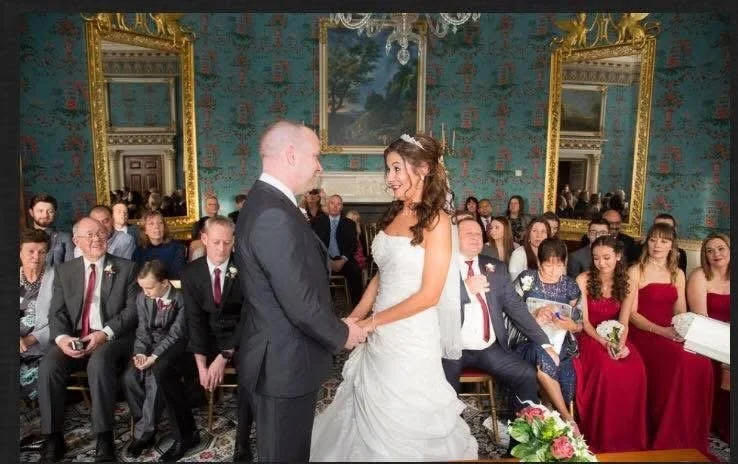
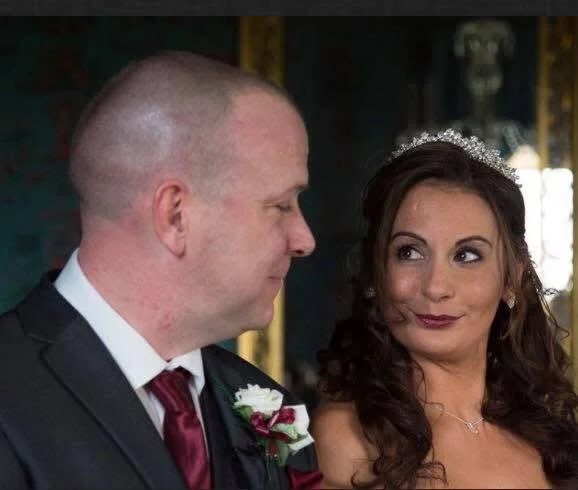
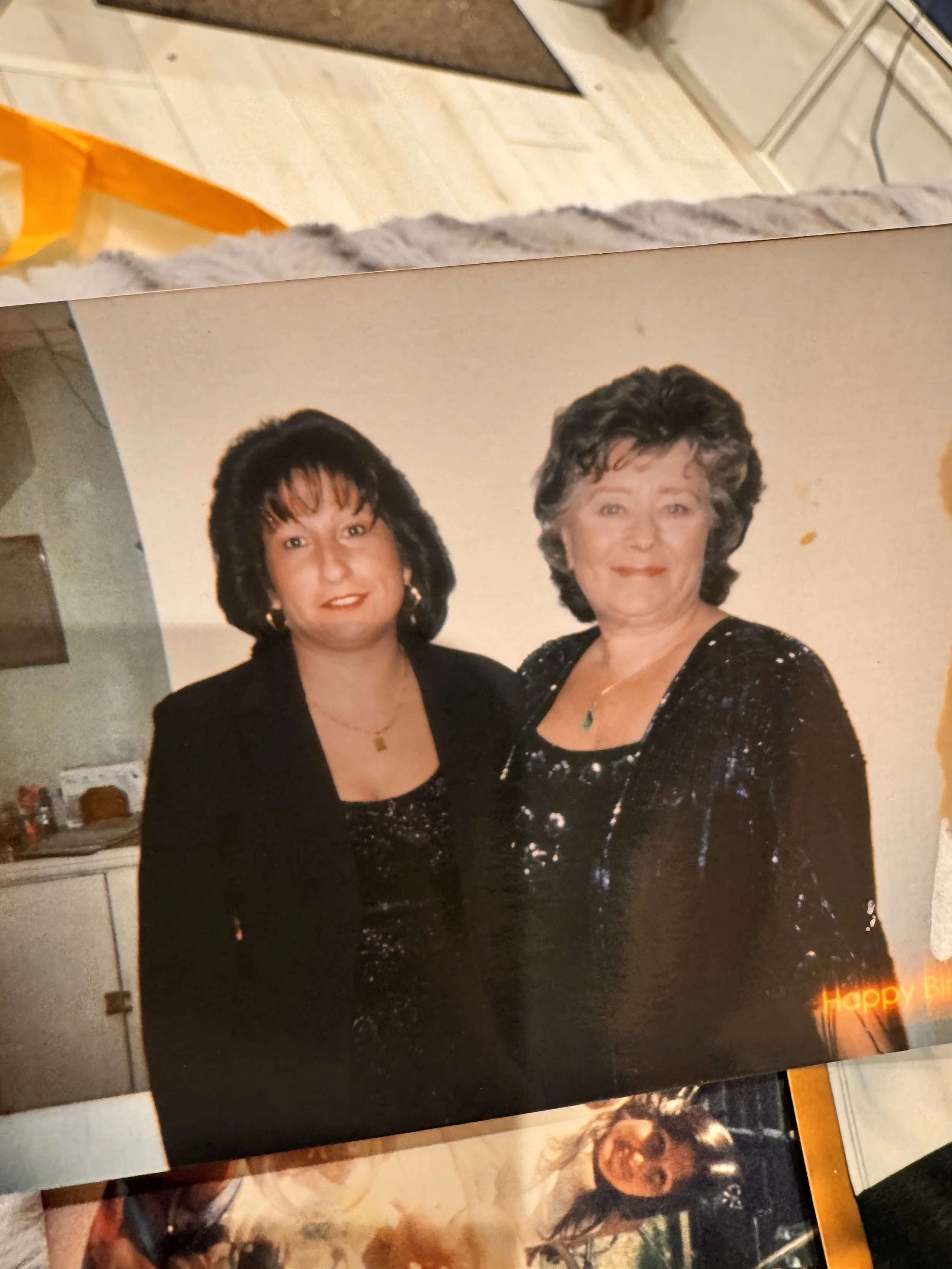
My husband asked me to marry him, for a year! And i said yes on Valentine’s Day ten years ago. Since my mum died, we haven’t really done birthdays or Christmas, celebrations felt too heavy. But today felt right. When he asked if I wanted to do something, we planned it together. No pressure. No expectations. Just something that felt safe in this moment.
That feels important.
Because love isn’t always loud. Sometimes it’s quiet agreement. Shared understanding. A gentle day that says, we’re okay here.
I have friends who are single, or not able to be with those they love, and we’ve been checking in with each other. Tonight I’ll be meeting some of them online if it feels right. No pressure, no performance, just acceptance.
And maybe that’s the heart of it.
Some people celebrate today.
Some people struggle with it.
Many feel both at once.
Acknowledging that matters. Meeting each other where we are at matters. Validation, understanding, communication, all of it matters.
If today feels hard, I see you.
Is there something you can do just for you? Something small? Inviting a little joy in, or maybe just comfort. Ice cream and Netflix. A walk. A quiet moment. Reaching out to someone you feel safe with.
However today looks for you, however you choose to spend it, know that you matter.
Stay safe.
Stay connected.
Take gentle care.
Louise x
Sobriety and the Shame That Was
Sobriety is beautiful.
Sobriety is brutal.
Both things are true.
Addict life isn’t glamorous. It isn’t fun in the way people sometimes imagine. It’s blackouts. Chaos. Conversations you don’t remember. Things said. Things done. A slow erosion of self. It’s survival dressed up as coping.
Nobody wakes up one day and thinks, “I’d quite like to become an addict.”
It’s usually a slow burn. A creeping reliance. A way of numbing pain, trauma, shame, anxiety, grief. For many of us, it was how we survived for years. It worked, until it didn’t.
And then comes sobriety.
People think the hard bit is stopping. Stopping is hard, yes. It takes everything. Especially when the one thing that always soothed you, numbed you, carried you through, is suddenly not an option. You’re left navigating life without the anaesthetic.
But there’s another layer people don’t talk about enough.
The past doesn’t disappear.
As much as we might want it to.
If we were an arsehole in the madness, sobriety doesn’t magically rewrite that. The words were still said. The chaos still happened. The hurt still landed.
We can be sober and deeply committed to change, and the people around us can still carry resentment, anger, mistrust. Their feelings matter too.
That’s where the shame can creep back in.
You’re doing everything “right.” You’re sober. You’re trying. And yet you can’t escape the history. You want it all to be okay now. You want to be treated as the person you are today. But healing doesn’t work on demand.
Ignoring it doesn’t help. If resentment isn’t spoken, it grows. It leaks out sideways. It comes out in arguments that seem to be about the washing up but are actually about years of pain.
Navigating that without the one thing you always turned to is hard. Sitting in uncomfortable conversations without numbing out is hard. Hearing how you hurt someone and staying present is hard.
But it’s not impossible.
It takes time. Patience. Effort on both sides. Accountability without self-destruction. Boundaries too, because acknowledging harm doesn’t mean accepting abuse. Being sober doesn’t mean you deserve to be insulted or punished forever. It means you’re willing to face what was, without running.
In therapy, individual or couples, we can mediate those conversations. Slow them down. Speak from the “I”. Acknowledge. Hear. Validate. Not excuse. Not attack. Just sit with the truth of it.
There are also groups that can help loved ones, Al-Anon, Alateen, Families Anonymous. They’re not for everyone, and they don’t replace therapy, but for some they’re a lifeline. Addiction impacts the whole system, its a family disease, not just affecting the individual.
I know this from both sides.
I grew up around addiction. And I’ve lived it.
Both sides needed working through. Both carried pain. Both carried shame.
Five years into sobriety, I still work at it every day. I have supervision. I have therapy. I have friends I can be honest with. If something comes up, I have to be open to the conversation. Not defensive. Not collapsing. Just present.
My addiction holds some of the darkest and most painful times of my life.
It does not define me.
And if you’re walking this road, the sobriety, the shame, the resentment, the rebuilding, I see you. Truly see you.
It’s messy. It’s uncomfortable. It’s courageous.
And it is possible to work through.
If any of this resonates, get in touch for a free, no-obligation intro call. We can see if we’re the right fit.
Stay safe.
Stay connected.
Take gentle care.
Louise x
Shame and Object Permanence (Or Why My Car Is Still Filthy)
Let’s talk about something that carries an enormous amount of shame for so many people, object permanence.
Object permanence is a psychological concept that originally comes from child development. It describes the understanding that something continues to exist even when you can’t see it. Babies learn this over time, that when you hide a toy under a blanket, it hasn’t vanished from the universe.
Now here’s where it gets interesting.
In neurodivergent brains, ADHD, autism, trauma-impacted nervous systems, object permanence doesn’t always function in the neat, linear way textbooks describe. It’s not that we think people or things literally disappear. It’s that if something isn’t visible, present, or actively in our awareness… it can drop out of our working memory completely.
Out of sight can become out of mind.
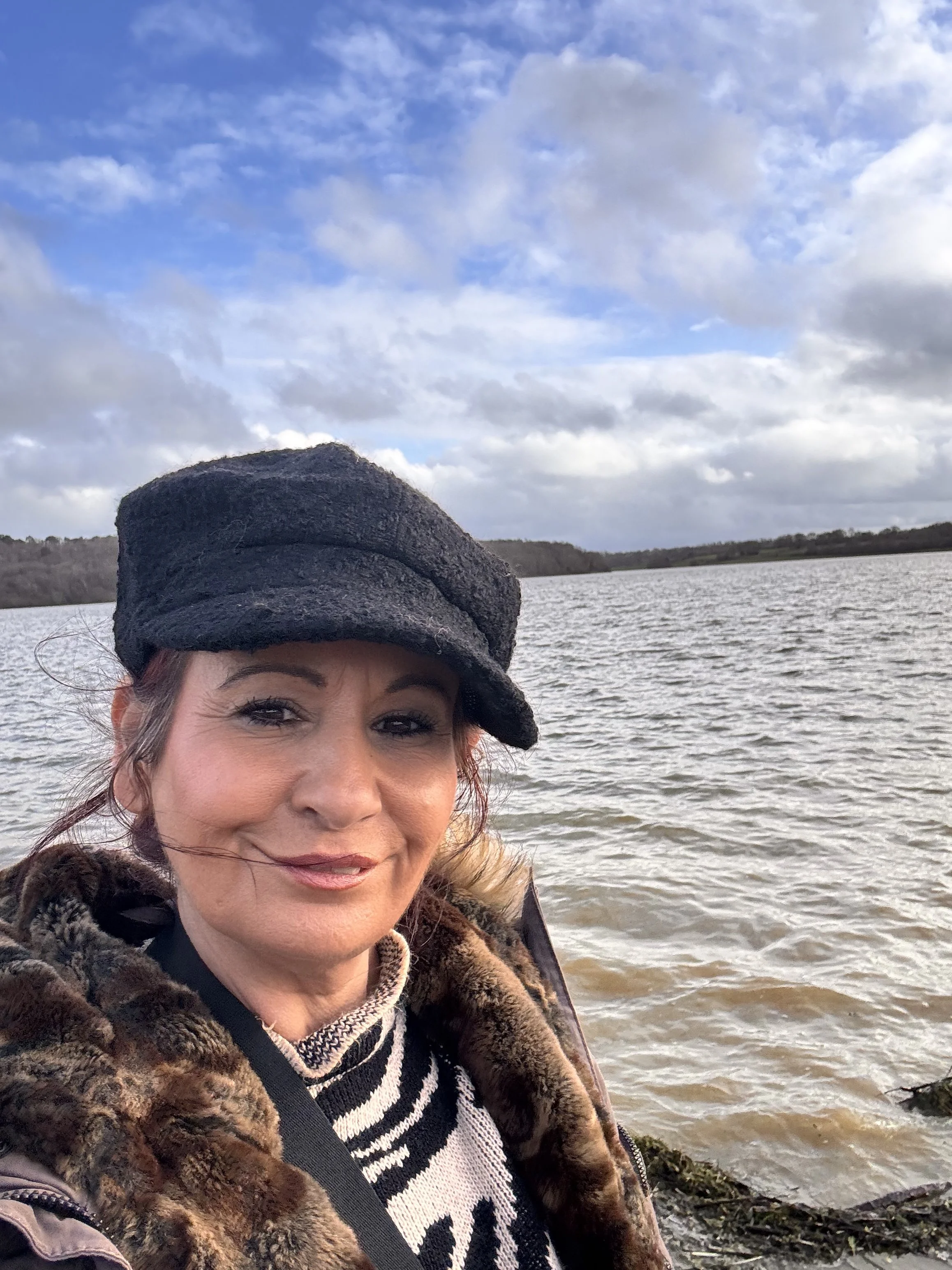
Take my car.
It’s filthy. Muddy paw prints. General life chaos. Every time I get into it, I think, “I must clean the car.” Very sincere. Very determined.
Then I get home, go inside, and the car ceases to exist.
Not metaphorically. Neurologically. It is no longer in my brain. Until the next time I sit in it.
Vitamins? They live on top of the air fryer. Or the microwave. Put them in a drawer and it’s game over. Drawer equals disappearance. Visibility equals survival.
Friends? If I don’t see them, if they don’t pop up on socials, if I don’t think of them at a time I can immediately message, I don’t. Not because I don’t care. Not because they don’t matter. But because the thought leaves my working memory and something else takes its place.
The bag for the charity shop? That’s been known to hang around for six months. Three bags currently live by the freezer. They have a better social life than I do at this point.
For years, the shame around this was brutal. The internal narrative was harsh. Lazy. Useless. Inconsistent. Why can’t you just do the thing? Add to that the frustration of people around you. The eye rolls. The “how did you forget?” The understandable irritation from my husband when something slips again.
It took me a long time to understand this isn’t a moral failing. It’s neurology.
ADHD sits under the neurodivergent umbrella. Autism does too. Trauma impacts the brain in similar ways, particularly around working memory, executive function, and cognitive load. When your brain is busy scanning for threat, regulating emotion, or juggling ten internal tabs at once, things that aren’t directly in front of you can genuinely fall offline.
Understanding that changed everything.
It didn’t magically fix it. The car still needs cleaning. The charity bags are still loitering. If I’m in a rush and walk straight out the door, I don’t see the vitamins, and I don’t take them.
But I take them more often than I don’t. Because they’re visible. Because I’ve adjusted. Because I’ve stopped trying to force myself to function like someone I’m not.
That’s the difference.
When we understand our brains, we can work with them instead of constantly fighting them.
The shame used to be debilitating. Now it still bites me occasionally, but it doesn’t define me. I can laugh at the muddy car. I can create systems that actually fit how I operate. I can explain to the people around me what’s happening instead of absorbing all the blame.
This is why psychoeducation matters. This is why being neurodivergent-informed matters. This is why compassion, especially towards ourselves, matters.
If any of this resonates, if you’ve been carrying shame for things that might actually be neurological, you’re not broken. You might just need a different strategy and a bit of understanding.
Feel free to get in touch for a free, no-obligation intro call.
Stay safe.
Stay connected.
Take gentle care.
Louise x
Perimenopause, Dog Walks, and Lemon Fanta
Perimenopause, Dog Walks, and Lemon Fanta
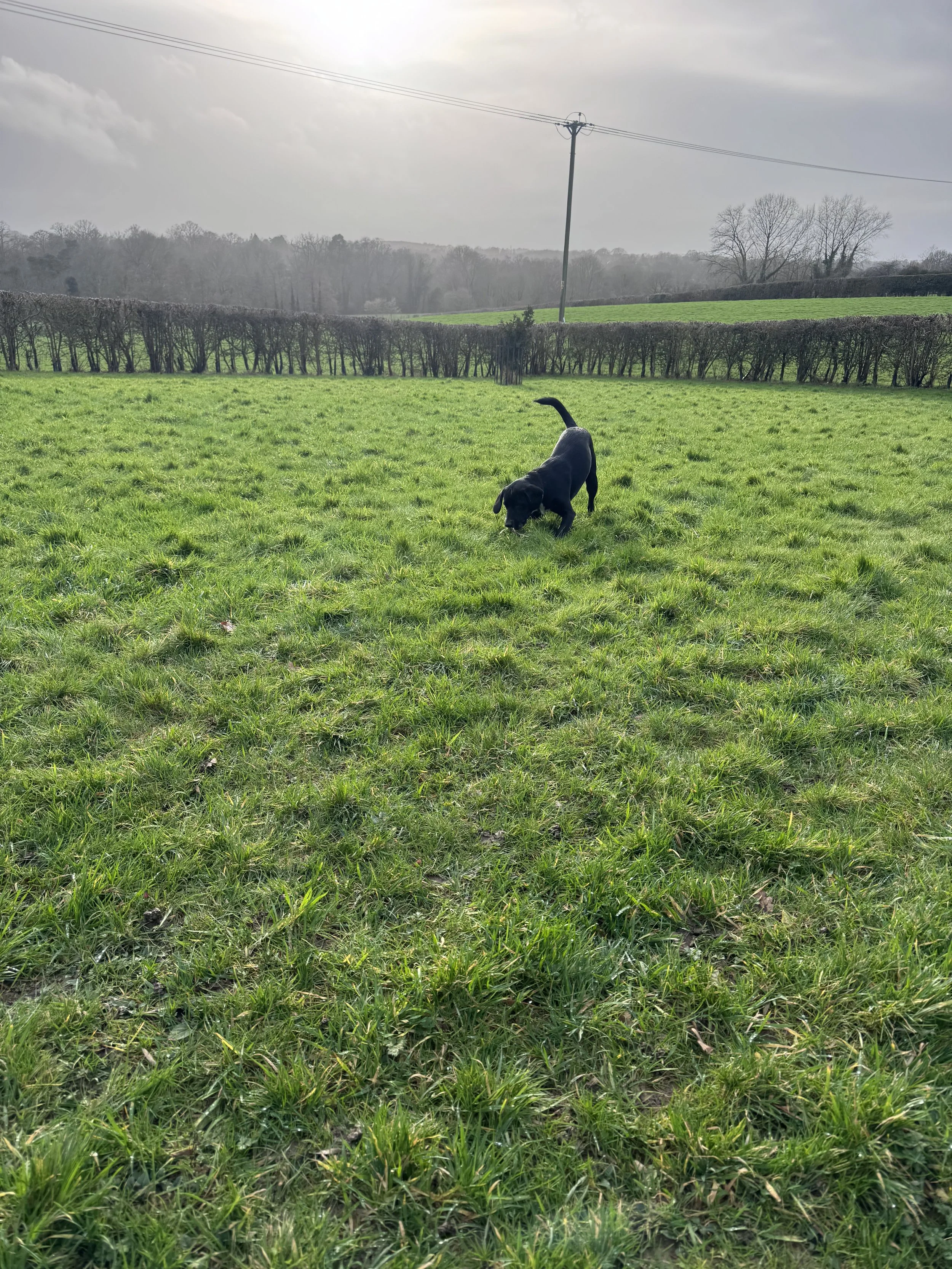
Today has been strange.
I was up super early. Started work at 6:45am with a genuine spring in my step. Productive. Focused. On it. I even surprised myself.
We had a beautiful Wellbeing Wednesday session and Lydia from Riding the Trauma Train joined us. It was thoughtful, grounded, powerful. I felt connected. Purposeful.
Then I took Arthur for a walk.
And somewhere between the mud and the trees, it hit me.
The emotional weight of perimenopause.
I talk a lot about effort in life. The invisible effort. The kind people don’t see. Perimenopause feels like that, extra effort layered on top of ordinary life. I’ve got diaries and alarms everywhere. Fans for night time. Cooling sheets. Creams. Vitamins. Patches for day. Patches for night. Itchy skin. Foggy memory. Forgetfulness that makes you question yourself. Add ADHD into that mix, where executive function already needs scaffolding, and it’s amplified.
But what I hadn’t fully clocked was the grief.
The loss.
Menopause isn’t just physical. It’s a transition. A closing. A shift you cannot reverse. I’m not wanting more babies. My children are grown. I love that they’re grown. And yet, walking along today, there was this wave of realisation: I will never be able to have babies again.
Not choosing not to.
Unable to.
There’s something primal about that. Something beyond logic. My brain knows I’m okay with it. My body seems to be having a separate meeting without me.
Then the empty nest thoughts crept in. All I haven’t done. All I missed. Questions about identity. Am I even a woman anymore? Writing that feels dramatic. Slightly unhinged even. But those were some of the thoughts moving through me.
And then the guilt.
Thinking about women who desperately wanted children and couldn’t. Feeling their imagined pain and then feeling ashamed that I was emotional at all. All of this in a 45-minute dog walk.
I came home, made a drink, and for a moment felt ridiculous. How can you go from capable professional woman at 6:45am to existential hormonal spiral by lunchtime?
But here’s what I know, both personally and professionally: emotions move. They surge. They crest. They settle.
I chatted it out. I doodled. I moved my body. I put music on, a bit of Madonna for good measure, cracked open a can of lemon Fanta and within half an hour it was like the storm had passed.
That doesn’t mean it wasn’t real.
It was intense beyond words at the time.
This is a whole new era for me. One that will need navigation, learning, support, and probably more fans and moisturiser than I ever anticipated. I’m fortunate to have incredible women around me who’ve walked this road already. The empathy I received today was powerful. They just knew. No long explanations required. That kind of quiet understanding is gold.
If you’re experiencing this, the fog, the grief, the irrational thoughts, the identity wobble, I see you.
It’s real.
And if today taught me anything, it’s this: you can go from grounded to overwhelmed and back again in the space of a dog walk. That doesn’t make you weak. It makes you human. It makes you hormonal. It makes you in transition.
Sometimes growth looks like therapy rooms and training courses.
Sometimes it looks like lemon Fanta and Madonna in your kitchen, reclaiming yourself one song at a time.
This era might be different. But different doesn’t mean diminished.
Stay safe, stay connected and take gentle care,
Louise x
Why I’m Leaving the BACP (and Why That Actually Serves My Clients)
This hasn’t been a knee-jerk decision. It’s been a slow, thoughtful, slightly uncomfortable one. The kind you sit with, chew over, run the numbers on, and then finally say: this no longer makes sense.
We’re often taught, especially during training, almost conditioned, that as counsellors we have to be with the BACP. That it’s the gold standard. That without it, we’re somehow less legitimate. But here’s the truth that doesn’t get said loudly enough:
The BACP is not a governing body.
It’s a membership organisation.
A members’ club.
I’ve completed my CPCAB Level 2, 3 and 4. I have a counselling degree. I’ve invested in numerous additional qualifications and ongoing CPD. I continue to train, learn, reflect, and develop because I take my work, and my client….seriously. None of that disappears because I choose not to renew one particular membership.
What has become very clear is the cost. Financially, emotionally, and ethically.
When I actually sat down and worked it out, I’ve paid the BACP far more than I’ve ever gained from them. Over £300 a year, every year. And in return? I don’t receive referrals from them. I don’t feel represented. I don’t feel consulted. And increasingly, I don’t feel aligned.
That £300 doesn’t come from nowhere. It comes from a small business run by a self-employed therapist in a brutal economic climate. It impacts my expenditure. And I’d far rather use that money to offer another concession place, fund more CPD, or buy creative interventions that directly benefit the people I work with.
Because here’s the thing: my practice is full.
I’m continuously booked.
My referrals come from word of mouth, recommendations, and real human connection.
That tells me something important is already working.
What really sealed this decision, though, was values.
The recent lipstick campaign felt completely disconnected from the realities of mental health. Spending members’ money on a campaign telling women over 50 to “put lipstick on and it will be okay” landed badly for me, professionally and personally. I work daily with people who have spent their entire lives masking, performing, shrinking, pretending they’re fine when they’re not. The idea that more masking is the message? That’s not something I can stand behind.
Mental health is not lipstick.
Healing is not presentation.
Authenticity matters.
Men’s mental health matters. LGBTQ+ mental health matters. Young peoples mental health matters. Children’s mental health matters. Everyone matters. And running a campaign in one shopping centre, in one part of the country, while claiming national representation doesn’t sit right with me.
There were other moments too. Seeing how unhelpful the organisation deals with situations and communication is sobering. Experiencing the framework as woolly at times, and the organisation as distant and hard to access, reinforced what I’d already been feeling.
In contrast, I’m also with the NCPS, and I prefer their ethos, inclusivity, and values. And they feel human. A helpful person answers the phone. There’s clarity. There’s accessibility. There’s alignment.
I’m also a fan of unions, and we have one in this profession, so I’ll be joining that too. Because collective support, clear advocacy, and practitioner protection matter.
Running a therapy business is hard. Being self-employed is hard. We constantly have to reassess, rethink, and make decisions that are sustainable, not just financially, but ethically and emotionally too.
Right now, this is the right decision for me.
And ultimately, it’s a decision that serves my clients.
Not every therapist will agree. That’s okay. Just like not every counsellor is right for every client. I believe deeply in the relationship, in integrity, and in practising in a way that feels honest and congruent.
This choice does exactly that.
And I’m at peace with it.
Stay safe, stay connected and take gentle care
Louise x
Mud, Learning, and Doing Things Differently
Today hasn’t stopped raining. Mud everywhere. Even when the sun pokes its head out, it’s still… mud, mud, mud. There’s definitely something about this time of year. The damp seeps into everything, shoes, jeans, mood, motivation. You can’t quite escape the wetness of the world, even when you try.
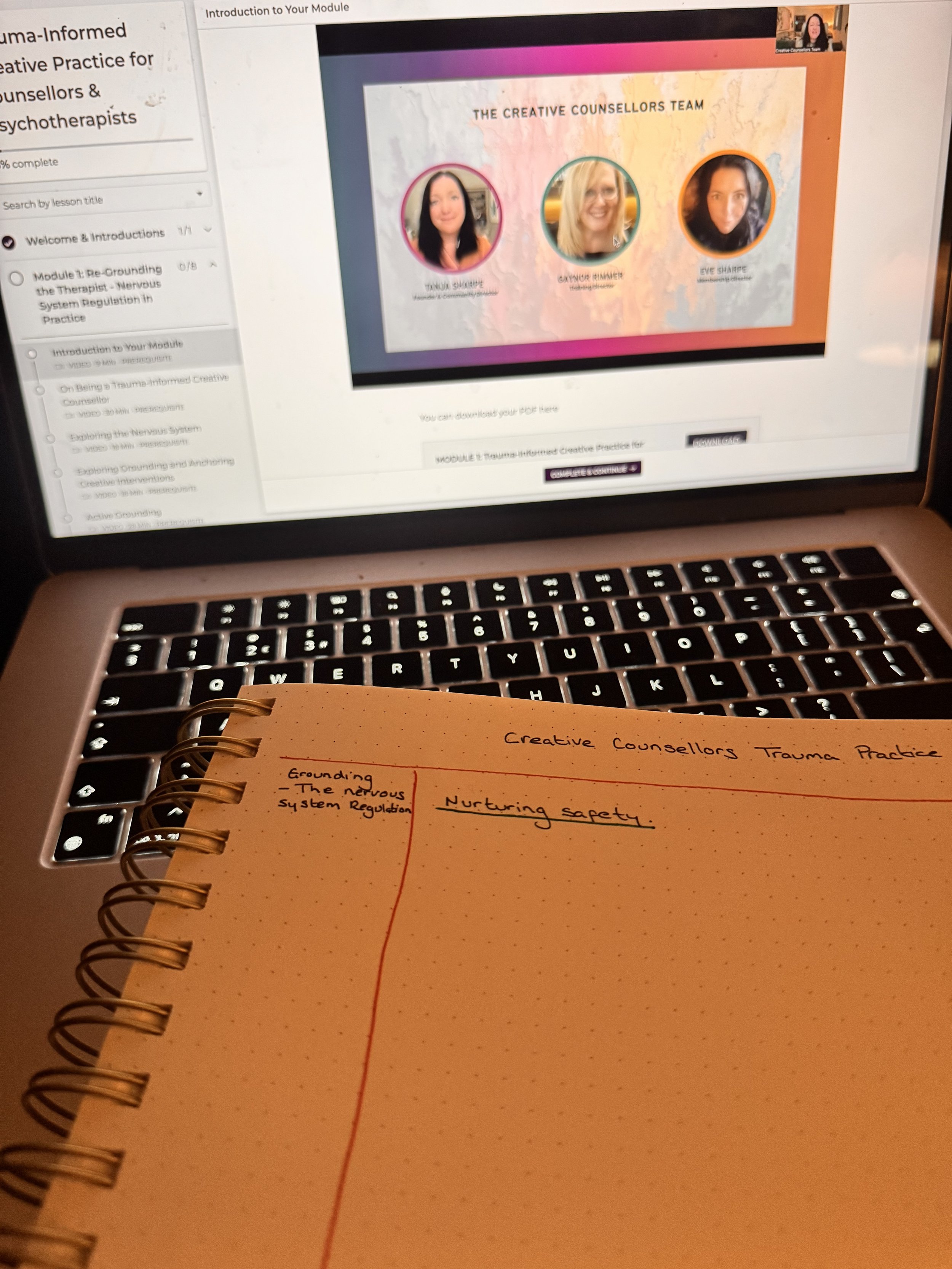
I’ve been busy today. Properly busy. I’m currently doing a few different courses because, as a therapist, learning never really stops. Basic qualifications get us started, but the real learning begins once you’re in the work. Right now I’m training in sex therapy, doing a creative trauma course, and adding more addiction training too.
Somewhere between the rain and the reading, I started thinking about learning itself, and how I learn.
I’m very visual. Always have been. My notes are colourful, mapped out, messy in a way that makes sense to my brain. For years, though, I thought I was “thick”. That I just couldn’t learn properly because textbooks didn’t stick. Turns out that wasn’t true at all. Nobody had ever shown me there were other ways to learn.
It was the support of an amazing tutor at university who gently pointed me towards a video instead of another chunk of text. And that was it. I was off. Something clicked. The problem was never my ability, it was the method.
That experience shapes everything about how I work now.
It’s why I don’t do therapy in a rigid, one-size-fits-all way. Because we aren’t all the same. We don’t think the same, feel the same, process the same, or heal the same. What works beautifully for one person might completely shut another down.
Therapy, for me, is about meeting people where they’re at, not where a model or framework says they should be. It’s about gently exploring what works for you. Words, images, metaphor, creativity, silence, movement, talking, not talking, all of it is valid. And we figure it out together, at your pace, with support.
Since realising how I learn, how I learn matters. The right pens. The right notebooks. Dotted paper. Good quality pages. That might sound silly to some, but for many people it’s huge. Sensory experience is real. Scratchy paper and awful pens are a hard no. They shut my brain down before it’s even started.
It makes me wonder how many people are out there thinking they “can’t learn”, when actually they’ve just never been shown how they learn. How many people have struggled unnecessarily because no one offered patience, time, or alternatives.
Support matters.
Being seen matters.
Having someone say “let’s try this differently” matters.
So yes, I do all this learning for my work and for my clients, but here’s a little secret: I do it because I enjoy it. It feeds me. It supports my growth too. I genuinely love learning when it’s done in a way that works with my nervous system instead of against it.
And small win for today: I wrote three of the eight workshops. If you read yesterday’s blog, you’ll know why that matters… 😅
If learning differently is something that speaks to you, keep an eye on my shop page and socials. I’ll be running another note-taking and learning differently workshop soon, where I’ll share all my hints, tips, and ways of doing this without burning yourself out.
For now, stay safe, stay connected, and take gentle care.
Louise
Being Real, Sober, and Distractibly Me: A Night in the Life of Louise Malyan
So here I am, award winning sober psychotherapist counsellor with ADHD, eight workshops to write for therapists, and… completely sidetracked by AI caricatures. Yep. Eight workshops. Not done. Instead, I’m drawing cats and people who look vaguely like me, giggling at my own creations, and thinking: this is fine.
Why am I telling you this? Because being real matters. A lot. I talk about lived experience in therapy for a reason. I’m not just someone who’s read the textbooks, though I’ve read plenty. I’m someone who’s been there, done that, survived it, and learned a little along the way. Sober, aware, messy at times, laughing at life even when it’s hard. And that matters in the room with a client. It matters with my supervisees. It matters in workshops.
See, ADHD isn’t a bug, it’s a feature. My brain jumps, skips, flits, and sometimes lands in a completely unrelated place. And that’s okay. In fact, it’s part of how I work. My sessions aren’t formulaic; they’re human. If a client is having a breakthrough through art, metaphor, fairy tale, sand tray, or just talking about their cat for 15 minutes, then that’s what we do. Because therapy isn’t about fitting someone into a mould. It’s about creating a space where the person in front of me can be seen, heard, and understood.
Not every counsellor is right for every client. And that’s fine too. My honesty, my humour, my creativity, my sober lens, my lived experience, that’s what I bring. That’s what makes me different. And yes, sometimes it means I get distracted making caricatures when I should be writing workshops. But it also means I notice when a client’s brain needs a little hop, skip, and jump to get to the heart of their story.
So here’s the takeaway: being real matters. Owning your quirks matters. Laughing at yourself matters. Crying when you are sad matters. And yes, ADHD brains and distractions? They can lead to joy, creativity, and connection. If my distractions make me smile, they also remind me that life, and therapy, isn’t meant to be perfectly linear. It’s meant to be lived, explored, and sometimes, illustrated in cartoon form.
If this resonates, you’re not on your own.
Pull up a chair.
I've got you.
Stay safe, stay connected and take gentle care.
Louise x
louisemalyancounselling@gmail.com
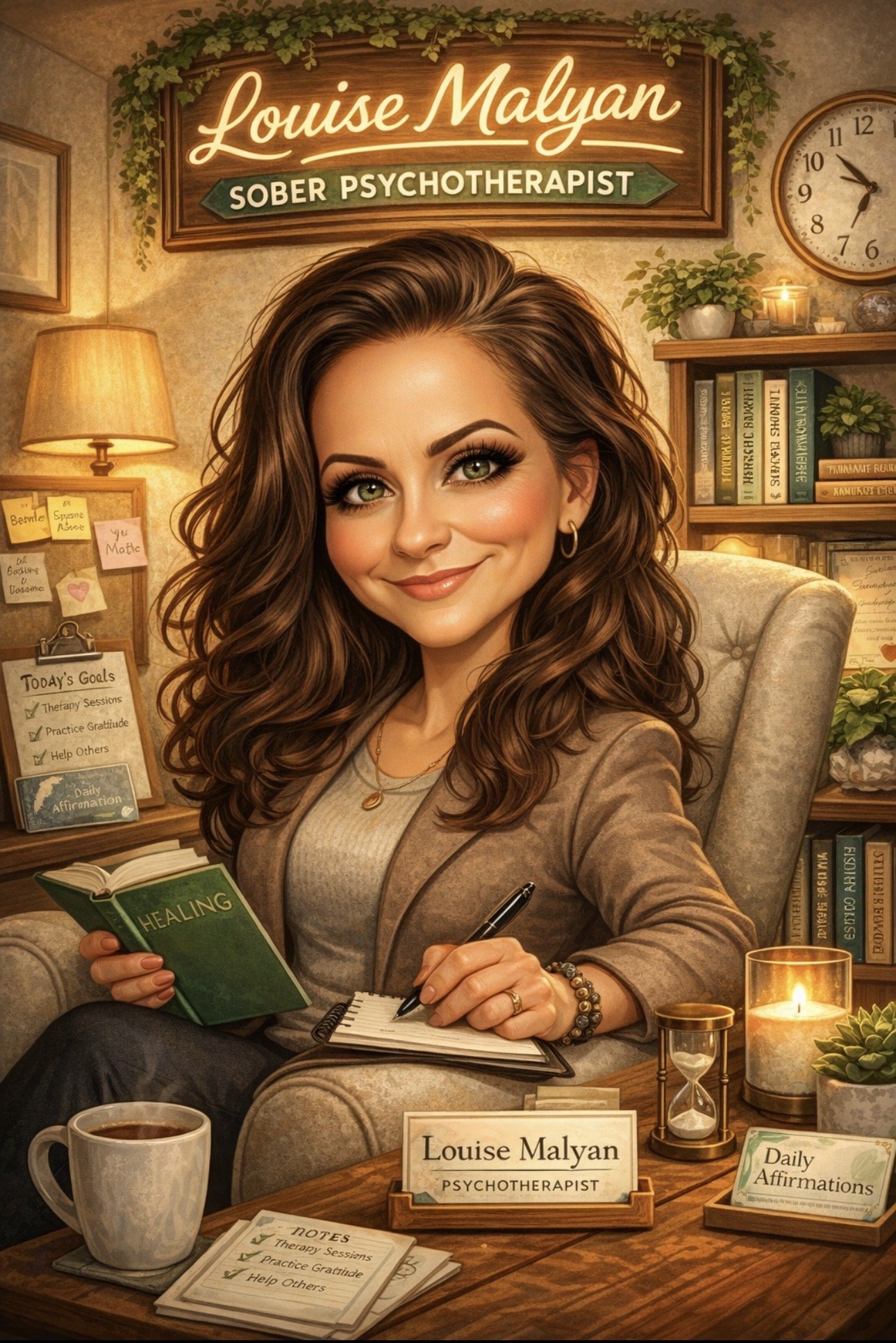
Listening to Anxiety Instead of Fighting It
Anxiety doesn’t usually arrive out of nowhere. It develops quietly, often after long periods of pushing, coping, managing, being “fine”, until one day your nervous system taps you on the shoulder and says: I can’t do this like this anymore.
Burnout and anxiety can completely floor you. Just because it isn’t visible doesn’t make it any less real. What I hear so often from people is this sense of confusion and self-doubt, why now? why can’t I cope like I used to?…….especially when they’ve been functioning, caring for others, working, surviving, for a very long time.
Something I’ve been sitting with myself recently is how anxiety often shows up as a protector emotion. It gets a bad reputation, but it usually isn’t trying to harm us. It’s trying to protect us from something underneath.
For me, starting a new course recently stirred up a lot of anxiety. Not because I didn’t want to do it, there was no lovic involved, this was purely involuntary and caught me by surprise. This was because when I slowed down and really listened, I realised what the anxiety was guarding was fear. Fear of getting it wrong. Fear of not knowing enough. Fear of not having worked with these people before. Fear of being exposed. And honestly… that makes complete sense. New experiences activate old survival wiring. Our brains like the familiar, even when the familiar is uncomfortable.
So instead of fighting the anxiety, I asked myself what it needed. I did the things we often forget are allowed as adults. I went for a walk. I listened to music. I talked it through with safe people. I did some research so I felt more prepared. I made sure I had the materials I needed to hand. And I gently reminded myself…..the way I would a child, directly to little me, that this is new, you’re allowed to not be perfect, you don’t have to get it all right first time.
That shift matters. Because anxiety often eases when it feels heard, not dismissed.
This is the work I do in therapy and supervision. We don’t shame anxiety or try to bulldoze it away. We get curious about what it’s protecting you from, and we build safety and capacity around that. We work with your nervous system, not against it. Especially if you’re burnt out, overwhelmed, or exhausted from holding it all together.
If you’re reading this and recognising yourself, diagnosis or not, you’re not weak, broken, or failing. Your system has been working very hard for a very long time.
What about you? Have you had moments like this, where anxiety showed up around something new or important? What helped, even a little?
Stay safe. Stay connected. Take gentle care.
Louise
If this resonates and you’d like to explore working with me in therapy or supervision, you’re very welcome to reach out for a free, no-obligation introductory chat. Finding the right person matters, that’s where healing begins.
LouiseMalyanCounselling@gmail.com
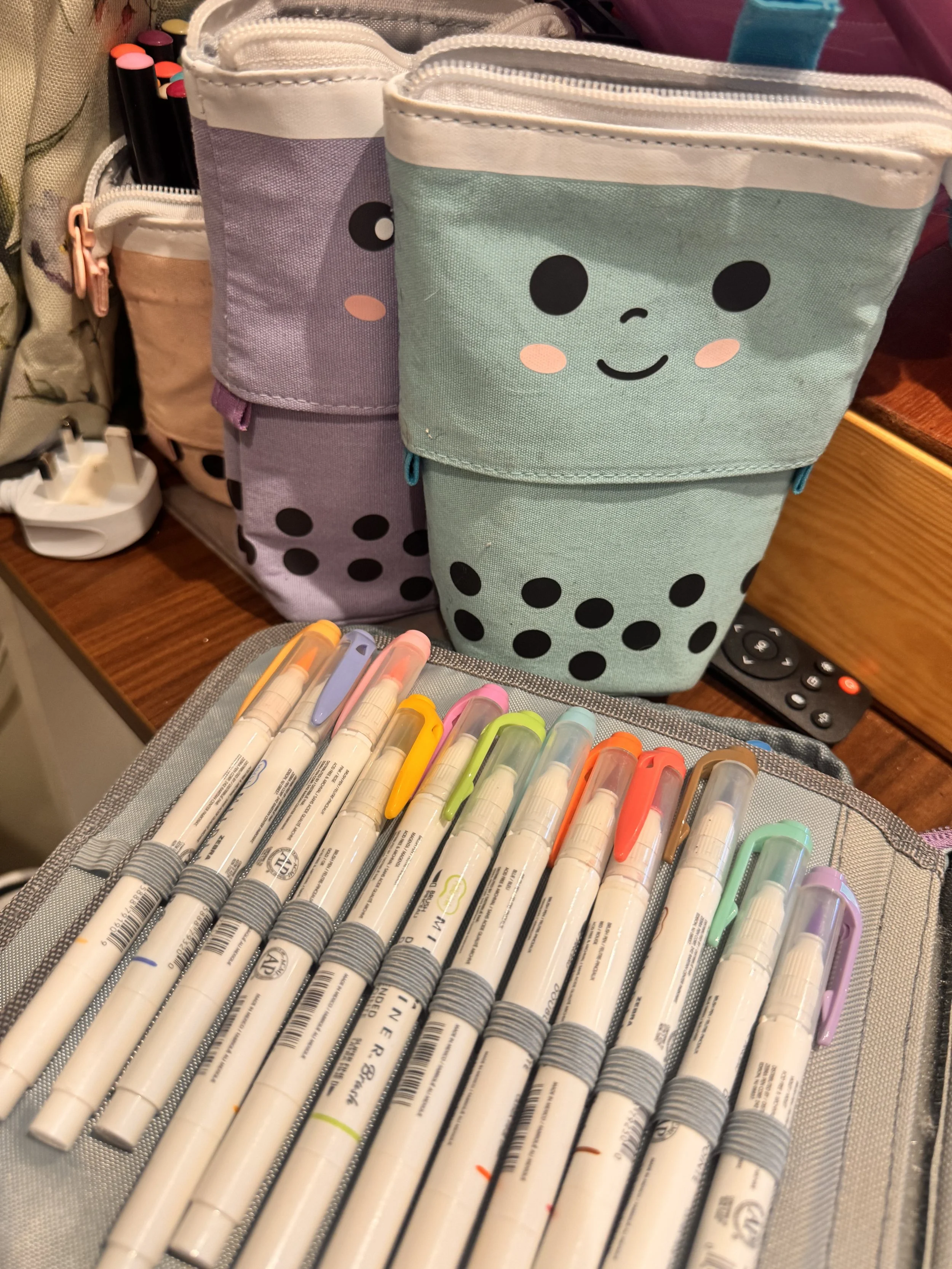
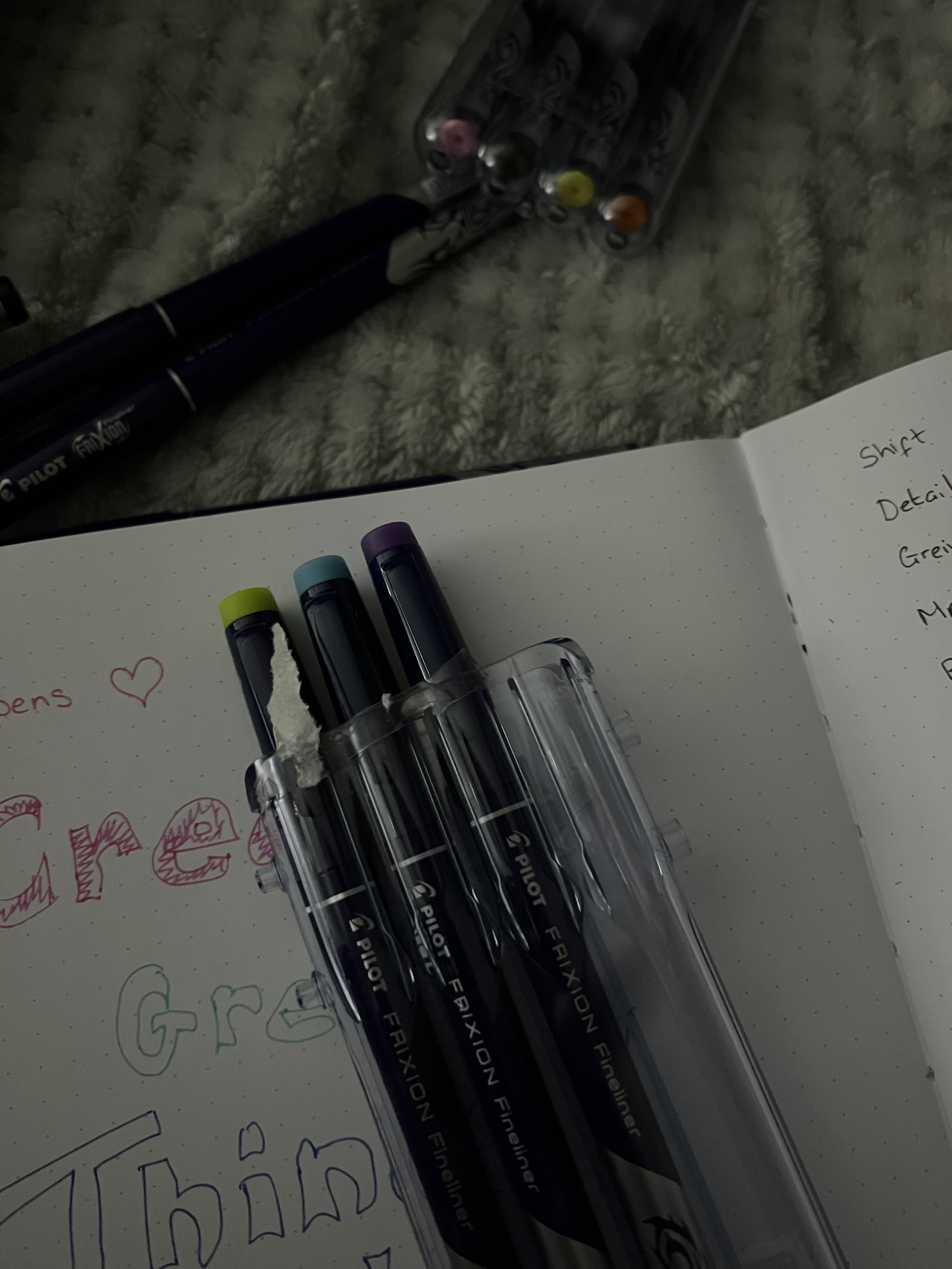
A Day of Learning (ADHD, Regulation, and Being Human)
Today has been a day of learning.
For me, and for Arthur, the therapy puppy.
ADHD often comes with chaos. A mouth that speaks before the brain has fully caught up. Reactions that happen fast, honest, and unfiltered. Before diagnosis, this can be especially painful, because being misunderstood and having assumptions made about you is something many of us have lived with our whole lives.
We’re often led to believe that we are the problem. That speaking plainly, directly, without fluff or bubble wrap, is wrong. So we try harder. We use more words. We over-explain. We desperately want to be understood.
Many people with ADHD are visual learners. Verbal instructions can feel like someone suddenly speaking Swahili, the words are there, but they don’t land. We’re trying to understand, truly we are.
Our energy can shift quickly. Full of ideas and momentum one moment, utterly exhausted and overwhelmed the next.
And then there’s rejection sensitive dysphoria (RSD).
RSD is an involuntary, intense emotional response to perceived rejection or criticism. It’s not a choice. It’s not dramatic. It’s a nervous system reaction that can feel physically painful.
A delayed reply. A change in tone. A raised eyebrow. Being told you’re selfish, inconsiderate, or not thinking of others.
When you already try so hard to understand people, include them, and do the right thing, those words can cut like a knife. All we want is to belong. To be included. To be loved.
Today, while trying to sort some admin, I spilled juice all down myself. I became so overwhelmed I couldn’t read the words on the page or make sense of what I was doing. I found myself sitting among a pile of washing, an overfilled bin bag that had burst open, and a crushing sense of uselessness.
Tears came. My chest hurt. And the familiar thought arrived: I’m 46, I should have this shit sorted by now.
So I did the only thing my nervous system could manage.
I put my coat and shoes on, grabbed my bag, and walked.
Tears streaming down my face, I walked and walked. Then I stopped.
Arthur was trotting along beside me on a loose lead, stopping to sniff, occasionally looking up to check in with me. A few weeks ago, he couldn’t do this. Not like this. And there we were, not perfect, but so much further along.
I’d been using visuals. Treats. Repetition. And slowly, it was landing.
I went home a little more grounded. The mess was still there. The puppy and Steve the cat got involved. I still couldn’t do the admin. But the washing got washed. The rubbish got sorted.
I stepped away. Then back.
Not to some miraculous breakthrough, but to the realisation that a walk and a bar of Galaxy chocolate had helped.
I’m not a dog. Treats don’t magically transform my brain.
What did happen was regulation. Enough calm returned for me to carry on a little.
For most of our lives, neurodivergent people have been forced into square holes we simply don’t fit into. Many turn to addiction to manage the relentless overwhelm. For some, it all becomes too much. Too many people never receive the care, understanding, and support they need to keep going. We are traumatised from insults, being shouted at and punishment.
Masking is exhausting. And it doesn’t always work. Sometimes that creates more confusion and pain that we should never have felt was an option to use to survive.
Our brains are different. Often running a hundred miles an hour faster than the world around us.
Tonight at training, when I had to ask twenty times, when I needed things shown rather than told, that was okay. My trainer offered that. I know how I learn. And I want to understand.
So if you struggle, diagnosis or not, please know this: it isn’t just a you thing. There are other ways. Find what works for you. Step away if you can to regroup. Ask yourself what has helped before.
And for anyone who treats others as if they’re stupid, lazy, or choosing this – it isn’t a choice. Empathy isn’t about fixing or correcting. It’s about showing the other person that you get it.
And Arthur?
Yes, he pulled the next time I took him out. Ran me in circles. Came home for snuggles. And the admin still wasn’t done.
But that’s okay.
Tomorrow is another day.
Stay safe, stay connected, take gentle care,
Louise x
This is how I work in therapy and supervision. We don’t try to force you into systems that don’t fit, or shame you for how your brain and nervous system respond. We slow things down, use what works for you, visuals, creativity, honesty, stepping back when it’s too much, and we work with regulation rather than against it. Whether you’re neurodivergent, traumatised, burnt out, or just exhausted from holding it all together, you don’t have to keep doing it alone. If any of this resonates and you’d like to explore working with me in therapy or supervision, you can email me at louisemalyancounselling@gmail.com. There is another way, and it doesn’t involve fixing who you are.